In Uganda’s supermarkets, pharmacies and local markets, product labels are everywhere-tiny fonts listing ingredients, expiry dates, dosages instructions, and safety warnings; hence, for most shoppers, these details are essential tools for making informed choices.
However, for thousands of visually impaired Ugandans, that information remains largely inaccessible; thus, without Braille labeling, tactile symbols or audio-enabled digital features, many visually impaired consumers cannot independently read critical product information.
Patrick Ojok, Program Coordinator at the Gulu Disabled Persons Union, noted that the absence of accessible labeling creates daily obstacles for visually impaired consumers and they should be supported through regulation.
“Visually impaired consumers often have to rely on people who can see to check expiry dates or product conditions and if they do not have someone to support them, they may end up buying expired or unsafe products,” Ojok told tndNews, Uganda.
He further noted that unscrupulous sellers can exploit this vulnerability and it directly affects the health of the visually impaired individuals and that of their families.
Ojok however, highlights how even everyday items like milk, packed foods and locally sold products pose risks to the visually impaired individuals.
“Milk for instance, comes from multiple producers for example-Highland, Jesa and others; thus, a visually impaired consumer cannot distinguish between brands or check expiration dates without assistance,” Ojok revealed.
Adding that, “even locally sold items are sometimes adulterated and without Braille or other accessible labeling, these consumers cannot be sure what they are buying.”
He adds that technology could help bridge the gap and advise that supermarkets could provide talking gadgets that detect expiry dates, manufacturing dates and prices since visually impaired individuals have very sharp hearing abilities and can use these devices effectively.
“Where Braille is possible, it should be included so consumers can read using their hands; otherwise, sellers must be ready to explain the details clearly to buyers,” Ojok urged.
Ojok notes that visually impaired consumers often develop coping strategies but these are not foolproof, hence many move with a personal assistant who can read labels with some memorizing packaging shapes or rely on tactile features.
Additionally, Ojok disclosed that for new products or brands, these strategies fail and appealed that sellers must assist visually impaired buyers and also buyers should have literate personal assistants to ensure safe consumption.

He although points out that the challenges are beyond food but even when handling money, visually impaired persons can be cheated if there are no tactile indicators for denominations.
“Ideally, all products, even road signs and printed materials should have Braille or tactile components; institutions like the Uganda Bible Society have made progress with Braille Bibles but bulkiness and cost make widespread adoption difficult,” Ojok disclosed.
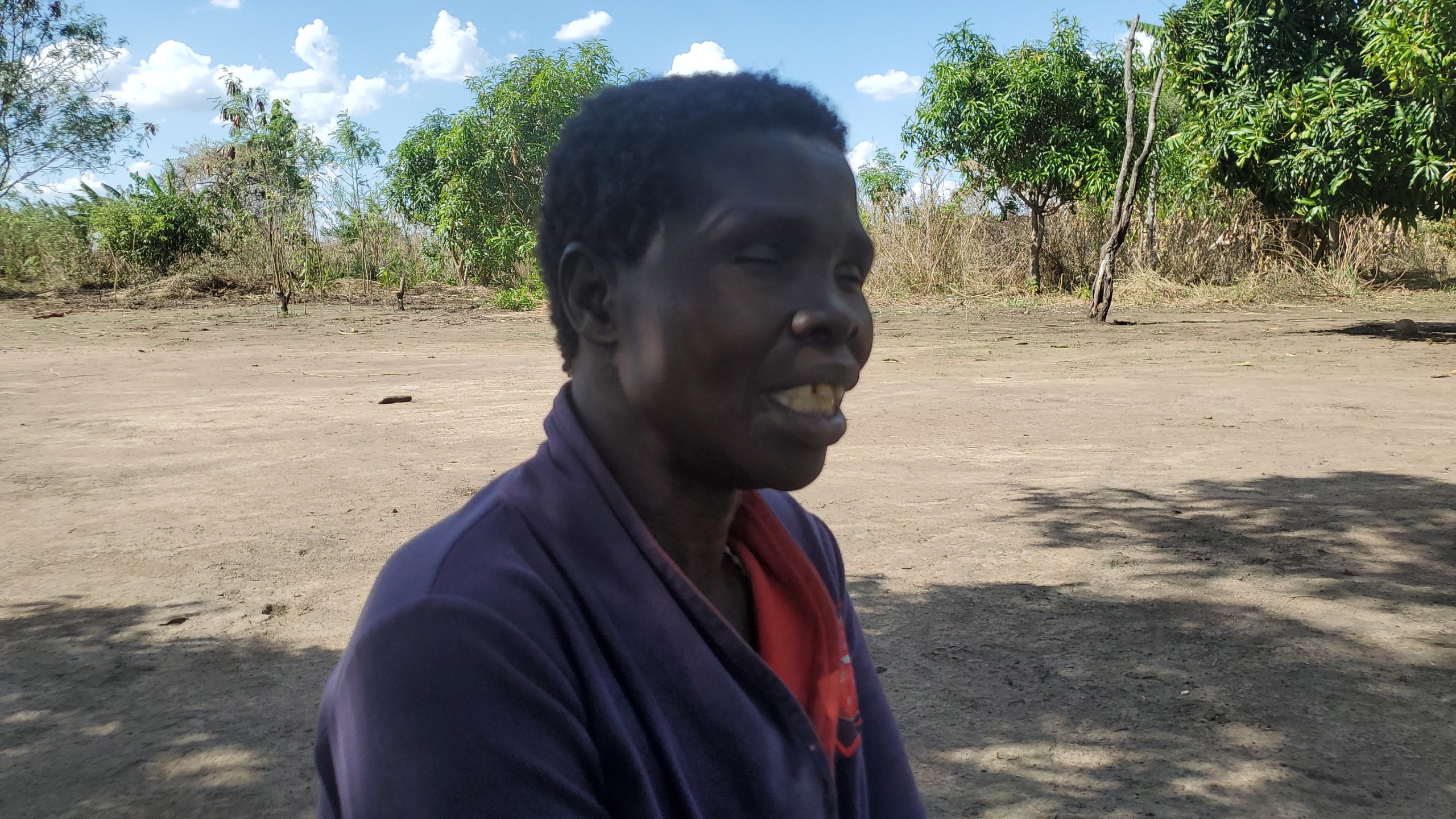
Alanyo (Not real name), a visually impaired person from Gulu City explains that when going for her shopping, she have to bring someone every time she go to the supermarket.
She revealed that even if she moves with someone, her worries is that the person reading the labels for her might miss something and she cannot check expiry dates or brands on her own.
“Sometimes, I have to avoid buying certain products entirely because I do not know if they are safe and if packaging had Braille or a talking device, I would feel independent and safe,” Alanyo noted.
Alanyo further explains that even simple household items can become sources of stress and uncertainty like buying milk, cooking oil or flour; and she often have to rely on memory or guesswork.
“Some brands I know, I can trust but when there is a new product, I feel helpless and I sometimes leave products on the shelf because I am afraid of buying something expired or unsafe,” she disclosed.
She further highlighted the social and emotional dimensions of dependence citing that having to ask someone for help makes her feel less independent and sometimes embarrassed.
“I want to be able to make decisions about my purchases like everyone else; having labels I can read, either in Braille or through audio would give me dignity and confidence,” she revealed.
According to Alanyo, she has a smartphone and knows that there are some apps that can read product information aloud but not all products are recognized and the apps are not always reliable in crowded markets or small shops but the Braille or talking labels on the products themselves would solve the problem much better.
“It is not just about convenience, it is about safety, health and independence because every product that reaches the market should be accessible to people like me,” she said.

Bernard Bwambale, Head of Programs at the Global Consumer Center (CONSENT) and Deputy Country Coordinator at Food Safety Coalition of Uganda stresses the broader rights implication of excluding visually impaired individuals.
Bwambale explained that consumer rights include the right to information and when product information is inaccessible, and then visually impaired consumers are excluded from that right.
“Our advocacy focuses on ensuring that labeling standards, Braille signage and accessible devices are part of everyday consumer protection,” Bwambale noted.

Bernard Bwambale, Head of Programs at the Global Consumer Center (CONSENT) and Deputy Country Coordinator at Food Safety Coalition of Uganda
On the other hand, William Onyai, the Gulu District Senior Health Educator highlights the impact on rural and semi-urban communities citing that many visually impaired people in Gulu rely on local markets and small pharmacies, hence without accessible labels, they may take expired or incorrect medications or consume unsafe food products.
“This is not just a convenience issue, it directly affects health outcomes and health education alone is not enough; labeling must be inclusive so that these patients can safely manage medications and household products on their own,” Onyai explained.
Onyai further explained that in rural areas, many consumers travel long distances to buy essential items and if a visually impaired person buys expired food or the wrong medicine, the consequences can be severe.
“Unlike supermarkets in Kampala, local markets often have fewer staff and no technology to assist customers and visually impaired persons are forced to depend on whoever is nearby, which increases the risk of mistakes and exploitation,” Onyai disclosed.
He also pointed out the intersection of accessibility and public health disclosing that expired or adulterated products can lead to malnutrition, infections or worsening of chronic illnesses.
Adding that, “for people who cannot independently verify expiration dates or ingredients, even something as simple as a cooking oil or packaged flour can become a health hazard; our goal should be to ensure that labeling is not just a formality but a tool that protects lives.”
Onyai emphasizes the need for practical solutions at the community level with local pharmacies and markets using simple audio devices and Braille stickers for common medications and household products.
“Even basic training for sellers on how to assist visually impaired consumers could dramatically reduce health risks and we need interventions that work for the people on the ground not just policies on paper,” Onyai emphasized.

Patricia Bageine Ejalu, Deputy Executive Director-Standards at the Uganda National Bureau of Standards (UNBS) says the UNBS certification mark remains a key assurance of product quality and compliance.
“The UNBS certification mark is visible evidence that a product meets the requirements of established standards and has been duly certified by UNBS,” she explains.
 Patricia Bageine Ejalu, Deputy Executive Director-Standards at the Uganda National Bureau of Standards (UNBS)-Credit to UNBS.
However, Ejalu acknowledges that accessible packaging for persons with disabilities particularly those who are blind has not received sufficient attention.
She further notes that UNBS has previously developed standards in response to such demand including those covering wheelchairs, accessibility to buildings and Braille signage for equipment and appliances.
“This is an area that has not been extensively handled and standards development is largely demand-driven and the areas we have addressed so far have come from expressed need,” she says.
Adding that, “the existing standards do not specifically address product labeling such as incorporating Braille on the Q-mark and this is something we need to look into.”
Ejalu emphasizes that inclusivity in certification is important particularly for persons with visual or psychological disabilities citing that it is only right that persons with disabilities should be able to independently verify whether a product is certified including through Braille and UNBS should take up.
She further explained that developing or revising standards involves a multi-stakeholder process bringing together all relevant actors.
“When we develop standards, we consult widely and as we did with wheelchairs, building accessibility and Braille signage, associations representing persons with disabilities are actively involved in the process,” she says.
According to Ejalu, UNBS will review existing standards particularly those on Braille signage to determine whether they can be extended to apply to certification marks and they shall also examine the current signage standard and assess whether it can apply to the Q-mark; thus, if it does then it can be incorporated accordingly.
“We are introducing a digital conformity mark which allows consumers to verify product safety using their phones and this is an area where we can also explore incorporating accessibility features such as Braille,” she disclosed.
Adding that, “we will continue to engage organizations representing persons with disabilities, as we have done before and if there is need to develop a specific standard in this area, we shall certainly do so.”
While current standards have made strides in accessibility, gaps remain particularly in ensuring that persons with visual impairments can independently verify product safety and with a willingness to review existing frameworks, integrate accessibility into emerging digital conformity systems and engage disability focused stakeholders, UNBS appears poised to take a more deliberate step towards standards that leave no consumer behind.
Discover more from tndNews, Uganda
Subscribe to get the latest posts sent to your email.