Retirement from formal academia need not mean retirement from intellectual contribution.
On the contrary, the public intellectual occupies a vital space where scholarly rigour meets civic engagement. This article emerges from that conviction—to document, analyse, and critique Uganda’s political trajectory with the evidence-based precision of academic work and the accessibility required for public understanding.
The concept of political chameleonism captures a governance phenomenon increasingly visible across Africa, yet insufficiently theorised.
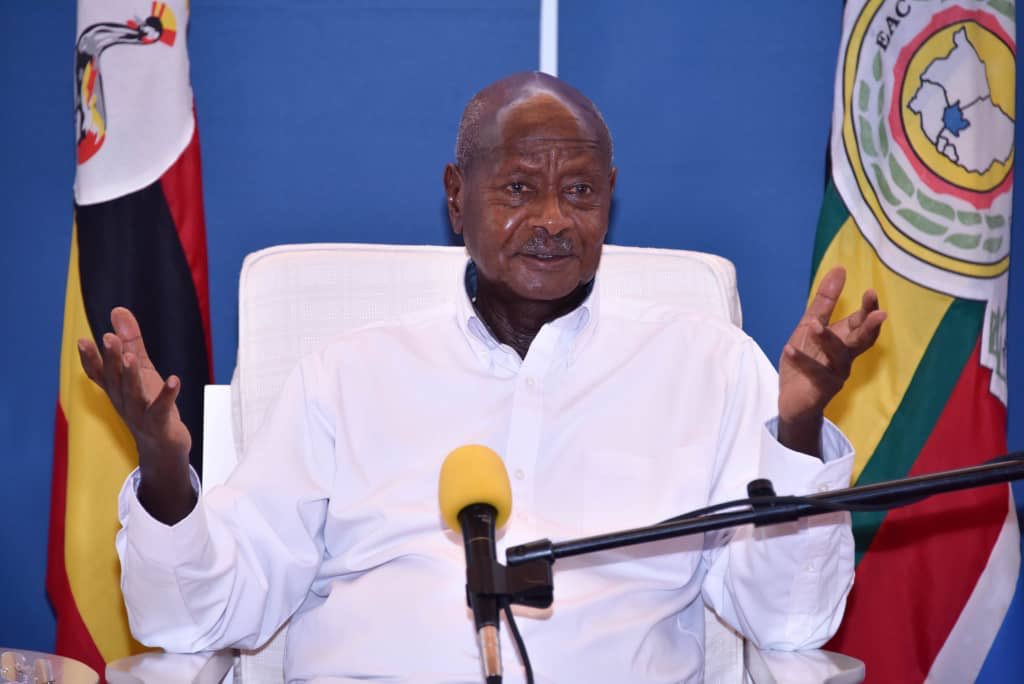
Nowhere is this phenomenon more evident than in Uganda, where President Yoweri Tibuhaburwa Museveni—who once proclaimed himself a chameleon—has governed for forty years (1986–2026) through successive ideological transformations that systematically abandon original commitments while maintaining a rhetoric of liberation.
Defining political chameleonism
Political chameleonism is defined here as the deliberate, strategic adaptation of political positions, ideological commitments, and policy promises not in response to genuine conviction or democratic accountability, but as a survival mechanism for the retention and consolidation of executive power.
Its characteristics include:
● Ideological fluidity without accountability – Shifting positions without public explanation or admission of error
● Promise abandonment with impunity – Campaign commitments systematically discarded once power is secured
● Constitutional manipulation–altering fundamental rules to advantage incumbency
● Discursive appropriation–maintaining liberation rhetoric while implementing counter-liberation policies
● Opposition absorption–co-opting potential challengers through patronage rather than policy consensus
Unlike principled political evolution or pragmatic adaptation to new evidence, political chameleonism is characterised by bad faith—the chameleon knows transformation has occurred but denies it, demanding that observers accept the new colour as original.
The NRM’s ten-point programme and its abandonment
The National Resistance Movement (NRM) ascended to power on January 26, 1986, with a ten-point programme that promised:
●Restoration of democracy
●Restoration of security of person and property
●Consolidation of national unity and elimination of sectarianism
●Defence of national independence
●Building of an independent, integrated, self-sustaining economy
●Restoration and improvement of social services
●Elimination of corruption and misuse of power
●Redressing historical injustices
●Cooperation with other African countries
●Establishment of a mixed economy
As I have documented in previous work (Oweyegha-Afunaduula, 2019, 2021, 2023), Uganda’s political trajectory has systematically inverted each of these promises.
Where democracy was promised, Uganda has experienced what scholars term “electoral authoritarianism” (Levitsky & Way, 2010) or “deceptive democracy” (Brownlee, 2007).
Where a self-sustaining economy was promised, Uganda has experienced what I have called the “povertisation of development”—growth without structural transformation, benefiting primarily those connected to the regime.
President Yoweri Tibuhaburwa Museveni – the self-proclaimed chameleon
In his reflective work, The Mustard Seed (Museveni, 1997), Museveni articulated a vision of democracy, freedom, and justice rooted in his interpretation of the liberation struggle. Yet the Uganda over which he presides bears little resemblance to that vision.
The tripartite Uganda’s political future: Museveni, Mao, and Muhoozi
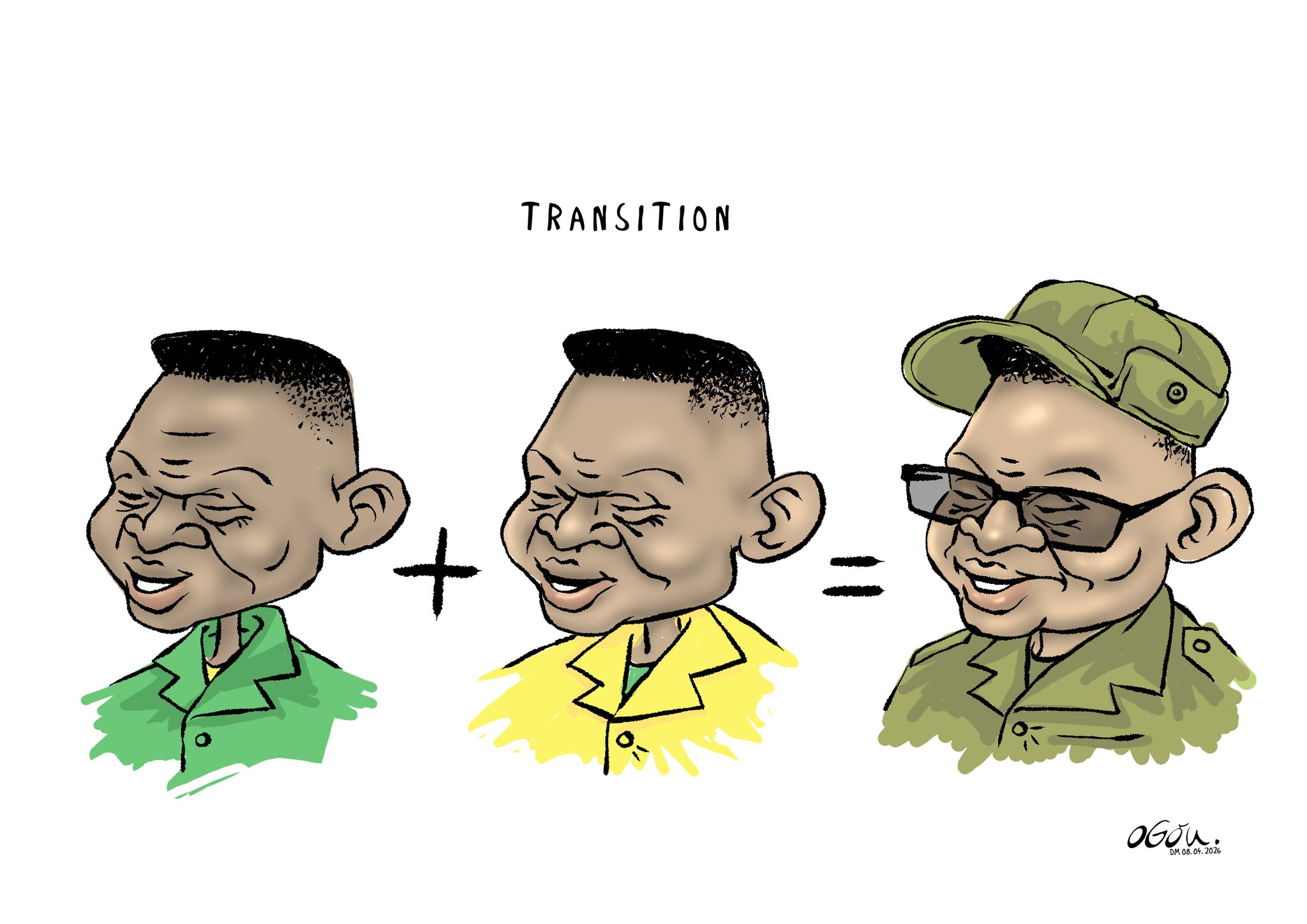
Uganda’s political future appears structured around three figures: Tibuhaburwa Museveni (the incumbent), Norbert Mao (the co-opted opposition leader), and Muhoozi Kainerugaba (the designated successor).
This tripartite arrangement suggests a managed transition that preserves regime continuity while creating the appearance of political evolution.
The author, Oweyegha-Afunaduula, is a conservation biologist at Center for Critical Thinking and Alternative Analysis.
Discover more from tndNews, Uganda
Subscribe to get the latest posts sent to your email.