In the annals of Uganda’s political evolution, few phenomena are as profoundly destabilising as the systematic weaponisation of money against the very people the state is meant to protect.
The National Resistance Movement (NRM), under the leadership of President Tibuhaburwa Museveni, has perfected the art of using financial resources not as a tool for collective emancipation, but as a weapon to disempower the poor, weaken institutional integrity, and render the vulnerable even more susceptible to exploitation.
The recent events at the Kyankwanzi NRM caucus meeting serve as a microcosm of this larger malady. There, in a spectacle that defied the President’s own clarion call for “Zero Tolerance to Corruption,” each newly elected Member of Parliament—including Independents—was gifted Uganda Shillings 100 million .
The President reportedly handed out shs20 million in cash immediately, with the balance of shs80 million promised later, amounting to a staggering total payout of more than shs40 billion.
This gesture, cloaked in the language of “facilitation” for parliamentary responsibilities, represents a fundamental betrayal of the Ugandan populace.
Money has become the primary political weapon in Uganda, used to buy loyalty, paralyse oversight institutions like Parliament, and deepen the poverty of ordinary citizens.
When the state’s resources are deployed to disconnect representatives from their impoverished constituents, governance ceases to serve the public good and instead becomes a mechanism for elite consolidation.
The loyaltisation of leadership: Buying consciences at Kyankwanzi
The Kyankwanzi payouts were not an isolated incident of generosity; they were a calculated political transaction. Historical precedent supports this interpretation. In 2005, legislators each received shs5 million during the controversial vote to remove presidential term limits—an episode many analysts cite as the beginning of declining institutional integrity in Parliament.
In November 2017, as the nation debated the removal of the presidential age limit under Article 102(b), MPs were given shs29 million each for “consultations.”
The pattern is unmistakable: whenever the executive requires the legislature to surrender its constitutional autonomy, the treasury opens.
What makes the 2026 Kyankwanzi disbursement particularly egregious is its timing and juxtaposition. According to reports from the retreat, President Museveni stood before the same MPs and warned them against corruption, stating, “If there is corruption in Parliament, how do you control others? If the overseers are also sick, who will oversee you? This is suicide and must not be tolerated.”
Minutes later, he announced the shs100 million handout.
This is what I term performative anti-corruption—a theatre where the leader condemns the disease while simultaneously administering the pathogen.
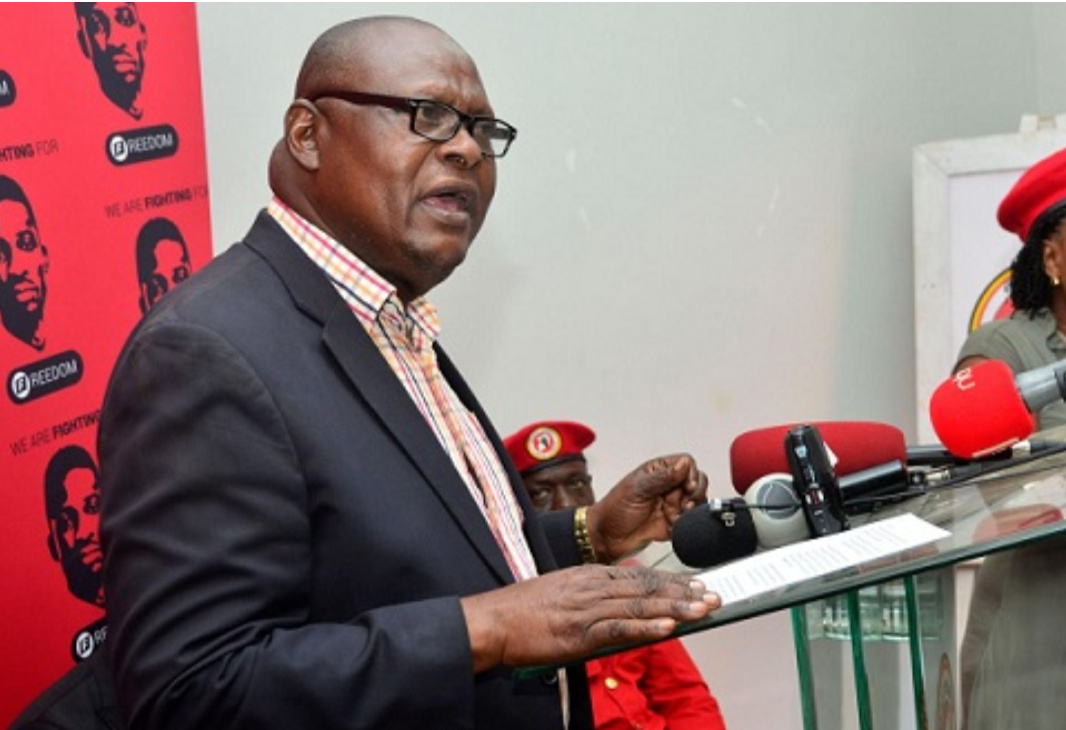
As Mr Marlon Agaba, the Executive Director of the Anti-Corruption Coalition Uganda (ACCU), observed, most MPs spent between shs900 million and shs1 billion to get elected. “Many are now indebted and vulnerable. While this may appear as a kind gesture, it is not sustainable and raises questions if public funds are involved.”
An indebted MP is a captured MP. When the President becomes the financier, loyalty flows upward, not downward to the voters swimming in an increasingly deep sea of poverty.
The Leader of the Opposition in Parliament, Mr Joel Ssenyonyi, correctly questioned the impact on legislative independence: “It is not the first time the President has given MPs money. How do you expect them to objectively scrutinise laws after receiving such funds?”
The answer is that they cannot. Political buying is political corruption, and it disconnects the representative from the represented.
The separation of representatives from constituents
Once an MP’s financial survival depends on the President’s discretionary “donations”—facilitated by a Presidency donation budget estimated at shs163 billion —their commitment to constituents deteriorates. The poor, weak, and vulnerable who elected these representatives find themselves orphaned in Parliament.
Their issues—collapsing healthcare, failing schools, absent roads, and punishing taxes—take a backseat to the Executive’s legislative agenda.
The constituents, meanwhile, are increasingly turned into beggars. “President Help us” reverberates from all corners of Uganda, from the cattle corridors of Karamoja to the banana plantations of the Southwest. This is not accidental.
By creating the impression that he alone holds the nation’s purse strings, the President cultivates a dependency syndrome that undermines local initiative and collective agency. Communities that once organised for mutual aid now queue for presidential handouts.
This weaponisation of money ensures that the poor remain politically impotent. A hungry population cannot agitate for accountability. A desperate population cannot demand structural change. And a population that must beg cannot resist.
Poverty programmes or patronage pipelines?
The NRM government has launched numerous poverty alleviation programmes: Emyooga, Operation Wealth Creation (OWC), and the Parish Development Model (PDM). On paper, these initiatives target individual households and specialised groups—boda boda riders, women enterprises, carpenters, tailors, mechanics, performing artists, and fishermen.
Each Savings and Credit Cooperative Organisation (SACCO) under Emyooga receives Shs30 million as seed capital . The Ministry of Finance spends over shs600 billion annually on special grants aimed at fighting poverty .
Yet, the evidence suggests these programmes are designed to fail—or at least to underperform—because their architecture is fundamentally flawed. They target individuals, not communities.
The underlying assumption is the discredited trickle-down theory: if targeted individuals become prosperous, their wealth will permeate the community. This has not happened. Instead, communities are being supersized into poverty.
Why? Because corruption has penetrated these projects at every level. The diversion of iron sheets meant for the vulnerable Karamoja region—a scandal that led to the conviction and imprisonment of former Minister Agnes Nandutu—is a paradigmatic example.
Court records showed that iron sheets procured through a shs39.94 billion supplementary budget under the Office of the Prime Minister, intended for women, the elderly, and reformed youth warriors, were diverted to politicians.
Only 1,000 of 10,000 iron sheets earmarked for the programme launch in Moroto reached the intended beneficiaries.
If such brazen diversion occurs with tangible goods like iron sheets, what happens to cash disbursed through SACCOs and PDM accounts? The answer is predictable. SACCOs, which the NRM government touted as replacements for the dismantled cooperative societies and unions, are instead impoverishing their members.
Without the robust oversight, democratic governance, and collective education that characterised traditional cooperatives, these SACCOs become vehicles for elite capture. Loans are disbursed to connected individuals. Savings are mismanaged. Members sink deeper into debt.
The irony of anti-corruption rhetoric
The Nandutu conviction is instructive. While the court sentenced the former minister to four years in prison and barred her from public office for 10 years, the systemic corruption that enabled the diversion remains intact.
One minister jailed does no cleansing. The same political economy that funnelled relief iron sheets to politicians is the one that distributes shs100 million to MPs.
President Museveni’s “Zero Tolerance to Corruption” speech at Kyankwanzi is thus a masterclass in political irony. He told MPs not to take loans from moneylenders and commercial banks because such practices expose them to undue influence yet he offered them a loan from the Presidency—with no repayment terms, only loyalty clauses. The message is clear: do not be indebted to anyone except me.
This contradiction is not lost on Ugandans. How can the same leader who gives shs40 billion to MPs claim to fight corruption? The answer is that the fight is selective.
Corruption that challenges the centre is punished. Corruption that serves the centre is rewarded. Political buying is not an aberration of the NRM system; it is the system.
The question is whether Ugandans will continue to accept the weaponisation of money or whether they will demand that the state’s resources serve the many, not the few.
History suggests that no ruling elite voluntarily surrenders its weapons. They must be disarmed by an organised, conscious, and determined citizenry.
Professor Oweyegha-Afunaduula is a distinguished academic and commentator on Ugandan political economy, governance, and development.
Discover more from tndNews, Uganda
Subscribe to get the latest posts sent to your email.