When we speak of sterile, exploitative, consumptive development in Uganda, we refer to a system of accumulation that produces nothing of lasting value for the majority while extracting everything from them.
This is development that consumes people, communities, and nature without regenerating them—hence “sterile.” It is a model that treats Uganda’s resources, both human and natural, as expendable inputs to be exhausted for the benefit of a tiny elite.
Primitive accumulation and theft from the poor
The foundation of this system lies in what Karl Marx termed “primitive accumulation”—the original theft that precedes capitalist exploitation. In Uganda’s case, this is not a historical phenomenon confined to colonialism but an ongoing process.
The deceptively rich have acquired their wealth not through hard work or productive enterprise but through the systematic theft of public funds. As we have documented elsewhere, Uganda loses approximately shs10 trillion annually to corruption. This is not petty crime but organised plunder orchestrated by men and women of power who occupy state institutions.
These primitive accumulators are indistinguishable from the political class. They use state security and surveillance institutions not to protect citizens but to shield themselves from the wrath of the people and to safeguard their loot.
The Uganda People’s Defence Forces (UPDF), the police, and intelligence agencies are increasingly deployed to protect elite interests rather than national sovereignty.
The politics of self-service
The political process has been captured to serve these interests. Laws and policies are crafted not for national development but to facilitate continued accumulation by the ruling elite. The Mining and Minerals Act, 2022, for instance, prioritises state (elite) interests over local land tenure systems, particularly customary ownership.
Article 244 of the Constitution vests all mineral rights in the state, granting sweeping control over resources at the expense of landowners and communities.
Yet those in power pretend to be committed to freedom, democracy, and justice while actively undermining these virtues. They speak of transformation and progress even as they reinvent the colonial economy—extracting raw materials, exporting them unprocessed, and importing finished goods.
Uganda continues to export raw coffee, minerals, and cheap labour while richer countries sell finished goods and control the rules of trade.
The assault on identity
A particularly insidious aspect of this system is its systematic undermining of the various identities of the people and their communities. The powerful argue that identity does not matter—only interests do.
But this is deception. By eroding social identity, ecological identity, spiritual identity, economic identity, environmental identity, cultural identity, lingual identity, moral identity, intellectual identity, ecosystem identity, agroecological identity, and even academic identity, they serve their own interests while destroying the collective identity of Uganda and Ugandans.
This is not an accident. A people without identity cannot organise collective resistance. People who do not know their worth are easier to exploit. When the powerful dismiss identity as irrelevant, they are really saying that the particular identities of ordinary Ugandans must be subordinated to the singular identity of the ruling elite and its interests.
Mechanisms of control: De-intellectualisation, deradicalisation, and depoliticisation
To ensure that people do not express their disapproval, the system has perfected mechanisms of control. De-intellectualisation proceeds through the systematic neglect and underfunding of education, particularly the humanities and social sciences.
Universities have muted these disciplines, silencing critical voices and disconnecting academia from society. Deradicalisation ensures that any questioning of the fundamental order is suppressed before it can take root. Depoliticisation reduces citizens to passive recipients of government programs rather than active shapers of their destiny.
Bantustanisation—the fragmentation of the national space into ethnic enclaves—keeps people divided and focused on localised grievances rather than national questions. And militarisation ensures that any remaining dissent can be crushed.
The military now permeates civilian institutions, with military officers holding key positions from foreign service to ministerial portfolios and government parastatals.
The destruction of social organisation
The system is deliberately destroying clan-based social organisation and the extended family system, which offered obvious economic and social benefits to local communities. In their place, imported blueprints are imposed. The sterile culture of money is emphasised over communal solidarity.
Programs such as Emyooga, the Parish Development Model (PDM), and Operation Wealth Creation (OWC) target individuals rather than whole communities. They are environmentally, ecologically, morally, culturally, and ethically empty. As we have argued elsewhere, these programmes are exercises in futility designed to deceive and mislead millions of citizens.
Alien cultures: Mafia and deep state
To enhance their own sovereignty and liberation from the people, the ruling elite have introduced alien cultures. The Mafia culture—networks of power that operate outside formal institutions to serve private interests—now permeates Ugandan politics and business.
Gold, now Uganda’s largest export, is controlled by such networks. Gold-producing regions such as Busoga and Karamoja receive no benefits from this extraction—the situation is worse than under colonial exploitation.
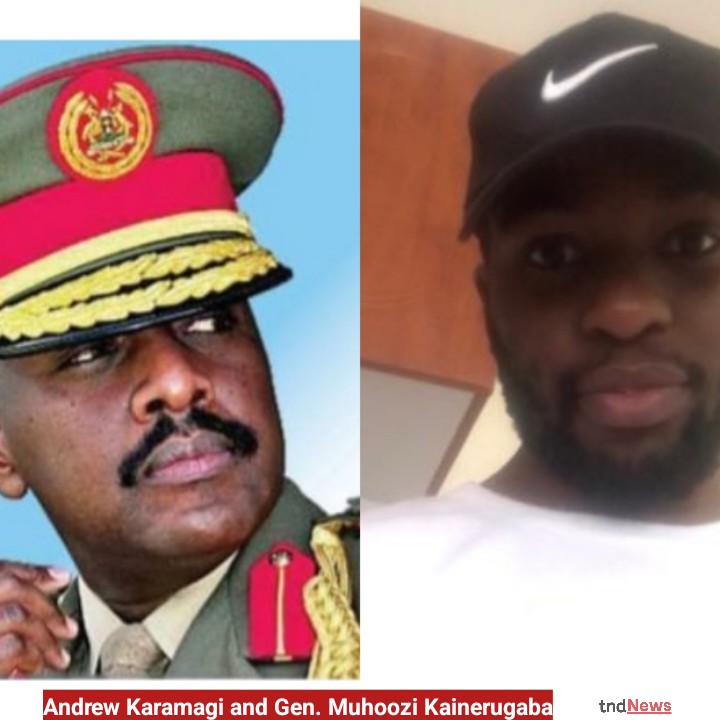
The deep state—security and bureaucratic apparatuses that operate beyond democratic control—protects these arrangements. General Muhoozi Kainerugaba’s rapid ascent within the military and his political manoeuvrings exemplify the blurring of lines between state, party, and family interests.
The Uganda People’s Defence Forces (Amendment) Bill, allowing civilians to be tried in military tribunals, further subverts constitutional order.
Ecodevelopment: A conceptual framework
In contrast to this sterile model, we propose ecodevelopment—an approach that harmonises economic and social objectives with sound environmental management.
Ecodevelopment is not merely “sustainable development” as conventionally understood; it is a fundamental reorientation of how we understand the relationship between human societies and the natural systems that sustain them.
The four dimensions of the environment
Ecodevelopment begins with the recognition that our environment consists of four mutually inclusive, dynamically interconnected, and interacting dimensions:
Ecological-biological dimension
This encompasses the physical environment, ecosystems, biodiversity, and natural resources. It includes the soils, water systems, forests, wetlands, and minerals that form the material basis of all economic activity.
Crucially, it includes the ecosystem services—pollination, water purification, climate regulation, and nutrient cycling—that make human life possible but are invisible to conventional economic accounting.
In Uganda, this dimension is under severe threat. Wetlands are drained for agriculture and industry. Forests are cleared for charcoal and timber. Soils are degraded through continuous cropping without regeneration. Mineral extraction proceeds without regard for environmental consequences.
Socioeconomic dimension
This includes the systems of production, distribution, and consumption; the institutions of economy and governance; and the material conditions of people’s lives. It encompasses employment, income, infrastructure, and technology.
The socioeconomic dimension in Uganda has been captured by elite interests. Production is oriented toward export rather than local needs. Distribution is grossly unequal. Consumption patterns among the elite mimic those of rich countries, while the majority struggle for basic necessities.
Socio-cultural dimension
This comprises the institutions, values, knowledge systems, and practices that shape how communities organise themselves and relate to their environment. It includes clan structures, traditional governance systems, indigenous knowledge, language, and cultural practices.
This dimension is under direct assault. The extended family system, which provided social security and economic cooperation, is being destroyed by individualistic programs. Indigenous knowledge of environmental management is displaced by imported blueprints. Languages and cultural practices are devalued.
Temporal dimension (time)
This is perhaps the most neglected dimension. It encompasses intergenerational equity—the obligation to leave future generations the capacity to meet their needs. It includes the long-term consequences of today’s decisions, the pace of change, and the historical context that shapes present possibilities.
The current development model ignores this dimension entirely. Non-renewable resources are exhausted without provision for the future. Environmental degradation is passed as a cost to coming generations. The long-term consequences of decisions—whether mineral extraction, wetland destruction, or soil mining—are discounted to zero.
Recommendations
Abandon individualistic and disciplinary approaches
The sterile development model is both individualistic in its targeting and disciplinary in its planning. Programs target individuals rather than communities, fragmenting social solidarity.
Planning is done in sectoral silos—agriculture here, health there, environment somewhere else—ignoring the interconnections that actually determine outcomes.
Ecodevelopment requires integrated planning that addresses the whole system. This means moving from projects aimed at individuals to programs that strengthen communities.
It means creating horizontal authority able to overcome sectoral approaches, concerned with all aspects of development while always taking into account the complementarity of various measures.
Restore the humanities and social sciences
The systematic underfunding and marginalisation of humanities and social sciences in Uganda’s universities serves elite interests. These disciplines produce critical thinkers who can question the prevailing order.
They preserve the cultural knowledge and historical understanding that sustain identity. They provide the conceptual tools for understanding complex social-ecological systems.
Ecodevelopment requires one science that integrates natural sciences, social sciences, and humanities. There is a symmetry between the possible contributions of ecology and social anthropology to planning.
Understanding ecosystem dynamics requires understanding human dynamics, and vice versa. The humanities provide the ethical frameworks without which technical solutions become instruments of domination.
Embrace team sciences
The complexity of social-ecological systems cannot be grasped through any single discipline. Ecodevelopment requires multiple forms of collaborative inquiry:
Interdisciplinarity involves integrating knowledge and methods from different disciplines to address common problems. Ecologists and economists, anthropologists and agronomists must work together from the start, not sequentially.
Crossdisciplinarity involves viewing one discipline from the perspective of another. Economists must learn to see what ecology reveals; ecologists must understand economic constraints and incentives.
Transdisciplinarity goes beyond academic disciplines to include the knowledge and perspectives of communities themselves. Local farmers know their soils, their microclimates, and their crop varieties in ways that outside experts cannot match.
Indigenous knowledge of environmental management embodies generations of experimentation and adaptation. Transdisciplinarity treats communities as partners in inquiry, not objects of study.
Extradisciplinarity recognises that some questions cannot be contained within any disciplinary framework. They require new ways of thinking that emerge from engagement with real-world problems. The climate crisis, biodiversity loss, and social disintegration are such questions. They demand that we think beyond established categories.
The benefits of team sciences for ecodevelopment are clear. They produce a more complete understanding of complex problems. They generate solutions that work across multiple dimensions. They build consensus among diverse stakeholders. And they develop the intellectual flexibility needed to adapt to changing conditions.
Strengthen community institutions
Ecodevelopment cannot be imposed from above; it must be built from below. This requires strengthening the institutions through which communities manage their affairs and relate to their environment. Clan structures, cooperative societies, local governance bodies, and customary land tenure systems should be supported, not destroyed.
The principle should be subsidiarity: decisions should be taken at the most local level consistent with effectiveness. Communities should participate in working out ecodevelopment strategies—in defining concrete needs, identifying productive potentialities of their ecosystems, and organising collective effort for their utilization.
Ensure that benefits stay with communities
A fundamental requirement of ecodevelopment is that the populations who work for it should not be deprived of its results to the benefit of intermediaries standing between local communities and national or international markets.
This means ensuring that mineral wealth benefits mining communities. It means supporting local processing of agricultural products so that value addition occurs where production happens. It means cooperative ownership of enterprises so that profits stay in communities.
Transform education
Ecodevelopment requires education that prepares people for participatory planning and management. People’s attention must be drawn simultaneously to the notion of environment and the ecological aspects of development.
Education should foster respect for nature, understanding of ecological limits, and appreciation of cultural diversity. It should develop the critical thinking skills needed to evaluate development proposals and hold leaders accountable.
Address the structural drivers of the current crisis.
None of the above is possible without confronting the power structures that sustain the sterile, exploitative model.
By Prof. Oweyegha-Afunaduula | Centre for Critical Thinking and Alternative Analysis
Discover more from tndNews, Uganda
Subscribe to get the latest posts sent to your email.