The ongoing anti-corruption campaign led by Uganda’s Chief of Defence Forces, Muhoozi Kainerugaba, has generated significant public debate.
While it is being presented as a serious effort to fight graft and restore accountability, many Ugandans view it with much suspicion. It is a calculated farce, meant to dupe Ugandans, while the real thieves continue to plunder the nation with impunity.
To critics, the campaign is less about ending corruption and more about consolidating political power around the ruling family and shaping succession politics within the National Resistance Movement (NRM).
Corruption in Uganda is not simply the result of individual misconduct. It is deeply rooted in the political system that has developed under President Yoweri Museveni over nearly four decades in power.
The NRM system has long relied on patronage, political loyalty, and cronyism to maintain control. Government positions, public contracts, and access to state resources are often distributed based on loyalty to the ruling establishment rather than merit or accountability.
In such a system, corruption becomes part of the structure of governance itself. This is why many Ugandans are skeptical of sudden anti-corruption campaigns led by figures who are themselves central beneficiaries of the system.
Critics argue that corruption in Uganda has persisted not because the government lacks institutions to fight it, but because there has never been genuine political will to dismantle the networks that sustain regime power.
Uganda already has institutions responsible for combating corruption, including the Auditor General (AG), Inspector General of Government (IGG), the Criminal Investigations Directorate (CID), the Directorate of Public Prosecutions (DPP), Parliament, and the judiciary.
The increasing role of the military in civilian political affairs raises serious constitutional concerns. Muhoozi’s public involvement in anti-corruption efforts is therefore viewed by many as part of a broader strategy to expand military influence over civilian governance while building his political image as a reformer.
The timing of the campaign is also important. Muhoozi has increasingly become a central figure in discussions about Uganda’s political future. His growing public profile, political messaging, and influence within state institutions have fueled perceptions that he is being prepared to succeed his father.
In this context, anti-corruption rhetoric becomes politically useful and expedient. It allows the regime to present Muhoozi as a decisive leader while potentially targeting rivals within the ruling elite.
Ugandans have witnessed similar anti-corruption promises before. Several major scandals involving politically connected figures have generated public outrage but resulted in little accountability. The Temangalo land scandal involving Amama Mbabazi exposed how political influence could shield powerful individuals from consequences despite parliamentary investigations and evidence of misconduct.
Other controversies involving senior figures such as Jim Muhwezi, Michael Mawanda, Sam Kuteesa and Caled Akandwanaho (Salim Saleh) reinforced the perception that corruption investigations are often selective. Smaller officials may be punished, but politically connected elites frequently escape serious consequences. This selective accountability has created widespread public cynicism.
President Museveni himself has repeatedly condemned corruption in speeches while presiding over a system where corruption continues to flourish. His reported remarks to former IGG Betty Kamya reflected the contradictions within the regime’s anti-corruption approach. Aggressively dismantling corruption networks would threaten the patronage structures that help sustain political control.
The failure of institutions to hold powerful individuals accountable reflects what many analysts describe as state capture. Institutions that should function independently increasingly operate under political influence.
Parliament has often failed to effectively check executive power. The judiciary faces accusations of political interference, while law enforcement agencies are frequently accused of targeting opposition figures more aggressively than regime insiders accused of corruption.
Similarly, the AG, DPP, CID, and IGG have struggled to act independently in politically sensitive cases. Investigations rarely lead to meaningful convictions involving powerful figures connected to the ruling establishment.
This has created a culture of impunity in which elites believe they are beyond the reach of the law.
The media has also faced challenges in fulfilling its watchdog role. Journalists investigating corruption frequently encounter intimidation, threats, arrests, and economic pressure.
Many media organizations depend heavily on state advertising and political connections, making independent reporting increasingly difficult. As a result, investigative journalism has weakened, and corruption scandals often fade without sustained public scrutiny.
Civil society organizations and activists continue to advocate for accountability and democratic governance, but they operate in an increasingly hostile environment. Activists face surveillance, harassment, arrests, and accusations of serving foreign interests.
Civic initiatives such as Agora have attempted to encourage public participation and political awareness, especially among young Ugandans, but shrinking civic space has limited their effectiveness.
The consequences for Uganda’s democracy are serious. The militarization of politics, weakening of independent institutions, and concentration of power within one family threaten constitutional governance and democratic accountability.
The 12th Parliament risks becoming even more subordinate to executive and military influence if current trends continue.
How do we move forward? First, Ugandans must reject the militarization of anti- corruption. The UPDF has no constitutional mandate to investigate civilian corruption, and its involvement is a dangerous precedent that threatens to turn Uganda into a military state.
Second, civil society, activists, and the diaspora must continue building alternative accountability mechanisms – digital platforms, international advocacy, and grassroots mobilization that bypass captured institutions.
Third, the international community must impose targeted sanctions not just on mid-level officials but on the family members and enablers at the top of the kleptocracy.
Fourth, Ugandans must demand the operational independence of the AG, IGG, DPP, and judiciary, backed by constitutional reforms that remove these offices from presidential patronage.
Finally, and most importantly, Ugandans must see through the smokescreen. Muhoozi’s anti-corruption campaign is not about justice; it is about succession. It is about eliminating rivals, intimidating Parliament, and conditioning the public to accept military intervention in civilian affairs.
The real corruption, the oil theft, the land grabs, the defense contract kickbacks, the classified presidential expenditures, will never be investigated by the CDF because it is the family business. Ugandans deserve better than a soap opera of selective arrests and military theatrics.
They deserve a system where the law applies equally to the general’s son and the street vendor. They deserve institutions that work for the people, not for the dynasty. And they deserve leaders who understand that you cannot fight corruption with the very tools of corruption itself.
The smokescreen is thick, but the fire is real. And it is burning Uganda to the ground.
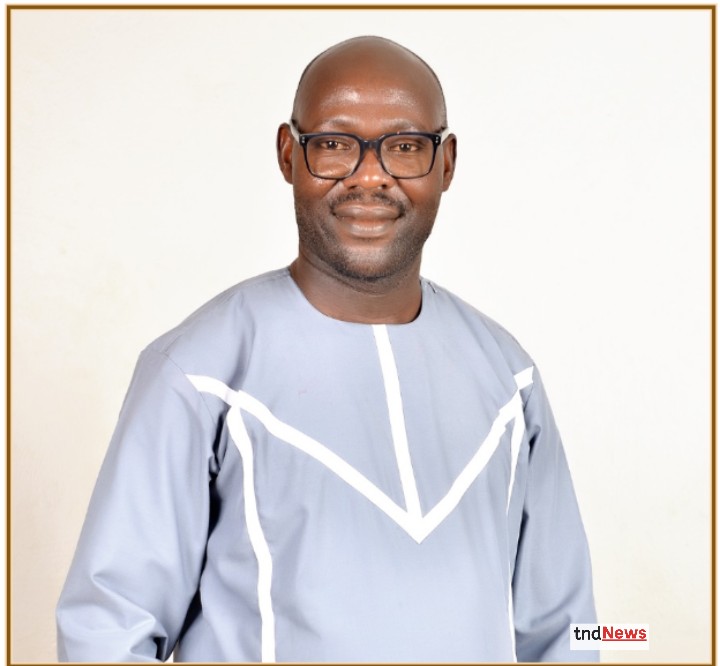
Joe WhalouXhaso is a political analyst and human rights activist
Discover more from tndNews, Uganda
Subscribe to get the latest posts sent to your email.