The Uganda Peoples’ Defence Forces (UPDF) Director of Women Affairs, Brigadier General Charity Bainababo, has called for greater inclusion of women in conflict resolution processes, emphasising their critical role in building sustainable peace.
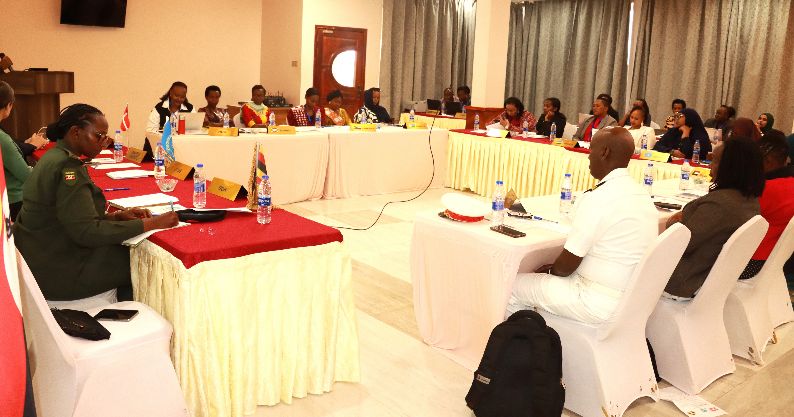
Speaking at the opening of the Women in Mediation Course in Entebbe, Brig Gen Bainababo observed that although women are disproportionately affected by conflict, they remain largely excluded from formal peace processes.
 “We are aware that women are most affected or impacted by conflict but remain excluded from resolving these conflicts yet evidence has shown that when women are included, peace agreements are more likely to be reached and peace is more sustainable,” Charity said.
She described the course as a strategic cross-border initiative aimed at strengthening regional security through inclusivity and professionalism.
“This is not merely a training programme, but a cross-border strategic initiative that reflects a collective commitment to building a professional, inclusive, and mission-ready force capable of responding to complex contemporary security challenges,” she added.
Brig Gen Bainababo acknowledged the ongoing regional and global efforts to promote women’s participation in peacebuilding but stressed that significant gaps remain, particularly in formal mediation roles.
She urged participants to use the training to build networks and enhance their capacity to influence peace processes at national, regional, and global levels.
“Such networks are essential for sharing experiences, supporting each other’s initiatives, and ensuring that women’s voices are effectively represented,” she noted.
Danish Ambassador to Uganda, Signe Winding Albjerg, echoed concerns over the underrepresentation of women in peace processes despite longstanding international commitments.
“We are here today for very positive reasons but also for critical reasons. Despite strong and long-standing commitments, women remain under-represented in peace processes globally but also here in the East African region,” she said.
Ambassador Albjerg highlighted the importance of meaningful participation, citing examples from countries such as South Sudan and Somalia, where women’s networks have sustained community dialogue even when formal negotiations stalled.
“When women are meaningfully included at negotiation tables, the agenda moves forward and reconciliation becomes more achievable,” she said.
She reaffirmed Denmark’s support for initiatives that promote women’s inclusion in mediation through the Danish Peace and Stabilisation Programme.
The EASF Chief of Joint Staff, Brigadier General Stephen Kashure, underscored the importance of mediation in addressing the region’s complex and evolving security challenges.
He said that modern conflicts require multidimensional approaches that integrate prevention, management, and long-term transformation.
“Mediation stands out as a vital tool for peaceful resolution, drawing on skills in negotiation, strategic communication, stakeholder engagement, and trust building. Women have a key role to play in fostering that trust,” he said.
Brig Gen Kashure highlighted the need to elevate women into decision-making roles within peace processes, noting that the course is designed to equip participants with practical skills for immediate application.
“We have active conflicts in the region. You won’t be surprised if you are called upon immediately after this course to be part of a team to go and participate in mediation or negotiation,” he said.
The Head of the Civilian Component of the Eastern Africa Standby Force (EASF), Monalisa Kakono Noowe, expressed appreciation to the Government of Uganda for hosting the training and to the Kingdom of Denmark for its continued support.
“Mediation emerges as an important aspect in EASF, and we take it very seriously that women must be included. I thank you for supporting the civilian component and making sure this workshop happens,” she said.
She reiterated EASF’s commitment to integrating women into mediation and peacekeeping efforts.
Also read: UPDF human resource officers told ‘don’t be afraid to do what is right’
The Senior Civilian Advisor to the EASF, Ken Albert, commended the Government of Denmark for financing the workshop, describing the country as a value-driven nation committed to equality, social solidarity, and the empowerment of women.
He said that the training seeks to increase women’s direct participation in negotiations, link formal and informal peace processes, and integrate gender perspectives in peace agreements.
“The next 10 days build on the planning efforts made in the past towards ensuring full inclusion of women’s voices in mediation efforts at all levels, whether at the state level, the regional level, or indeed at the community level in the context of peace and security,” he said.
Discover more from tndNews, Uganda
Subscribe to get the latest posts sent to your email.