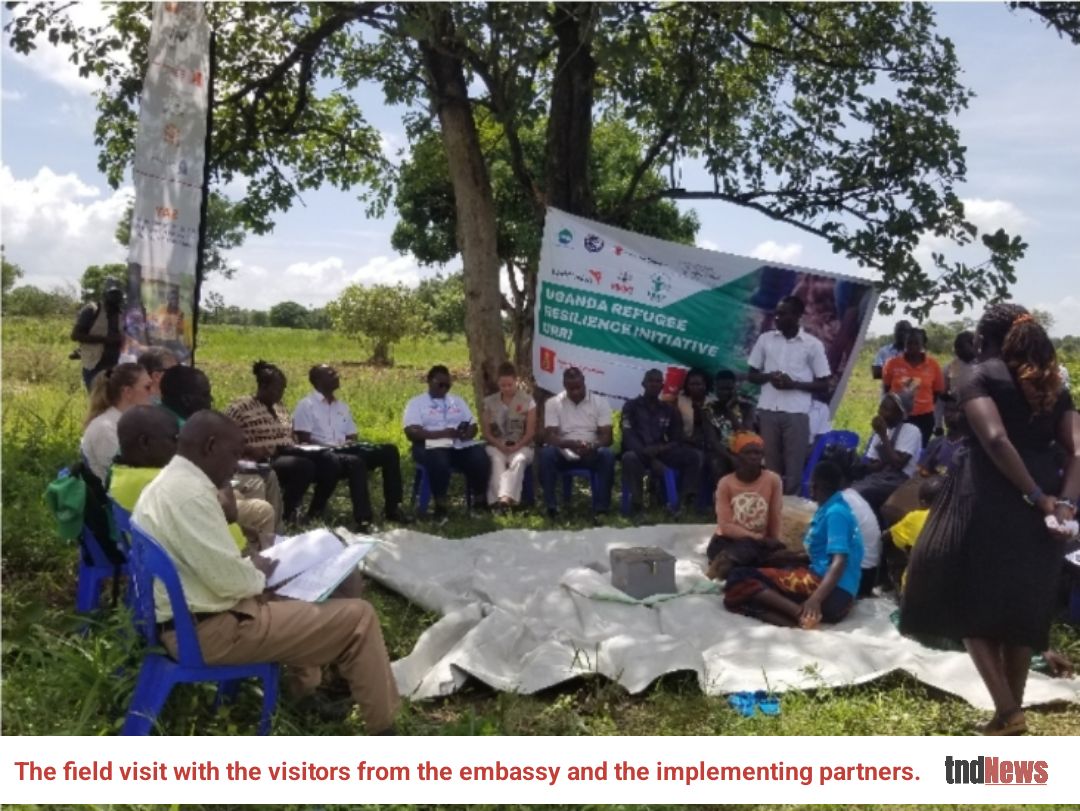
Youth in Adjumani district are beginning to transform their lives through skills, training, and financial opportunities provided under the Uganda Refugee Resilience Initiative (URRI) project.
URRI is a multi-partner program designed to strengthen the livelihoods of both refugees and host communities.
Noel Alabi, Program Manager at World Vision, overseeing the Adjumani and Lamwo districts, highlighted the organisation’s role in driving sustainable change.
“As World Vision, we bring expertise and lead the implementation of the climate-smart agriculture component together with the sustainable management of the environment and natural resources. Those two components we deliver together with YSAT. So, we have so far delivered one year of this program.”
“After finalising the first year, we see positive signs of transformation already starting to happen with the participants, especially in the areas of financial inclusion, sustainable climate smart agriculture where the farmers are starting to replicate the climate smart practices, but also in the areas of gender, especially joint planning and decision making at family and group levels,” he explained.
For many young beneficiaries, the project has been life-changing. Brenda Pasi, a participant from Ofua sub-ounty, shared her journey.
“Through the support I got from the Danish Royal Embassy when I joined the group through URRI, they gave us many trainings. This made me set up my own garden where I plant vegetables like eggplants and tomatoes. When I sell them, I use the money to pay my school fees and buy scholastic materials.”
Last year, Pasi bought a goat with the money she made from vegetables.
“I got shs500,000 and this year I’m having shs600.000 in my account. And the money that I got from vegetables, I’m able to buy an oven where I bake different kinds of breads like queen cakes, kababs, and other types of breads.”

Another beneficiary, Maridio University, emphasised the importance of financial access in improving livelihoods.
“I got a loan,” she said, adding: “And we want to thank the government of Denmark who are supporting us and we want more support from them so that the young ones who can not access money can also help themselves.”
Leaders note that challenges remain, particularly in balancing support between refugees and host communities.
Abudal Rhamandan, the Settlement Commandant in Adjumani District, explained that the refugees are getting 35% and the host communities 65%.
“When you look at the population of the refugees and the host communities, we are almost going past the number of the host communities as refugees. So, to me the intervention should be 50-50 so that we shall have no issues but peaceful coexistence will be spread out.”
On the issue of food reduction for the refugees, he said it has greatly impacted their lives. A good number of them are not getting food assistance. They struggle for their own food, their own livelihood.
“But sometimes they are limited by the resources. They cannot be able to get land, hire land, or have money for hiring the land. They want to do business; the market is not there.”
“If they are empowered, they will be standing on their own and support themselves,” Abudal noted.
Government representatives have also called for continued collaboration to close existing gaps. Obumai Simon Peter, Assistant Resident District Commissioner of Adjumani, said there are other opportunities because the gaps have been identified.
The refugees, he said, are no longer friends but brothers, pledging continued support. “It’s not that the government is doing nothing. We are doing what we can. But because of the open policy which also has its challenges, more refugees are still coming.”
Also read: Relief amid strain: MTI recruits 154 health workers in Adjumani post layoffs
The Nuri and the Uri project are addressing some of those gaps, he said.
“We are receiving new arrivals. So, some of these things are to address people who have just come, the ones who missed the Nuri and now they are benefiting from”
 Chairperson of the youth group in one of their garden for green vegetables.
Despite the challenges, the URRI project continues to offer hope, equipping young people in Adjumani with practical skills, financial knowledge, and opportunities to become self-reliant.
As more youths embrace climate-smart agriculture and entrepreneurship, the district is witnessing the early signs of a more resilient and empowered generation.
Discover more from tndNews, Uganda
Subscribe to get the latest posts sent to your email.