

A new initiative aimed at strengthening cultural identity, spiritual well-being, and social cohesion in Uganda is seeking government support for the establishment of a formal Tribal Chaplaincy framework across the country among cultural institutions.
Uganda, known for its rich mosaic of tribes and cultural institutions, continues to grapple with social challenges, including erosion of cultural values, limited access to structured pastoral care, and rising tensions within communities.
Proponents of the initiative argue that a Tribal Chaplaincy system would provide an organised framework for spiritual, psychosocial, and cultural support within tribal settings.
Speaking about the concept, Pastor Moses Phiri, Country Director of Overland Mission Zambia and a promoter of Tribal Chaplaincy, said the initiative aligns with Uganda’s Vision 2040 and the National Development Plan, both of which emphasise social cohesion, cultural preservation, and community resilience.
He noted that despite Uganda’s deep cultural diversity, there is currently no formalised chaplaincy structure specifically designed to operate within tribal contexts.
“Many communities lack structured pastoral care systems tailored to their cultural realities. This has contributed to weakening cultural identity and moral values, limited psychosocial support for vulnerable groups, and, in some cases, escalation of tribal misunderstandings and conflicts,” he explained.
The concept also highlights insufficient integration of cultural heritage into national development efforts as a key gap the initiative seeks to address.
The overarching goal of the proposed Tribal Chaplaincy framework is to strengthen cultural identity, spiritual well-being, and social cohesion in Uganda.
The framework is designed to complement, rather than replace, existing cultural and religious institutions by embedding trained chaplains within recognised tribal structures.
According to Moses, the proposed activities under the proposal include collaboration with cultural institutions, religious bodies, and government agencies, particularly the Ministry of Gender, Labour and Social Development through its Department of Culture and Family Affairs.
Capacity building will form a central component of the implementation strategy, ensuring that chaplains are equipped with skills in pastoral care, counselling, and peacebuilding.
The Resident District Commissioner of Adjumani, Swaib Toko, said the introduction of chaplaincy will play a key role in strengthening and preserving African cultural values.
He noted that before the arrival of the British, African communities lived in unity, but colonial boundaries later divided them. According to Toko, the new development signals a return to togetherness and urged cultural leaders to embrace cooperation.
“Before the coming of the British, Africans were united. The British later created boundaries, but I am now seeing unity returning. I want you to begin working together as cultural leaders,” Toko said.
He further observed that previous cultural institutions collapsed and were eventually abolished by the government largely because they lacked a strong spiritual foundation.
At the time, he added, spirituality often deepened divisions instead of fostering cohesion. He commended the current initiative, saying it is helping to bridge gaps, promote unity, and restore moral values within communities.
Meanwhile, Drici Sunday Phillip, the Secretary of the Lopirigo of Madi in South Sudan, welcomed the initiative, describing it as a long-awaited step toward uniting the Madi people across borders.
“This is an initiative we have long been looking forward to, where we can unite like this and strengthen our cultural institutions,” he said, noting that it brings together the Madi of Uganda and those in South Sudan.
Prince David Emot, the Minister for Information and Communication Technology in the Iteso Kingdom and representative of the Emorimor in South Africa, said he established contact with the Overland Mission, which has since trained chaplains within the kingdom.
“We invited the Overland Mission to train chaplains in the Teso Kingdom, including in parts of Kenya, and we are overwhelmed by the vision of the mission,” Prince David said.
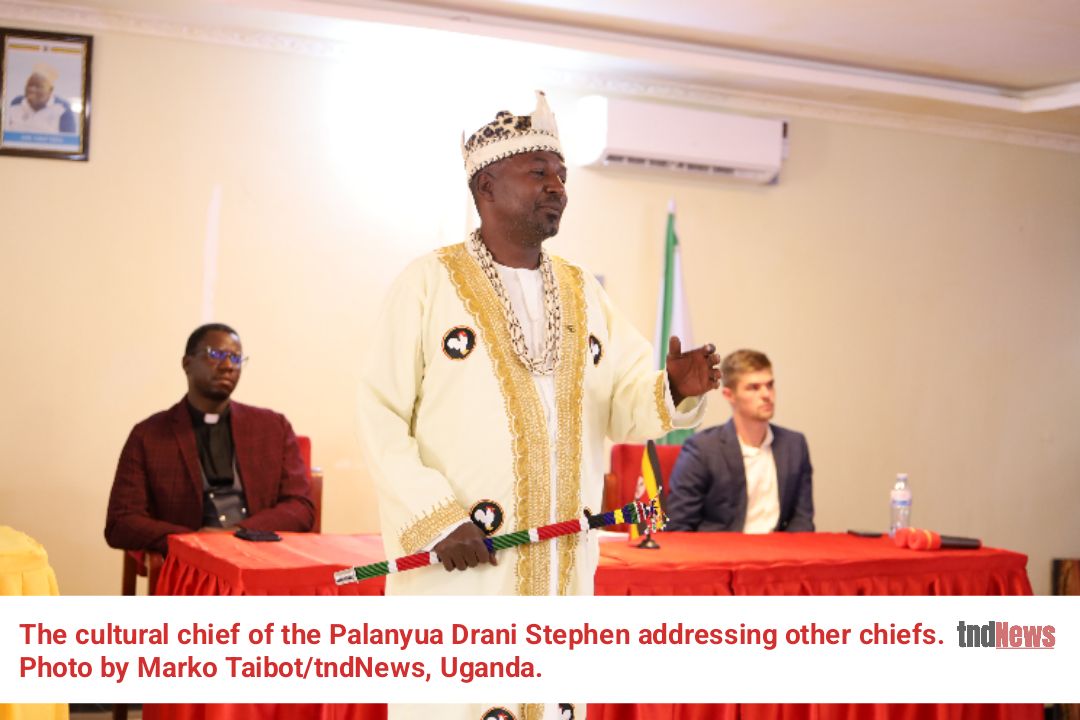
The Cultural Chief of Palanyua, Stephen Drani Kongoro, said he invited the Overland Mission to help reinforce and revitalise the Madi cultural institution so that it remains strong and relevant.
He acknowledged that the institution has in recent years grown weak, but expressed optimism that the partnership will restore its vitality. According to him, the initiative will also help unite the Madi people scattered across different parts of the region by promoting shared cultural values and identity.
“If implemented, the initiative is expected to result in strengthened Christian and cultural identity, improved moral values, and enhanced access to pastoral and psychosocial support among traditional leaders,” Drani added.
Call for government support
The concept note concludes that institutionalising chaplaincy services within tribal communities represents a strategic investment in Uganda’s cultural and social fabric.
By integrating spiritual and psychosocial support into tribal leadership systems, proponents argue, the country can foster unity, preserve heritage, and strengthen resilience among communities.
The initiators are now calling for government partnership and support to ensure the successful implementation of the Tribal Chaplaincy framework nationwide.
Discover more from tndNews, Uganda
Subscribe to get the latest posts sent to your email.

