The Little Sisters of Mary Immaculate of Gulu, a Catholic indigenous congregation with over 550 members, has ventured into commercial coffee farming in a bold move aimed at achieving economic sustainability and combating poverty in northern Uganda.
The congregation has so far received 247,500 coffee seedlings from the Government of Uganda through the Ministry of Agriculture, Animal Industry and Fisheries (MAAIF), out of its request for 1.5 million seedlings.
Founded in 1936 in the Archdiocese of Gulu by Bishop Angelo Negri, the Little Sisters of Mary Immaculate are among northern Uganda’s oldest Catholic religious congregations.
Now, the sisters are turning to coffee farming as both a source of income and a long-term empowerment strategy for their communities.
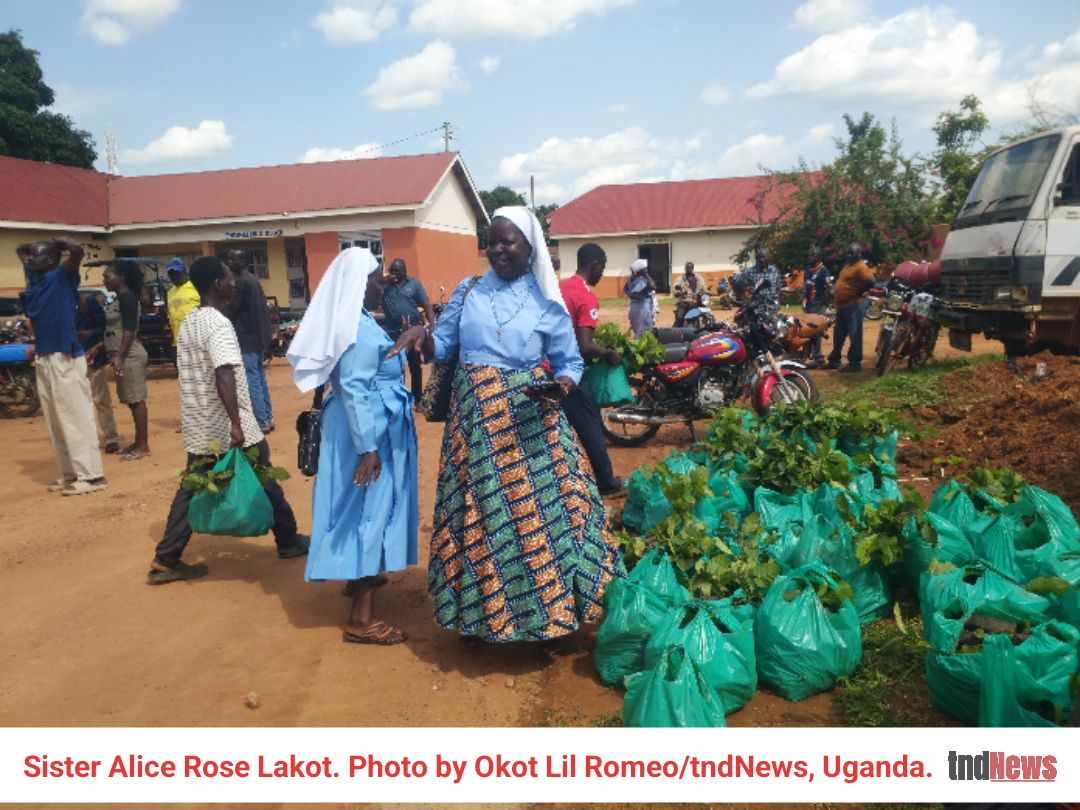
Sister Alice Rose Lakot said the decision to invest in coffee farming followed years of encouraging communities to embrace commercial agriculture and perennial crops as a pathway out of poverty.
“We have been preaching about coffee growing and commercial farming for many years and we realised we also needed to actively participate in it,” Sister Alice said.
She explained that coffee farming will help the congregation generate income, support the welfare of the sisters, and strengthen their ability to serve vulnerable communities.
“This project will help us meet our basic needs and empower us economically as religious women,” she said.
“It will also enable us to continue supporting ordinary Catholics and communities through the transformative mission of the Church,” she added.
According to Sister Alice, the congregation has already prepared farmland where individual sisters are expected to plant and monitor approximately 450 seedlings each. The sisters hope the coffee plantations will begin generating income within the next three years.
She added that the initiative is also expected to create employment opportunities for young people in the region.
“When young people are engaged in productive work, cases of idleness and crime in the community reduce,” she noted.
The congregation expressed gratitude to the Government of Uganda and MAAIF for supporting religious institutions in northern Uganda through agricultural empowerment programs.
“We are very grateful to the government for supporting us and this initiative will greatly benefit our congregation and secure our future,” Sister Alice added.
She also called on religious women across the region to unite and embrace commercial agriculture as a tool for social and economic transformation.
Meanwhile, local farmers in the Acholi sub-region are increasingly embracing coffee growing despite challenges associated with the relatively new crop in the area.
Ojok Michael Obwona, a farmer from Koch Kalang in Nwoya district, said he recently received 150 replacement coffee seedlings after losing his initial crop due to poor management and harsh weather conditions.
“I started coffee farming without enough knowledge and planted three acres at once and managing it became difficult because of drought, lack of skills, and limited experience,” Ojok explained.
However, he said the lessons learned have motivated him to continue with coffee farming.
“With the experience and skills I have gained, I believe I will succeed in the next three years when harvesting begins,” he said.
Ojok advised farmers to begin on a small scale and first acquire adequate knowledge before investing heavily in coffee production.
“Many farmers lose seedlings because they rush into large-scale planting without proper preparation. Start small and learn first,” he cautioned.
Judith Obina Pacutto, a former Woman MP candidate for Gulu, said she mobilised support for coffee growing during campaigns promoting government wealth creation initiatives.
She revealed that she lobbied for approximately 200,000 coffee seedlings for farmers in Gulu City.
“This is the time for the Acholi people to embrace coffee as a long-term income-generating crop and retirement package,” Obina said.
She encouraged farmers to take advantage of the current rainy season to establish coffee gardens, noting that the government has supplied improved KR-line Robusta coffee varieties free of charge.
“The seedlings being distributed are high-quality and expensive on the market, yet farmers are receiving them for free,” she said.
Jenny Winifred Oyella, an Agricultural Officer attached to the Northern Regional Office under MAAIF, said the distribution exercise is based on farmers’ demand for planting materials.
According to Oyella, Gulu District requested 734,000 coffee seedlings and has already received 500,000, while Gulu City requested and received 100,000 seedlings.
She added that Omoro district requested 1.5 million seedlings and has so far received 690,000, with more expected soon.
Oyella said the ministry plans to transition to improved propagation methods through cloning technology while currently distributing KR-line Robusta seedlings.
“We are also planning to establish mother gardens for sustainable seed production in the future,” she said.
George Nicolas Kidega, the Principal Commercial Officer for Gulu, urged farmers to approach coffee farming cautiously despite the growing excitement surrounding the crop.
“There is a lot of misinformation about coffee farming. Farmers should start small and grow gradually as they gain experience,” Kidega warned.
He noted that coffee farming offers strong investment returns because prices are generally more stable compared to many other crops.
“Coffee does not necessarily require large pieces of land and even small-scale farmers can benefit if they manage it properly,” he said.
Kidega also warned farmers against fake agricultural inputs on the market and advised them to buy seedlings and farm supplies from trusted suppliers.
Under the Operation Wealth Creation (OWC) program, the government has reportedly committed billions of shillings toward coffee seedling distribution across northern Uganda, targeting more than 10,000 farmers with over shs20 million.
Coffee farming is steadily gaining popularity in Gulu and the wider Acholi sub-region as farmers form cooperatives and seek to tap into growing global demand for coffee.
However, challenges such as limited technical knowledge, access to quality seedlings, climate variability, and market access continue to affect the sector, according to farmers and agricultural officials.
Discover more from tndNews, Uganda
Subscribe to get the latest posts sent to your email.