History:
- In 1997, the NRM under Museveni introduced Universal Primary Education (UPE) to provide free primary education.
- The UPE policy was to cover four children per family.
- In 2007, the same government introduced Universal Secondary Education (USE), to expand access to secondary education by eliminating tuition fees in government schools.
Kololo Ceremonial Ground in Kampala was filled with yellow on Monday, August 25, as thousands of NRM delegates came together for the party’s Special Interest Groups (SIGs) elections.
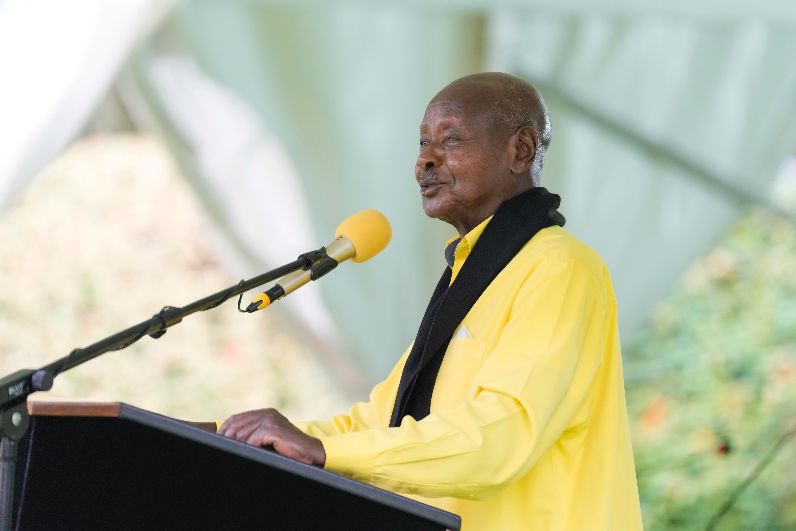
The event marked the first sitting of the party’s 4th National Conference, setting the stage for internal elections ahead of the 2026 general elections. There, national chairman of the ruling NRM party president Museveni highlighted key policy pledges.
Addressing delegates, Museveni made headlines with a historic commitment to make education free in all public schools if re-elected. He described universal free education as a cornerstone of national development and a fundamental right for every Ugandan child.
“I was surprised to learn that private schools have now outnumbered public schools, yet parents still prefer government institutions. This shows confidence in our system. I promise that no parent will pay a single coin in public schools,” Museveni said, emphasizing that hidden or unlawful charges must be eliminated through active collaboration between parents and school administrators via Parent-Teacher Associations (PTAs).
The president stressed that education was only one element of a broader national vision, calling on Ugandans to join the fight against poverty, crime, and corruption, which he described as persistent obstacles to socio-economic progress.
He urged citizens to embrace commercial agriculture, expand factories and artisan workshops, and invest in ICT and service sectors, which he positioned as engines for economic growth.
“We must demand better roads, health services, and safe water, especially in rural areas,” he said, stressing that grassroots participation is key to achieving development goals. Delegates comprising grassroots leaders and representatives from NRM’s SIGs responded with thunderous applause, signaling widespread support for Museveni’s agenda.
Museveni’s keynote also emphasized the need for economic transformation alongside political stability. He argued that wealth creation, improved livelihoods, and the expansion of the money economy are crucial for national development.
Delegates were urged to support initiatives that promote commercial farming, industrialization, and the growth of the services sector.
The SIG elections, which began immediately after the opening session, involved nine internal party leagues: women, youth, persons with disabilities (PWDs), elders; workers, entrepreneurs, diaspora, veterans, and historical leaders.
Each league will elect a five-member committee responsible for representing their demographic group and playing a role in selecting parliamentary flag bearers. Voting methods varied, with most groups using lining-up procedures, while the workers’ league employed secret ballots to ensure transparency.
NRM secretary general Richard Todwong addressed delegates, urging them to embrace leadership grounded in purpose, service, and community understanding. He emphasized that leadership is about understanding communities’ needs, including in health, education, social welfare, and political representation.
“Leadership is about helping you, as leaders, understand your communities and respond to their concerns,” Todwong said. He encouraged delegates to seek mandates with clear purpose, warning against using divisive rhetoric or gestures that could belittle fellow party members.
Todwong also reminded them to differentiate between competitors and enemies, stating, “Calling your competitor an enemy is misguided. Internal contradictions should not make anyone your enemy.”
His guidance underscored the importance of constructive competition. Delegates were reminded that embracing transparency, fairness, and accountability would strengthen the NRM’s credibility and legacy as a party focused on community service and development.
Supporting Todwong’s message, NRM vice chairperson for Eastern Uganda Captain Mike Mukula who is facing Calvin Echodu called for the disqualification of any candidates found bribing voters. He stressed that discipline and integrity must define the party’s internal processes to maintain legitimacy.
As delegates break into their respective caucuses, attention will remain on the outcomes of these internal elections, which are expected to shape both party governance and strategy ahead of the national polls.
Speaker of Parliament Anita Annet Among hailed Museveni’s inclusive leadership style as a model of unity and accommodation. Among praised the president for creating space for newcomers to contribute meaningfully to the party’s growth, describing his leadership as key to maintaining NRM’s political dominance.
Among is currently campaigning for the position of 2nd national vice chairperson (female) on the party’s Central Executive Committee (CEC) against former house speaker Rebecca Alitwala Kadaga.
She highlighted her experience as Speaker of Parliament as preparing her to advance the party’s agenda at the highest decision-making level. Among also addressed issues raised by the Uganda Local Government Association (ULGA), presenting a petition urging the government to raise salaries for local government leaders, a move she argued is crucial for effective service delivery.
She also defended Parliament’s Anti-Homosexuality law, framing it as a measure intended to safeguard Ugandan cultural values rather than violate human rights. Her comments reflected the government’s longstanding position that the legislation is aimed at protecting local traditions amid international criticism.
With the general elections just months away, the SIG conference represents the first significant building block in Uganda’s upcoming electoral season. For many, the Kololo event is both a test of the party’s internal credibility and an opportunity for leaders to demonstrate commitment to purposeful, community-centered leadership.
Now, the big question is: are these elections capable of shaping the trajectory of the NRM’s campaign strategies and Uganda’s broader political landscape as the 2026 elections approach?
Discover more from tndNews, Uganda
Subscribe to get the latest posts sent to your email.