Farmers in Arinyapi sub-county in Adjumani district are beginning to reap the benefits of small-scale irrigation under the Uganda Intergovernmental Fiscal Transfers (UGIFT) programme, with members of the Tandrundru Farmer Field School expanding vegetable production and improving household incomes.
Located in Melekwe Parish in Elegu parish, the farmer field school was established in 2024 to help smallholder farmers learn modern agricultural practices and improve their livelihoods through collective farming.
The group currently has 30 members, 16 women and 14 men, who work together to cultivate crops, share skills, and market their produce.
According to the chairperson, Dayo Lilliam Dragulu, the group initially started with the cultivation of simsim before later introducing cassava.
However, the members eventually abandoned the crops and shifted to vegetable farming after realising the crops were more profitable and had a ready market.
“We began by growing onions, sukuma wiki, and tomatoes, and later added cabbage to our production. We decided to focus on vegetables because they have a higher market demand and generate quicker income for members,” Dragulu said
UGIFT irrigation support transforms production
The turning point for the group came when they received support under the government’s UGIFT micro-irrigation.
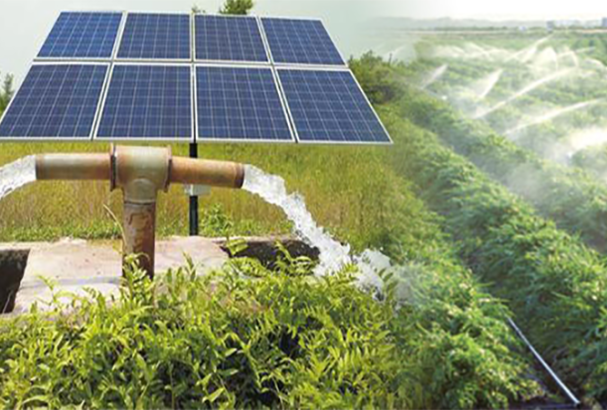
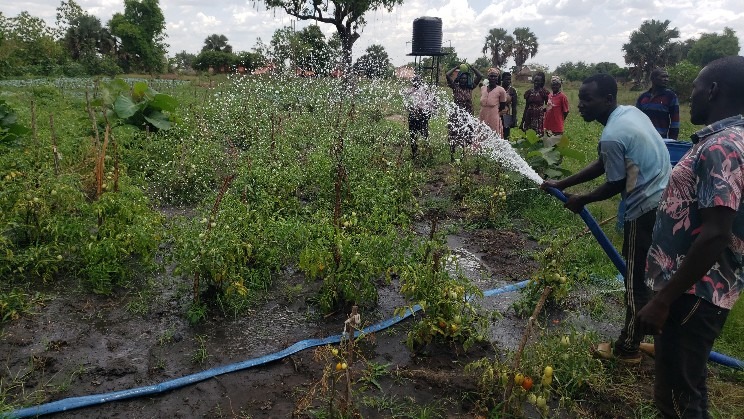
Through the programme, the farmers acquired a micro irrigation system at a subsidised cost, allowing them to water their crops more efficiently and increase production.
Under the arrangement, the group contributed 25 per cent of the total cost of the irrigation equipment while the government covered the remaining 75 percent.
“We benefited from the UGIFT micron irrigation where we paid a small portion of the cost while the government supported us with the larger share to purchase the irrigation equipment,” Dragulu explained.
She added that women were prioritised during the selection of beneficiaries in Arinyapi sub-county.
“In our sub-county, women were selected as beneficiaries, and two of us came from Elegu Parish. After being selected, I mobilised fellow farmers and formed this group,” she said.
The irrigation system has enabled the group to diversify its production further. Today, members grow vegetables such as green pepper and watermelon alongside other crops.
Flooding challenges affect farmers
Despite the progress made, the farmers have faced significant challenges, particularly from flooding.
Last year, heavy rains caused the River Tete to burst its banks, flooding their gardens and destroying crops.
“The flooding affected us greatly. Our watermelon and cabbage gardens were submerged, and we lost produce worth about shs1 million,” Dragulu recalled.
The losses dealt a major blow to the group’s earnings, but members say they remain determined to rebuild and expand their farming activities.
Extension services build farmers’ skills
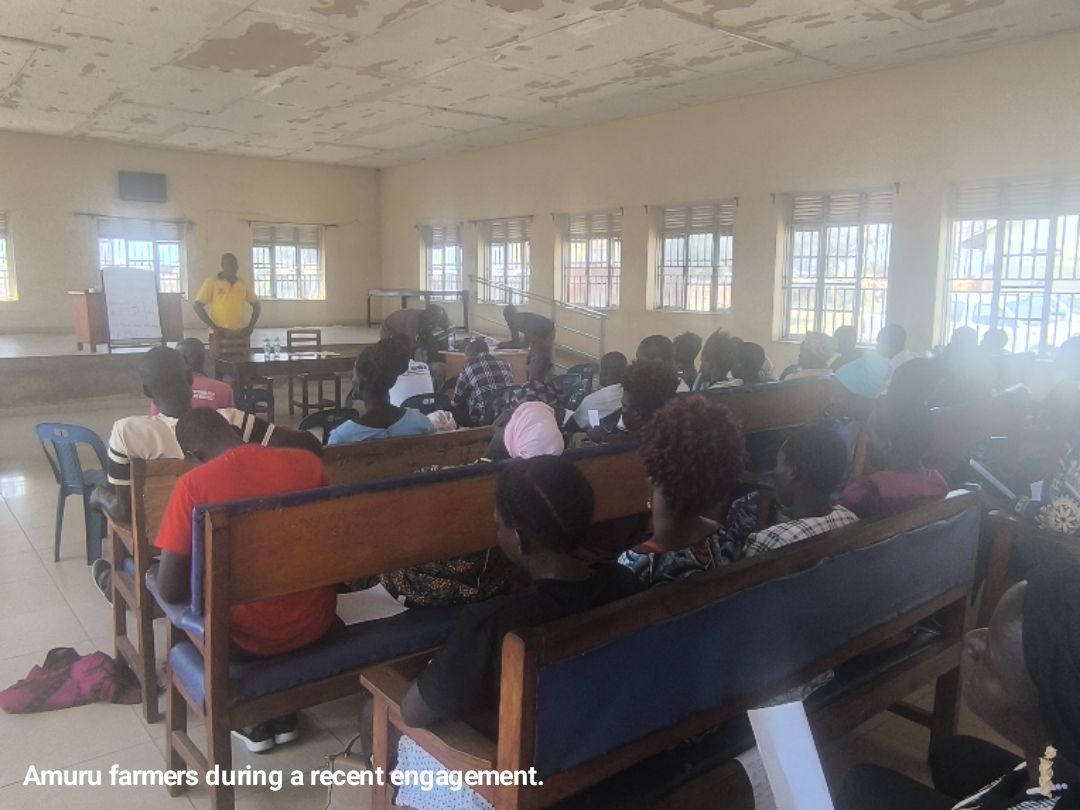
Beyond irrigation equipment, the group has also benefited from regular training provided by the Arinyapi sub-county extension services.
The training focuses on practical farming techniques such as nursery bed preparation, proper planting methods, mulching, pest and disease management, and other modern agronomic practices.
According to Dragulu, the training has significantly improved the farmers’ skills and boosted their confidence in vegetable production.
“Through the extension officers, we have learned how to prepare nursery beds and plant crops properly. These skills have helped us increase our yields and improve the quality of our vegetables,” she said.
Growing incomes from vegetable sales
The benefits of the project are already being reflected in the group’s earnings.
Dragulu said the farmer field school now earns between shs300,000 and shs500,000 every week from the sale of vegetables.
Most of the produce is sold at Elegu Border Market, a busy trading centre that attracts buyers from both Uganda and neighbouring South Sudan. Some of the vegetables are also sold within Arinyapi sub-county and nearby communities.
For many of the farmers, the income generated from vegetable farming is helping them support their families and meet basic household needs.
Eyeing the South Sudan market
James Ulego, the group’s general secretary, said the micro- irrigation has broadened the farmers’ skills and strengthened their ambition to expand production.
“The irrigation project has widened our knowledge and skills. With more support, we can expand our acreage and increase production,” Ulego said
He said the group hopes to take advantage of the proximity to South Sudan, which offers a potentially lucrative market for agricultural produce.
“South Sudan is very close to us, and our dream is to supply vegetables to that market. If we expand our irrigation system and cultivate more land, we can produce in larger quantities,” he added.
For some members, the benefits of the farmer field school extend beyond income generation.
Alice Idro, one of the members, said the knowledge gained from the group has enabled her to train other members of her family in improved farming practices.
“As a member of this group, I have become a teacher in my family. Last year I taught my children the best practices for planting cabbage. My son later planted one acre of cabbage and has already harvested a good yield,” Idro said.
She said the knowledge shared within the farmer field school has helped strengthen farming skills within households and encouraged young people to take agriculture more seriously.
Plans to expand irrigation capacity
Despite the achievements, the farmers say they still need additional support to expand their operations and reduce the impact of flooding.
Dragulu said the group hopes to invest in a generator and irrigation equipment with bigger pipes so they can irrigate larger areas of land located outside the flood-prone zones.
“We have a reliable water source nearby. What we need now is a generator and a bigger irrigation system so we can extend irrigation to more land that is not affected by floods,” she said.
The Uganda Intergovernmental Fiscal Transfers (UGIFT) programme is a government initiative aimed at strengthening service delivery at the local government level.
The programme is funded by the Government of Uganda with support from development partners, including the World Bank and the International Development Association’s Refugee Sub-Window.
It focuses on improving services in key sectors such as education, health, water, and environment, while also supporting micro-irrigation and refugee-hosting districts across the country.
Climate change drives irrigation demand
Anthony Leku, the agriculture officer for Arinyapi sub-county, said the programme has already supported several farmers through micro-irrigation projects.
“Under the UGIFT programme, Arinyapi Sub-county has received four micro-irrigation schemes,” Leku said.
He explained that the irrigation systems were introduced partly in response to the increasing effects of climate change in the area.
“Our farmers are experiencing climate-related challenges such as prolonged droughts and flooding. These conditions have caused crop losses and highlighted the need for irrigation,” Leku explained.
Leku added that his office continues to provide technical support to farmers through extension services.
“I have been helping the farmer field school with training in nursery bed preparation, mulching, timely planting, and pest and disease control,” he said.
He encouraged farmers to continue applying the knowledge they have gained to strengthen their resilience to climate change.
Leaders encourage group farming
Local leaders have also praised the farmer field school for demonstrating the power of collective action among small-scale farmers.
Justine Vukoni Elias, the Parish Chief of neighbouring Ituji Parish, commended the group for organising themselves and working together.
“It is easier for the government to support farmers who are organised in groups. Your example should inspire other farmers who are still working individually to come together and form groups,” Elias noted.
He also urged members to consider investing funds obtained under the Parish Development Model (PDM) into productive agricultural enterprises.
“If the money from PDM is invested in viable projects like vegetable farming, it can help households fight poverty more effectively,” he said.
Transitioning to commercial agriculture
At the district level, agricultural officials say the irrigation initiative is part of a broader effort to transform small-scale farming into commercial agriculture.
Pius Jurugo, the Adjumani District Agricultural Engineer, said the UGIFT programme, which began in 2022, has been supporting farmers to increase productivity
“The government has been providing irrigation equipment at subsidised prices so that small-scale farmers can transition from subsistence farming to commercial farming,” Jurugo said.
He added that about 62 of the installations planned under the programme have already been implemented in the district. Encouraging farmers to invest in high-value enterprises and use the equipment responsibly to ensure sustainability.
“The goal is to increase productivity so that farmers can supply food to markets while also ensuring food security at home,” he emphasised.
However, Jurugo says farmers must demonstrate greater commitment to fully benefit from government programmes. He further noted that some farmers remain slow to adopt modern farming practices despite available support.
“For the past three years, micro-scale irrigation was implemented as the second phase, and the government has been investing resources to help small-hold farmers transition to commercial agriculture, but unfortunately, some farmers are still slow to take advantage of these opportunities,” he said.
He emphasised that farmer field schools provide an effective platform for farmers to access extension services.
“When farmers organise themselves in groups like this, it becomes easier for extension workers to train them and monitor their progress,” he added.
For members of the Tandrundru Farmer Field School, however, the future looks promising.
With irrigation support, improved farming skills, and access to nearby markets, the farmers are steadily building a resilient and profitable agricultural enterprise.
“Our dream is to expand irrigation, increase production, and supply bigger markets. If we continue working together, this project will transform our community,” Dragulu said.
Discover more from tndNews, Uganda
Subscribe to get the latest posts sent to your email.