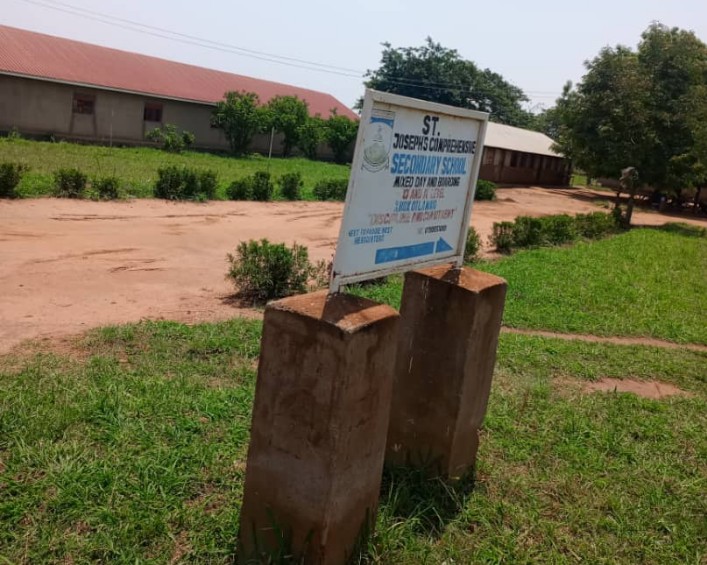
In 2018, St. Joseph Comprehensive School opened quietly in Padibe West sub-county with just 20 Uganda Certificate of Education (UCE) candidates and modest infrastructure.
Eight years later, the private institution has emerged as the best-performing secondary school in Lamwo district, highlighting a shifting academic landscape marked by growing competition among schools.
According to the latest district ranking, St. Joseph Comprehensive led the table ahead of Palabek SS, Lokung Secondary School, Kuc ki Gen secondary school, Agoro Seed Secondary School and Paluga Seed Secondary School.
Others that followed are Paluda SS, Palabek Ogili SS, Padibe Girls’ Comprehensive secondary school, Padibe SS and St. Mary’s College Madi Opei.
The school’s early performance reflected gradual growth. In its first UCE sitting in 2018, of the 20 candidates registered, one obtained Result 1, seven scored Result 2, five achieved Result 3 and seven obtained Result 4.
In 2019, the school registered 29 candidates, all of whom passed within Results 1–4, with one candidate recording Result 9. Performance improved steadily in subsequent years.
From 2023 to 2025, the school consistently registered 50 candidates per year, and all passed in Result 1, with grades limited to A, B and C.
District Education Officer (DEO) Banabas Langoya described the results as encouraging, noting that competition among secondary schools in Lamwo is strengthening overall performance.
“It is not just one school improving. Several secondary schools in the district have shown progress. What we are seeing is increased seriousness in academic supervision,” Langoya said.
The assistant Resident District Commissioner, Robinson Oyo attributed improved outcomes to discipline and monitoring, urging all institutions to maintain standards rather than focus solely on rankings.
Oyo advised the parent that schools in Lamwo district are good, saying parents should stop taking their children outside the district since there are a lot of school in the district who performing better that some school in Kampala
Chief Administrative Officer Chuna Moses Kapolon emphasized that sustained performance depends on institutional planning, teacher stability and infrastructure readiness.
He cautioned that rapid expansion without adequate preparation could affect consistency.
In recognition of its recent performance record, the Uganda National Examinations Board (UNEB) has increased St. Joseph Comprehensive’s candidate registration capacity from 50 to 150 learners beginning in the 2026 academic year.
Robinson Oyengolobo, the head teachers of St. Joseph comprehensive secondary school said the expansion allows the school to present a larger cohort but also raises questions about capacity to maintain quality.
Lamwo District Secretary for Education, Health and community-based services, Erwondo Peter Fred welcomed the healthy competition but stressed that district authorities will continue monitoring both private and government institutions to ensure balanced growth.
Erwondo said while St. Joseph topped the ranking, other schools also posted notable performances, reflecting broader improvements in secondary education across the district.
He says the rising standards may be linked to stronger internal examinations, remedial programs and increased parental involvement.
Francis Opiyo, a parent of the school and a resident of Padibe West, says the improved results have boosted confidence in local schools, reducing the need to send learners outside the district.
He said at first, he used to send his children to Gulu High school but he has decided to register the children who have just finished PLE last year to St. Joseph Comprehensive School.
He, however, notes that maintaining performance as enrollment grows will require continued investment in classrooms, laboratories and qualified teaching staff.
The just concluded UCE results illustrate the scale of St. Joseph Comprehensive’s current performance. The school recorded 14 A grades, 313 B grades and 138 C grades, a distribution indicating depth across subjects rather than isolated excellence.
As Lamwo’s secondary schools adjust to rising expectations, education leaders say the focus now shifts from individual rankings to sustaining district-wide progress in the years ahead.
Discover more from tndNews, Uganda
Subscribe to get the latest posts sent to your email.