Gulu City, Northern Uganda | As 2026 begins, women and girls in Northern Uganda find themselves confronting a familiar but intensifying reality: shrinking civic space, renewed attacks on sexual and reproductive health and rights (SRHR), and persistent impunity for gender-based violence.
From stalled defilement prosecutions in Acholi to unsafe motherhood in Karamoja and the quiet exclusion of pregnant girls from schools in West Nile, the global rollback on gender equality is playing out in deeply local and damaging ways.
Across northern Uganda, activists and service providers describe a pattern that is subtle but systemic. Local authorities invoke “culture” to silence survivors. Health facilities deprioritize reproductive services under political pressure.
In the region, schools continue to punish pregnant learners despite national guidelines that guarantee their right to education.
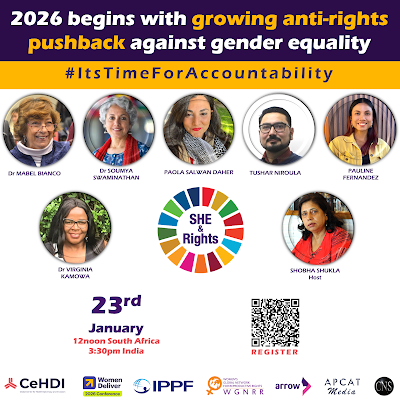
“What we are witnessing is not accidental backlash; it is organized resistance to women’s autonomy,” says Dr Mabel Bianco, feminist leader, physician activist, and founding president of Argentina’s Foundation for Studies and Research on Women (FEIM).
“When states fail to protect sexual and reproductive rights, they are actively choosing inequality,” Dr Mabel added.
Defilement without justice
In districts such as Gulu, Amuru, and Obongi, defilement remains among the most commonly reported crimes against girls yet one of the least successfully prosecuted.
Additionally, survivors and their families often abandon cases due to police inaction, medical costs, intimidation, or pressure to accept informal settlements with perpetrators.
The consequences are severe and enduring with teenage pregnancy continues to drive school dropouts across the region, while survivors face stigma instead of state protection and many are pushed into early motherhood with little access to healthcare or economic support.
According to Paola Salwan Daher, Senior Director for Collective Action at Women Deliver, “Anti-rights movements thrive where justice systems are weak and when institutions fail girls once, they embolden perpetrators everywhere.”
Unsafe motherhood and silenced choices
Northern Uganda continues to register some of Uganda’s highest maternal mortality rates, particularly in Karamoja and remote parts of West Nile, where access to skilled birth attendants and emergency obstetric care remains limited.
At the same time, discussions around abortion despite Uganda’s legal exceptions are heavily politicized and criminalized.
Health workers quietly report treating complications from unsafe abortions, often without the authority to discuss prevention or lawful options. The silence is deadly.
“When abortion is driven underground, it doesn’t disappear—it becomes unsafe,” says Pauline Fernandez, Coordinator of the Philippine Safe Abortion Advocacy Network (PINSAN).
She further noted that, “it is always the poorest women and girls who pay with their lives.”
In northern Uganda, where poverty, distance, and conflict legacies intersect, these risks are magnified.
Weaponizing culture and morality
Opposition to gender equality in northern Uganda is frequently framed as a defense of culture or religion. Yet gender justice advocates argue that today’s anti-rights rhetoric is neither organic nor isolated.
“What we see globally—from South Asia to Africa—is the strategic use of morality, religion, and nationalism to control bodies,” says Tushar Niroula, gender justice advocate and former Executive Director of Marie Stopes International Nepal.
According to her, these movements are coordinated across borders, and they learn from one another.
In Uganda, increasingly restrictive public discourse around sexuality and reproduction contrasts sharply with the state’s limited response to structural drivers of abuse, including poverty, unemployment, weak justice systems, and the lingering effects of armed conflict.
Mental health: The hidden emergency
Decades after the end of large-scale conflict in Northern Uganda, trauma remains widespread and poorly addressed.
Further, survivors of sexual violence many of them children rarely receive sustained psychosocial support and mental health services are largely provided by underfunded NGOs, while public health systems remain overstretched.
“Gender injustice does not end with the act of violence,” says Dr Semjidmaa Choijil, Executive Director of Psychological Responsiveness in Mongolia.
Dr Choijil further reveals that the act continues when survivors are denied mental health care, dignity, and the chance to heal.
In districts such as Pader and Lamwo, the absence of trauma-informed services compounds harm, increasing school dropout rates, early marriage, and cycles of abuse.
Development without women’s rights
Uganda is a signatory to multiple regional and international human rights frameworks, yet implementation remains inconsistent particularly at sub-national levels.
“Governments cannot claim to advance development while undermining women’s rights,” says Dr Virginia Kamowa, Regional and Country Manager at the Global Center for Health Diplomacy and Inclusion (CeHDI).
Noting that, “gender equality is not optional. It is foundational to health, peace, and economic growth.”
In northern Uganda, large-scale development and recovery programs often fail to meaningfully include women and adolescent girls in planning and decision-making, weakening their impact and sustainability.
Lessons from the global South
Despite mounting challenges, feminist movements across the Global South continue to resist the rollback on rights—offering lessons in resilience and community organizing.
Ravadee Prasertcharoensuk, Director of Thailand’s Sustainable Development Foundation (SDF), emphasizes the power of grassroots action.
“When women organize locally and collectively, they reclaim power even in hostile political environments.”
That lesson resonates in Northern Uganda, where survivor-led groups, youth advocates, and women’s rights organizations are increasingly documenting abuses, challenging unlawful school exclusions, and demanding justice through both formal and informal channels.
For Shobha Shukla, SHE & Rights Coordinator and Executive Director of CNS, the start of 2026 must be more than symbsymbolic
“Anti-rights forces may be loud, but they are not the majority. What is missing is political courage and accountability,” she said.
For northern Uganda, accountability means prosecuting defilement cases without compromise, enforcing policies that protect pregnant girls’ right to education, investing in SRHR and mental health services, and safeguarding civic space for activists and survivors.
As the year unfolds, the question is no longer whether gender equality is under threat. It is whether governments and institutions will be held responsible for allowing that threat to deepen.
For girls in Gulu, Arua, Lira, and Moroto, 2026 cannot be another year of promises without protection.
Discover more from tndNews, Uganda
Subscribe to get the latest posts sent to your email.