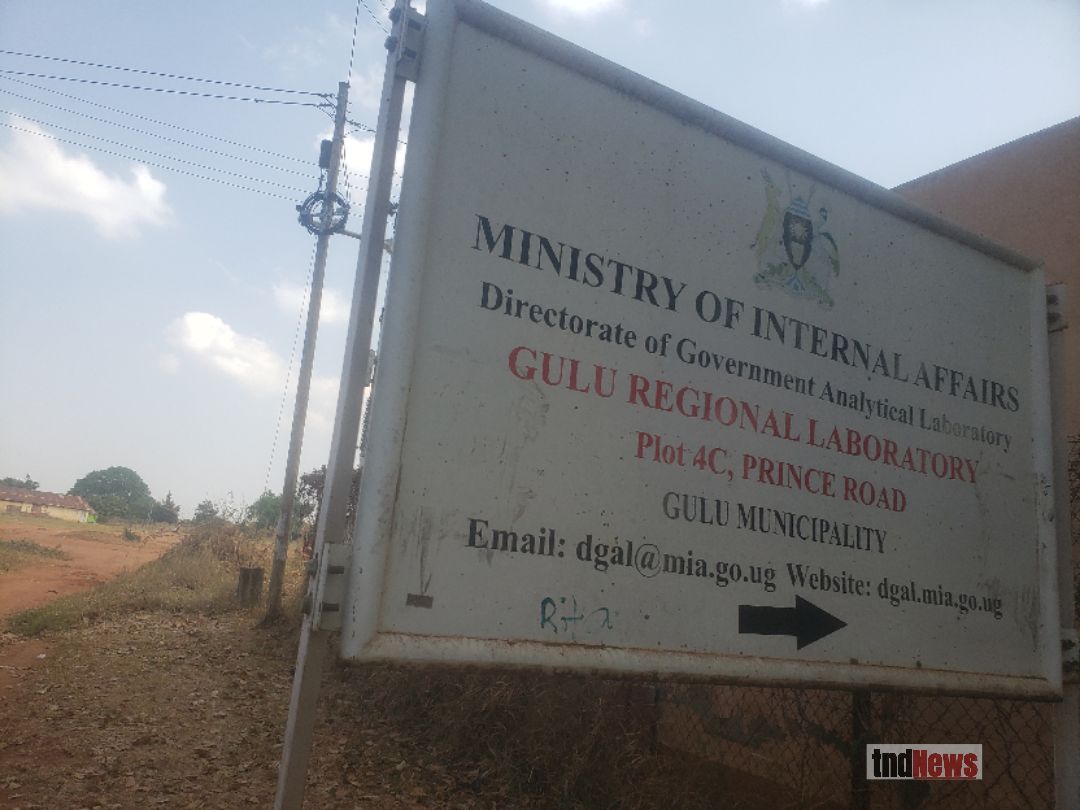
Gulu City | The 2025 Auditor General’s report has laid bare deep cracks in Uganda’s forensic justice system revealing that the Gulu Regional Laboratory – the only regional facility performing any forensic biology analysis is operating far below capacity leaving communities in Northern Uganda waiting months and sometimes years for DNA evidence critical to justice.
The report which reviewed DNA service delivery under the Directorate of Government Analytical Laboratory (DGAL), paints a troubling picture of stalled reforms, chronic backlogs, and under-utilized laboratories despite rising demand for DNA testing in paternity disputes, sexual violence cases and serious criminal investigations.
DGAL operates one central laboratory in Kampala and four regional laboratories in Gulu, Mbale, Moroto, and Mbarara, however, according to the Auditor General, only Gulu was partially performing limited forensic biology analyses.
Further, the other regional laboratories were found to be largely inactive with Mbale and Mbarara functioned only as exhibit collection and sub-sampling centres, forwarding samples to Kampala, while Moroto Regional Laboratory remained non-operational despite being established.
Over a five-year period, all four regional laboratories handled just 503 cases, representing only 8% of DGAL’s total workload of 6,109 cases; of these, Gulu handled 111 cases (22%), while Mbale and Mbarara accounted for 392 cases (78%), most of which involved only sample handling not analysis.
For victims and families seeking answers, the implication is clear: justice must travel to Kampala before it can be processed.
Delays that undermine prosecutions
DGAL’s Strategic Plan (2020/21-2024/25) sets a 30-day turnaround time for DNA case analysis and the Auditor General found that this benchmark is routinely exceeded.
Although DGAL headquarters conducts quarterly outreach visits to regional laboratories to collect exhibits, the report notes that the limited frequency of these visits causes delayed transfers, contributing to prolonged turnaround times especially for regions far from the capital.
In Northern Uganda, where Gulu serves as the main forensic hub, cases frequently stall while samples await transport, analysis and reporting.
However, legal practitioners warn that such delays weaken prosecutions, prolong remand periods and discourage survivors particularly in sexual and gender-based violence cases from pursuing justice.
The Auditor General’s findings show a forensic system struggling under its own weight and over the last five years, DNA case backlog increased from 786 in FY 2020/21 to 923 in FY 2024/25, a 17% rise.
Meanwhile, limited laboratory workspace at the central DNA facility allows only one analyst to work at a time, preventing concurrent processing and compounding delays.
Despite having four genetic analyzers, the DNA laboratory is operating inefficiently with one analyzer is obsolete, one reserved for wildlife DNA analysis and is rarely used, one operates below capacity and the fourth analyzer, installed in January 2025 remained unused eight months later.
The report concludes that these inefficiencies significantly constrain DGAL’s ability to clear backlogs even when equipment exists.
Flagship DNA database still missing
One of DGAL’s flagship commitments was the establishment of a National Forensic DNA Database and DNA Information System intended to strengthen investigations, link serial offences and improve suspect identification.
However, the Auditor General found that by the end of FY 2024/25, the database had not been established and without it, regional laboratories like Gulu remain disconnected from a national system that could speed up investigations and improve coordination across districts.
The audit also highlights severe staffing shortages revealing that DGAL’s approved structure provides for 60 positions across the four regional laboratories but as of 30 June 2025, only 28 positions were filled.
Therefore, the report disclosed that this leaves a 53% staffing gap including two Assistant Commissioner Positions responsible for overseeing regional laboratories.
In Gulu, limited staffing means restricted services, overworked analysts and continued reliance on Kampala despite the region’s growing forensic needs.
For communities in Northern Uganda, the consequences are more than administrative and survivors of sexual violence wait for DNA results that could corroborate their testimony with mothers seeking paternity confirmation facing prolonged uncertainty and suspects remain on remand as investigations drag on.
As reliance on forensic science grows within Uganda’s justice system, the Auditor General’s report warns that failure to fully operationalize regional laboratories particularly Gulu risks deepening inequality in access to justice.
Until DGAL addresses staffing shortfalls, equipment underuse, and the stalled rollout of a national DNA database, the report suggests that forensic science will remain a bottleneck rather than a bridge to justice leaving Northern Uganda waiting.
Discover more from tndNews, Uganda
Subscribe to get the latest posts sent to your email.