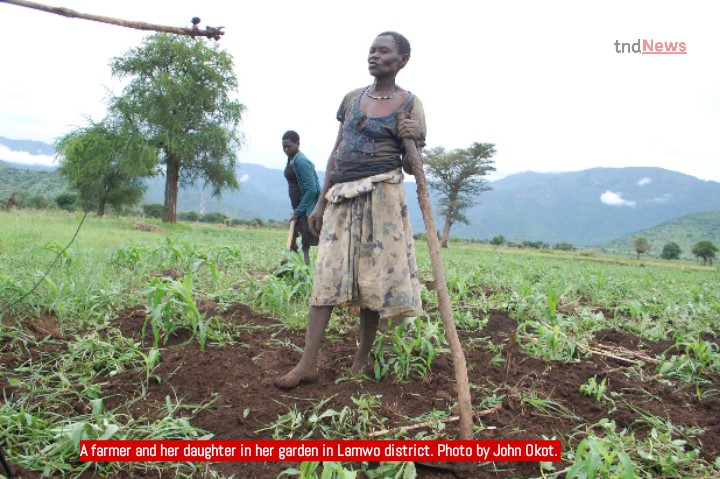
In the sunbaked plains of northern Uganda, life has always been intertwined with the rhythms of nature and the region’s pastoral communities depend heavily on seasonal rains and predictable weather patterns for their crops and livestock.
However, over the recent years, climate change has turned these patterns upside down bringing unpredictable droughts, devastating floods and erratic weather threatening livelihoods and endangering lives.
Amidst these mounting climate challenges, a silent crisis persists and one that often goes unnoticed is the vulnerability of northern Uganda’s deaf community during emergencies; coupled with limited access to timely warnings and information.
The deaf residents face heightened risks during floods, droughts and other climate induced disasters.
Northern Uganda is among the regions most affected by climate change with combination of factors like deforestation, poor land management and limited infrastructure. These have exacerbated the region’s vulnerability.
Therefore, the once seasonal rains are now unpredictable leading to prolonged droughts that threaten food security and when rains do come, they often arrive suddenly and with intense storms causing flash floods that destroy homes and displace communities.
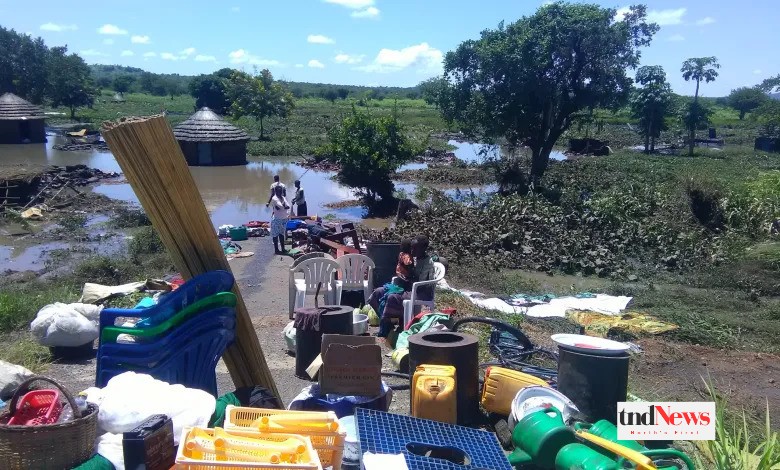
Recently, in Gulu and Amuru districts, floods submerged villages, washed away crops and displaced hundreds in Elegu township and neighboring sub-counties. Hence, these disasters threaten lives and livelihoods especially for farming and pastoral communities who rely on predictable weather cycles.
The hidden dimension: Vulnerability of the deaf community
While climate change impacts everyone, marginalized groups like the deaf community face unique risks during disasters when communication barriers significantly hinder their ability to receive warnings, understand danger, and respond effectively.
Boniface Ojok, a deaf man from Ogolo North village, Liri parish, and Elegu town council in Amuru district recalls the recent flood that nearly cost him his life while the sudden disaster occurred.
“The water came rapidly but I did not hear any warning; people shouted and ran but I did not understand what was happening. I only saw the water rising, and if there had been a visual alert or sign language message, I could have prepared,” Ojok revealed.
Unlike hearing community members who might hear sirens, radio alerts or community announcements, deaf individuals depend on visual cues, sign language interpreters and community networks resources that are often unavailable or insufficient during crises.
When Elegu flooded last year, Ojok and his family were caught unprepared with community relying on traditional methods of predicting weather changes but as a deaf person, Ojok received no alert.
“My family members tried to communicate the danger visually, but the chaos and lack of accessible information slowed my response. In that moment, I felt helpless; if there had been a sign language interpreter or visual alerts maybe I could have evacuated earlier,” he explained.

Many deaf Ugandans like Ojok live in marginalized conditions with limited access to sign language interpreters, emergency information in accessible formats or inclusive planning.
Beyond practicality, inclusion is a matter of rights, and the UN Convention on the Rights of Persons with Disabilities (CRPD) that has been ratified by nearly all African nations obligates governments to ensure accessibility in disaster risk reduction.
Similarly, Africa’s Agenda 2063 and the Sendai Framework for Disaster Risk Reduction both call for inclusive climate action and yet implementation remains patchy. Reports from Human Rights Watch and local NGOs repeatedly highlight failures to uphold these commitments during actual climate disasters.
Alice Apio, 26, is a resident of Lira district who revealed in an interview with tndNews that deaf people like her are not just victims of climate change but rather are agents of change but there is need for them to be included.
According to Apio, the growing threat of climate change is not only environmental but it is deeply social and as disasters increase in frequency and severity from floods and droughts to disease outbreaks, people with disabilities especially the deaf often find themselves excluded from response mechanisms that were designed with them in mind.
“Nothing about us without us is more than a slogan for the disability rights movement, it is a call to action especially in the climate discourse where the voices of deaf individuals are often drowned out by a flood of inaccessible information, language barriers, and token representation,” Apio explained.
The global deaf community estimated at over 70 million people faces unique barriers in climate adaptation and disaster response, and in many parts of Africa, climate early warning systems such as radio alerts, public address announcements or sirens are completely inaccessible to those who cannot hear.
Inaccessibility is not just about technology; it is also about systems and emergency briefings are rarely interpreted in sign language and climate adaptation trainings often lack visual materials or facilitators skilled in communicating with deaf audiences and in humanitarian planning meetings, the deaf are rarely consulted or even invited at all.
“During the 2020 floods in eastern Uganda, I only knew something was wrong when I saw people running; no one came to tell me. By the time I understood, it was too late, I lost my home, my crops, and my hearing aids,” James Wabwire, a deaf farmer from Mbale.
The World Health Organization estimates that of Uganda’s 2.5 million people with disabilities, 30% are deaf and defined deafness in children as “genetic or resulting” from common childhood illnesses like malaria, measles and meningitis which are often left untreated in disadvantaged areas.
Link Uganda note that deaf people are disenfranchised, victimized and suffer from discrimination stemming from stigma, misconceptions and deep-seated cultural taboos that devalue them. In tribal languages, and in impoverished regions, the word for deaf is, “Kasiru,” which translates as “lazy” or “stupid.”
Despite the government of Uganda having legislation on the protection of rights for people with disabilities, many deaf people living in poverty are unaware of what their rights are because of communication difficulties and society’s lack of understanding contributing to prejudice and even violence against deaf children.
Climate crisis through a deaf lens
According to the Intergovernmental Panel on Climate Change (IPCC), climate change disproportionately affects vulnerable populations and yet, disability particularly deafness is largely missing from adaptation strategies.
“We talk about the most vulnerable, but how do we define vulnerability? If you are deaf, female, poor and rural, your layers of exclusion compound but policy often treats people like they only have one identity,” Alex Ogwal, Executive Director, Sound of Silence Africa Initiative said.
Ogwal explains that deaf people often experience a form of invisible vulnerability and unlike visible disabilities, deafness can be overlooked in emergency planning and this erasure means deaf communities are often the last to receive crucial information about drought resistant farming, flood evacuation routes or food relief programs.

Extreme events leading to disasters such as floods, droughts and landslides have increased over the last 30 years and flooding has become more frequent largely due to more intense rainfall.
Over the past two decades, an average of 200,000 Ugandans were affected each year by disasters and an increased intensity of heavy rainfall has led to greater impact of floods and are causing more damage due to expanded infrastructure, human settlement and general development of the country.
However, non-climate stressors such as inadequate infrastructure to handle the increasing population are impacting the vulnerability to natural disaster sensitivity and climate change vulnerability with an urbanization rate of 5.4%, increasing amounts of the population living in urban centers.
The increase has put pressure on existing infrastructure as well as scarce available land and a diminishing natural resource, thus the impacts on the deaf communities also surging.
As of 2017, 9.9 million people lived in urban areas of Uganda and it is projected to increase to 19.9 million by 2030 and 31.5 million by 2040 causing increased pressure on urban infrastructure with increased likelihood of vulnerability for poorer and less resilient communities including the deaf.
Each year, floods impact nearly 50,000 people and costs over $62 million with Uganda experiencing both flash floods and slow-onset floods which are common in urban areas. For example, areas prone to floods include Kampala, as well as the northern and eastern areas of the country.
Accordingly, Ogwal revealed that effective emergency communication is key to reducing harm and decried the communication pathways of many African countries who gives alerts primarily through audio channels like radio or sirens, formats inaccessible to the deaf and hard of hearing.
“Even television announcements and when available often lack sign language interpretation or accurate closed captioning; and when interpreters are present, they may be poorly trained or placed off-screen where viewers cannot see them,” he stated.
“Language accessibility is a basic right and during a disaster, it can also be a matter of life or death,” he added.
In Africa, linguistic diversity further complicates the challenge since many countries use multiple sign languages and not all deaf individuals are fluent in written or spoken language. Standardized and culturally aware sign language dissemination is essential.
Local innovations offer hope
Despite the prevailing challenges, communities across Africa are finding ways to fill these gaps. In northern Uganda, Willy Chowoo, the Executive Director of Citi Media launched a project dubbed, “The Uganda Sign Language Project” in 2023. The project aims at bridging the gap between climate information and the people who needed it the most but were least likely to receive it.
“Uganda is rapidly moving into the digital era; news, climate updates, health advisories are all going digital, yet most Ugandans scroll, watch and listen with an entire community that remains locked out: the deaf and hard of hearing,” Willy noted.
According to Willy, he could not ignore it anymore and had witnessed how these communities struggled especially in rural regions and when flood warning is being broadcast on TV or the radio, the deaf and hard of hearing never get it; thus, when climate updates were posted online, there are no captions, no sign language avatars, and no subtitles, hence they were left in the dark even during storms.
“I once met a young man named Denis in northern Uganda, a small scale farmer, full of hope but at the mercy of nature. He told me how he used to rely on his father’s traditional wisdom to know when to plant, but things had changed. The rains were unpredictable, the sun harsher than before and climate change had shifted everything except the way we share information about it,” Willy recalled.
He further added that, “Denis was deaf; he could not hear the radio, the TV did not help, no subtitles, no interpreter. Social media? Just as bad; and when will it rain again? He asked me in sign language. And I did not have an answer. That moment stuck with me because it was not just Denis but there were thousands like him and the system was not built for them.”
In order to help people like Denis, Willy revealed that he started the project that saw seventeen sign language interpreters and six journalists trained and equipped with skills to create accessible multimedia content including videos with sign language, subtitles and accurate climate data.
He added that these interpreters were not strangers to the deaf community since many were already helping as hospital guides, family friends, or advocates and they simply given the tools to scale their impacts.
He, however, cited that the journalists were equally crucial since most people in Uganda listen to radio and some watch TVs, and the journalists are the voice of the airwaves hence by training them on inclusivity and digital media, allies within the mainstream was created and people could integrate sign language and subtitles into their broadcasts and challenge the status quo.
Natural Disasters in Uganda, 1990-2020.

“We did not stop there, we visited homes of the deaf and worked directly with caregivers, teaching them how to spot misinformation, how to interpret basic climate warnings and how to contact trained interpreters when needed; hence, these interpreters became contact points, verifiers of truth, and bridges between misinformation and clarity,” Willy explained.
Additionally, Willy noted that many of those they trained are now running their own platforms and they have created a thriving community WhatsApp group where both deaf and hearing people share updates, with flyers about climate events, tips for planting based on recent forecasts, updates during heavy rains are all shared and accessible.
However, with all these initiatives and efforts, Willy revealed that no amount of grassroots work can fully solve a structural problem like this since Uganda’s policies are progressive on paper but are not inclusive in practice.
He noted that the current digital transformation plan caters to the blind but not adequately to the deaf and there are only two schools in northern Uganda dedicated to the hearing impaired with most local governments having zero budget allocated for climate communication, let alone inclusive communication.
“Local government websites remain outdated, and their climate pages often contain little or no useful data and when the deaf go looking for information they can read, they find nothing; no updates, no interpreters and no one to ask,” Willy cried out.
“This is not a communication issue; it is an equity issue, it is a matter of survival and without climate information, farmers cannot prepare; families go hungry, floods catch communities unaware and lives are lost,” he added.
A systemic problem needs systemic solutions
The National Union of Disabled Persons of Uganda (NUDIPU)’s Chief Executive Officer, Esther Kyozira acknowledged the government’s progress in enacting the Persons with Disabilities Act and increasing budget allocations for special grants.
Kyozira, however, highlighted that many policies remained unimplemented including the finalization of the National Inclusive Education Policy, the development of an ICT Policy for PWDs and the establishment of disability employment quotas.
Minister of State for Environment, Beatrice Anywar Atim reaffirmed government’s commitment to climate action despite global concerns over severe climate change impacts and financing shortfalls.
According to Anywar, Uganda focused on eight key negotiation areas including adaptation and loss and damage, mitigation and Article 6, climate finance, technology development and transfer, capacity building, gender and climate change, agriculture and legal and compliance matters.
“We are aware of the injustices happening to us developing countries; Africa is endowed with natural biodiversity that helps clean up the mess from industrialized nations,” she said.
“While COP29 saw renewed commitments towards the long standing $100 billion annual climate finance target, the main substantive outcome was the Baku Climate Unity Pact. This includes a new global climate finance goal to raise at least $1.3 trillion per year for developing countries, with developed nations leading the mobilization of at least $300 billion by 2035,” minister Anywar added.
She revealed that while there is progress, it remains insufficient compared to the actual financing needs for adaptation and mitigation.
Lawrence Buyika Songa, the Chairperson of the Parliamentary Forum on Climate Change stressed the need to stay on course in achieving COP29 targets and inclusivity of PWDs in the climate actions.
“This is crucial for reflecting on what we set out to do in Azerbaijan and based on the outcomes, we need to adjust and see how we can align them with our priorities; on financing, it is important to avoid non-transparent middlemen and ensure that we receive our funding directly,” Songa said.
He, however, emphasized the need for government to include disability disaggregation in climate risk assessments and national censuses with specific attention to hearing loss.
“We need to develop and standardize early warning systems that include visual alerts, plain-language SMS and sign language videos in local languages.”
In addition, Songa urged that policymakers and government should design evacuation shelters, relief centers and health services which are fully accessible including trained staff and visual signage and also allocate dedicated budgets to disability inclusive climate programs and technology development.
“You cannot build resilience if you exclude a major part of your population and inclusion strengthens systems for everyone,” he said.
Therefore, as climate threats escalate, the need for inclusive preparedness is urgent and the upcoming Africa Climate Summit and COP30 offer critical platforms to raise the visibility of deaf inclusion.
“We need to see deaf delegates at the table, shaping solutions, not just being spoken about; our knowledge is part of the solution. We want to be part of the warning systems, part of the solutions and part of the future. Do not wait for another disaster to realize we matter,” Ogwal urged.
Further, he urged that local communities, governments, and international agencies must work hand-in-hand to dismantle the barriers that keep deaf and hard-to-hearing people in danger during climate emergencies; and there should be inclusive climate preparedness and not just about fairness but saving lives so that no one is left in the dark.
The Uganda Constitution guarantees access to information and the right belongs to everyone including the one-million-plus Ugandans who are hearing impaired; thus, as climate change escalates, denying them this right is not only unjust but dangerous.
Discover more from tndNews, Uganda
Subscribe to get the latest posts sent to your email.