At 4:30 a.m., before the first rays of sunlight touch the dusty roads of her village, Florence Acan, 46, begins her daily routine. Like countless women in the slum of Gulu City, she fetches water, prepares breakfast, and tends to the poultry.
However, unlike most, Acan has added to her struggle with managing her diabetes with a fragile insulin supply.
“I have been taking insulin for over eight years now,” she says, rolling up her sleeve to reveal tiny scars from daily injections. “Some days, I wonder if I will be able to afford my next dose.”
For women in slums, like Acan, insulin is more than just medicine, it is a lifeline yet in many parts of the world, diabetes care remains an urban privilege. However, lack of access to healthcare, financial hardships, and gender inequality make diabetes management an uphill battle for women living in slum areas of urban cities.
In many communities, women work long hours in the fields and at home, consuming high-carb diets that contribute to their risk of diabetes. Thus, due to cultural norms, many remain undiagnosed for years.
While insulin is a life-saving drug, it remains out of reach for thousands of rural women and those in slums who need it. The World Health Organization (WHO) has classified insulin as an essential medicine, yet it is unavailable in many small health centers.
“In my area, the clinic and health facilities do not have insulin; I have to travel 125 kilometers to the nearest town to get my supply. Sometimes, I cannot afford the bus fare, so I skip my doses,” Acan said.

Skipping insulin is dangerous and it can lead to diabetic ketoacidosis (DKA), a condition that can result in coma or even death, but when insulin is unavailable or unaffordable, women are left with no choice.
For rural families and those in slums, insulin’s cost is another burden; a single vial can cost between $5 dollar and $25 dollar, depending on subsidies and availability, and yet any families earn less than $2 dollar a day, making it nearly impossible to afford regular insulin therapy.
“Sometimes, I have to choose between buying food and buying insulin; I usually prioritize my children’s meals over my health,” she revealed.
Diabetes is a condition in which the body struggles to turn food into energy due to insufficient insulin. Without insulin, sugar stays in the blood instead of entering cells, leading to high blood sugar levels; long term complications include heart disease, kidney failure, blindness and amputations.
The International Diabetes Federation estimated in 2021 that 24 million adults in Sub-Saharan Africa were living with the condition; and researchers had projected that by 2045, about 6% of Sub-Saharan Africans –over 50 million would have diabetes.
Prevalence of diabetes, age standardized in Uganda

William Onyai, the Gulu district senior health educator told tndNews that in many villages and slum, communities work long hours in the fields and at home, consuming high carb diets that contribute to their risk of diabetes; however, due to cultural norms, many remain undiagnosed for years.
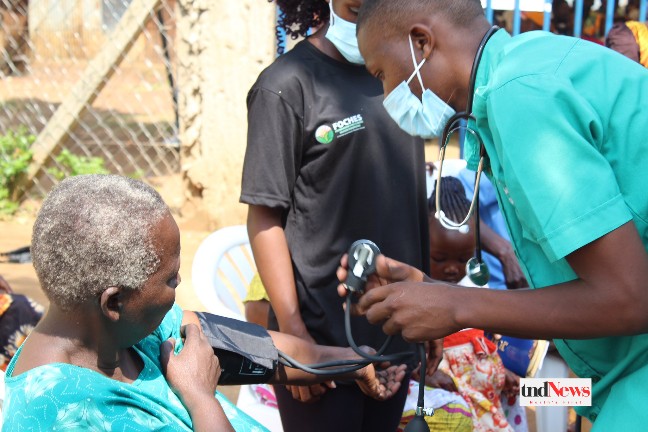
“Most women do not even know they have diabetes until they develop complications and by the time they seek medical help, they are already at risk of kidney damage, nerve disorders, and even blindness,” Onyai said.
According to Onyai, for those who do get diagnosed, managing diabetes is another challenge especially for women who rely on insulin and like many others, storing it safely is another challenge.
“In many rural homes and slums, electricity is unreliable or entirely absent; and without refrigeration, insulin loses its potency, putting users at risk; hence, many opt to using traditional cooling method-storing insulin in a clay pot filled with water; though, it helps, it is not as effective as refrigeration.”
The unavailability of insulin, a life-saving medication for those with Type 1 and advanced Type 2 diabetes makes management extremely difficult; hence, many rural areas lack the necessary refrigeration facilities forcing women to rely on irregular deliveries from distant towns; and sometimes, they have no choice but to ration their doses leading to devastating health consequences.
“Impaired glucose tolerance (IGT) and impaired fasting glycaemia (IFG) are intermediate conditions in the transition between normality and diabetes and people with IGT or IFG are at high risk of progressing to Type 2 diabetes, although this is not inevitable,” Onyai revealed.
In May 2022, WHO member states set global targets for diabetes, as part of recommendations to strengthen and monitor responses within national NCD programs and to help achieve these global targets for diabetes, WHO and the World Diabetes Foundation (WDF) agreed to implement a joint integrated project on diabetes prevention and control in Uganda and Ghana, with spotlight meeting was one of the preliminary activities of the joint integrated project.
“In recognition of the increasing burden of diabetes and other NCDs as a major socio-economic challenge, the Government of Uganda is scaling up critical care pathways for managing chronic diseases including diabetes up to primary health care level,” said Margret Muhanga, the Minister of State for Primary Health Care, Uganda.
According to the International Diabetes Foundation, in 2021, an estimated 716,000 adults in Uganda had diabetes and about 89% of Ugandans with diabetes are neither on medication nor aware of their status and therefore present to the health system with difficult to treat complications.
The Global Burden of Disease Study estimates that diabetes is the fifth leading cause of deaths due to non-communicable diseases in the region; and others ahead of it are stroke, ischaemic, heart disease, congenital birth effects and chronic liver diseases.
Cultural barriers: The gendered burden of diabetes
In rural societies and the African setting, healthcare is often a low priority for women; traditional gender roles expect women to put their families’ needs before their own.
“My husband thinks diabetes is not serious, and usually says, why do I need insulin; I should just eat less sugar,” Acan disclosed.
This lack of awareness means that many rural women and those in slums do not get proper support from their families and some even avoid medical treatment altogether, fearing they will be seen as a burden.
“There is a stigma; many women think that admitting they have diabetes will make them less desirable for marriage or make their families worry about expenses; so they stay silent until it is too late,” Onyai noted.
David Onen Acana II, the Acholi Paramount Chief revealed that though the health partners are focusing on diseases like malaria, they should not forget the fact that diabetes is also a killer disease affecting the lives of women and communities especially in the rural areas.

Diabetes is not just an urban problem; it is a global health crisis affecting millions of people including the most vulnerable women in rural areas; hence, by ensuring insulin access is not just a medical necessity but it is a matter of life, dignity and equality.
“I urge the government to scale up the prevention, diagnosis and treatment of diabetes especially at the primary health care level, as part of the journey towards universal health coverage,” Acana said.
“As diabetes continues to rise, rural women deserve better; better healthcare, better support, and most importantly, a fair chance at survival. I thereby urge partners in the private sector to continue working to expand access to insulin and local manufacturing in Africa,” he added.
The consequences of interrupted insulin treatment
For insulin dependent diabetics, missing doses can have severe consequences; and without insulin, blood sugar levels can spike dangerously leading to fatigue, infections, nerve damage, and even amputation.
The Director General of the World Health Organization, Dr. Tedros Adhanom Ghebreyesus in his remarks at the UN General Assembly side-event: Empowering Lives: Bridging the Gap for Insulin Access in Africa in 2023, noted that insulin is the bedrock of diabetes treatment and it turns a deadly disease into a manageable one.
“Yet more than 100 years since the discovery of insulin, one in two people who need insulin for type 2 diabetes do not get it. Diabetes is on the rise in low-and middle –income countries, but access to insulin has not kept pace with the growing disease burden,” Dr Tedros noted.
He further revealed that the COVID-19 pandemic exacerbated inequalities in the treatment and care of non-communicable diseases including diabetes. The pandemic, he said, illustrated the need for locally produced health products in Africa, including vaccines and including insulin; which is a key priority for WHO.
At the World Health Assembly in 2022, countries committed to new targets on diabetes, including seeing 80% of people with diabetes diagnosed by 2030 and 80% of those diagnosed having good control of glycaemia.
“We can only reach these ambitious targets together, governments, WHO and the private sector working together for common sense. That is why two years ago, we launched the WHPO Global Diabetes Compact bringing together all partners to expand access to comprehensive, affordable and quality prevention, treatment and care,” Dr Tedros remarked.
As part of the compact, WHO worked with insulin manufacturers to secure commitments and contributions like Novo Nordisk and Aspen Pharmacare which committed to expanding access to affordable human insulin in Africa.
The side-event hence marked a significant milestone in the collective work to make diabetes treatment and care accessible to those who need it the most in Africa and around the world.
The Government of Uganda under the Ministry of Health has increased the number of health facilities throughout the country in recent years. However, there are still disparities between urban and rural areas as well as by geographic location therefore certain communities have more access to health services than others.
tndNews has also learned that the lack of public facilities in some communities which are predominantly used by the poor is likely to affect the health seeking practices of the population; the problem of inequity in health facility distribution affects the health seeking practices of several communities hence hindering health services utilization.
Bridging the insulin gap
Despite the prevailing challenges, hope is not lost; several initiatives are working to improve insulin access and diabetes care in rural and slums areas.
Myabetic, a retail company founded by Kyrra Richards in Uganda sells aesthetically pleasing cases and other devices in which to carry diabetes supplies.
Although the company’s main goal is to make diabetics feel better about themselves by giving them prettier carrying cases, they sell other diabetes paraphernalia as well; and among these items are bracelets handcrafted by diabetic artists in Uganda.
“I was first diagnosed with Type 1 diabetes at age 24, I was embarrassed and hid my condition from everyone by not checking my blood sugar or doing insulin in public, which threatened my life; part of my problem was her standard black supply case, which looked ugly and made my fear stigma even more,” Richards recalled.
“The bracelets come in red, blue, yellow and green and they cost $15 each; and these profits go directly back to the artists, allowing them to buy the supplies they need to survive,” he added.
She further revealed that those who do not die are shunned, given barely enough supplies to survive and are left to die; fortunately, Myabetic helps diabetics in Uganda to afford supplies by selling the bracelets that diabetic Ugandans make.
“The bracelets may be inexpensive in American standards, but every penny counts when someone needs diabetes supplies to live, and these Ugandan artists have a new chance to hope for a better life,” Richards said.
The road ahead
While these efforts are making a difference, long-term solutions are needed to ensure sustainable insulin access for rural women and experts suggest government intervention to regulate insulin prices and improve distribution to rural clinics.
Experts further recommend that better healthcare infrastructure including diabetes screening and specialized care in rural hospitals, increased awareness campaigns to educate women and their families about diabetes management and community based support groups to empower women in self-care and diabetes management.
Bwambale Bernard, a nutritionist and food safety advocate at Consent Uganda advised that healthy eating is important for everyone and when one has diabetes, he or she needs to know how foods affect their blood sugar levels. He noted that it is not only the type of food one eats but also how much one eats and the types of food one combines in meals and snacks.
“Among all foods, carbs often have the biggest impact on blood sugar levels and because they break them into sugar, it raises blood sugar levels. Some carbs are better for you than others,” Bwambale said.
For example, he said fruits, vegetables and whole grains are full of nutrients and they have fiber that helps keep blood sugar levels more stable too. “Eat fewer refined, highly processed carbs and these include white bread, white rice, sugary cereal, cakes, cookies, candy and chips.”
Uganda’s National Multi-sectoral Strategic Plan for the Prevention and Control of Non-communicable Diseases (2018-2023) outlines an action plan to halt the rise of diabetes by 2025. The Strategic Action Area 4 of the plan is to ensure a comprehensive and integrated management of non-communicable diseases (NCDs).
Key priority actions in this area include integrating NCD care within other health systems and raising public awareness of NCDs and as a member of the WHO Global Diabetes Compact, Uganda is working to put those living with diabetes at the centre of the decision-making that impacts their lives.
As diabetes continues to rise, rural women and those in slums deserve better healthcare, support and most importantly a fair chance at survival.
Diabetes is not just an urban issue; it is a global health crisis affecting millions of people, including the most vulnerable women in rural and slum areas, so ensuring insulin access is more than just a medical necessity; it is a matter of life, dignity, and equality.
Discover more from tndNews, Uganda
Subscribe to get the latest posts sent to your email.