Survivors of the Lukodi massacre are calling on the government and well-wishers to provide shs6 billion to develop a memorial site that includes a vocational school, an international museum, and a counseling center.
These initiatives aim to honor the memory of those killed in the 2004 attack and provide vital support to children born in captivity and other war-affected community members.
Wilfred Lalobo, 55, chairperson of the Lukodi Survivors and Victims’ Association, said the group, which has over 100 registered members, has already begun early preparations.
“We’ve mobilized ourselves to start molding 20,000 bricks as a first step toward developing the site, instead of waiting endlessly for government support,” Lalobo said.
He also cautioned fellow survivors against being misled into violent actions which to him will destabilize the peace and amnesty that they have been granted.
“Some people suggest going back to the bush to fight, but that’s not the solution. We must seek support peacefully and focus on rebuilding. We’ve suffered enough—we deserve to live with dignity,” he added.
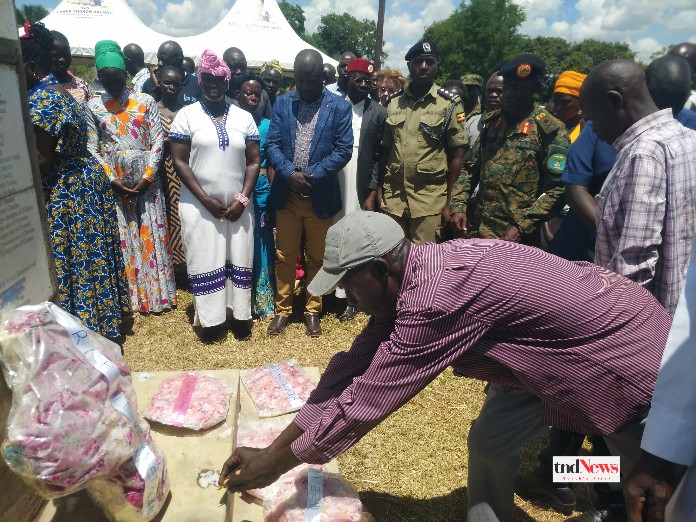
Lalobo emphasized the importance of the annual Lukodi memorial, saying it provides survivors with a space to connect, share experiences, and begin healing.
“Many children born in captivity are still not in school. A skills training center would provide jobs and reduce social instability in the community,” he said, noting that their SACCO (Savings and Credit Cooperative Organization) currently offers revolving loans to help members sustain their livelihoods.
David Acire, 43, a survivor and chairperson LC1 of Lukodi village, echoed the call for government support, highlighting the pressing educational and psychosocial needs of children born during the conflict.
“These children missed formal education. A vocational and technical school will equip them with the skills needed to reintegrate into society,” Acire explained.
He further noted that the proposed international museum would preserve the history of the conflict and educate both Ugandans and visitors about the region’s past.
“Proceeds from the museum would be managed by our SACCO, ensuring direct benefits for the victims, rather than relying solely on inconsistent donations.”
Acire estimated that over 2,000 children born in captivity currently live in northern Uganda and stressed the urgent need for a dedicated counseling center.
“We’ve raised these concerns for years with little response. This year, we are submitting a formal proposal requesting shs6 billion to build these vital facilities,” he said.
Okumu Martin, Deputy Prime Minister of the Acholi Cultural Institution in charge of Finance and Planning, said his office is also lobbying for the development of war memorial sites across the region.
“Despite limited funding from the Ministry of Gender, Labour and Social Development, we are promoting public awareness, offering psychosocial support, and providing startup capital to children born in captivity,” Okumu said.
He urged war survivors and their families to work together toward self-rehabilitation.
“We must not depend entirely on external aid. Let’s support our own. Our institution is offering scholarships and vocational training while continuing to seek more support from the government and development partners.”
Jimmy Otim Ocogo, ICC Field Outreach Officer for Uganda, confirmed that survivors of the Lukodi massacre are among the beneficiaries of reparations ordered in the case against former LRA commander Dominic Ongwen.
“Under the Trust Fund for Victims, over 49,720 survivors are eligible for symbolic payments of 750 Euros each,” Ocogo said.
He clarified, however, that while the reparations include the construction of counseling centers and memorial monuments, school infrastructure is not part of the current reparation package.
“We’ve deployed data clerks to register all victims across northern Uganda. Our goal is to ensure justice for the vulnerable who suffered during the insurgency,” he added.
This year marks 21 years since the Lukodi massacre, when over 69 civilians were brutally killed on May 19, 2004, in one of the deadliest attacks by the Lord’s Resistance Army (LRA), led by Joseph Kony and Dominic Ongwen.
The massacre remains a powerful symbol of the atrocities committed during the two-decade conflict in northern Uganda.
Between 1987 and 2006, more than 20,000 children were abducted by the LRA, and over 1.9 million people were displaced.
Survivors of the Lukodi massacre continue to push for justice, recognition, and a chance to rebuild their lives through meaningful, government-backed development.
Discover more from tndNews, Uganda
Subscribe to get the latest posts sent to your email.