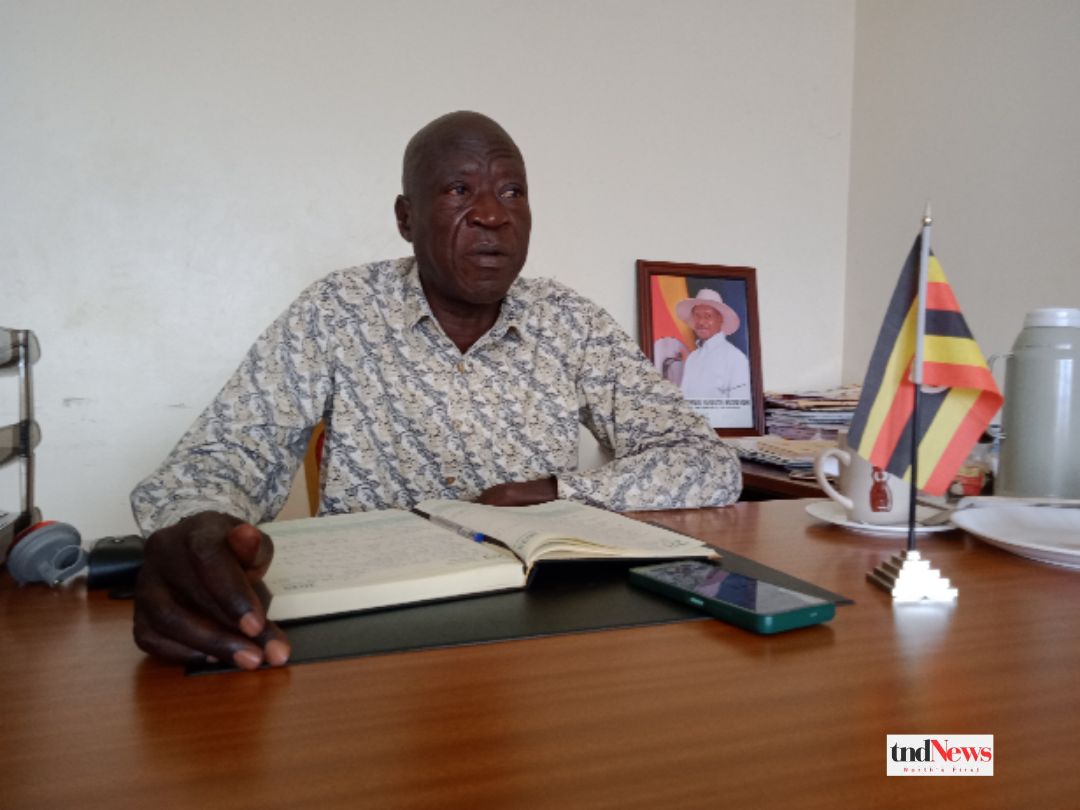
The Resident District Commissioner (RDC) of Lamwo district has expressed deep concern over the persistent trend of late reporting to duty by district staff, branding the practice as “corruption of the highest order.”
Speaking to tndNews in an interview, RDC William Komakech lamented that despite over ten years since Lamwo was carved out of Kitgum district, a significant number of staff continue to reside in Kitgum and commute daily to Lamwo for work.
According to the RDC, this daily commuting not only affects service delivery due to late arrivals and early departures but also places a heavy financial burden on the district through the misuse of government fuel and vehicles.
“This is not just an administrative challenge, this is outright abuse of public resources,” the RDC stated. “How can we expect effective service delivery when our public servants arrive late, leave early, and prioritize personal convenience over their professional obligations?”
The RDC emphasized the need for district leadership to take urgent measures, including enforcing stricter attendance monitoring, encouraging staff to relocate within the district, and reviewing vehicle and fuel usage policies.
Local residents have also raised concerns about delayed services in government offices, attributing much of the inefficiency to the absence or late arrival of key staff members.
The RDC concluded by warning that disciplinary action may be taken against persistent offenders and called upon civil servants to uphold the integrity of their offices and serve the people of Lamwo with commitment and accountability.
Local government reacts
In response to the RDC’s statement, the Lamwo District Chief Administrative Officer (CAO), Thomson Obong, acknowledged the problem and admitted that staff absenteeism and late reporting have been long-standing issues.
“We have indeed faced challenges in enforcing punctuality, especially among technical officers who live outside the district. While housing shortages within Lamwo have contributed to the situation, there is no justification for the misuse of government resources,” said the CAO.
Obong pledged that the district would begin implementing strict attendance monitoring, including biometric systems, and would issue formal warnings to habitual latecomers.
He also appealed to the Ministry of Public Service to support the construction of staff housing to encourage relocation.
Shocking statistics
According to the district Chairperson, Oyet Sisto Ocen, a 2024 internal audit report by the Lamwo District Human Resource Office, indicates that over 60% of technical staff live outside the district, with most commuting from Kitgum, approximately 45 kilometers away.
On average, staff report to work between 9:30 am and 10:00 am, despite the official reporting time being 8:00 am. An estimated shs120 million was spent on fuel in the last financial year, with up to 40% attributed to non-essential travel, including daily commutes while office productivity is estimated to be reduced by 25%, particularly in departments such as health, education, and community services.
The District Speaker, James Ochola, echoed the RDC’s concerns and called for immediate policy reforms. “We cannot afford to let this culture of laxity continue. We need to hold our staff accountable and ensure they put the needs of the people first. Service delivery must be our top priority,” she said.
Call to action
The RDC has directed the district service commission to compile a list of all staff residing outside Lamwo and issue them with formal relocation notices.
Staff who fail to comply within a specified period may face disciplinary action, including suspension or termination.
Residents have also weighed in, calling for urgent action. Patrick Ocen, a local farmer in Padibe, said, “Sometimes you come to the district headquarters before 9 am, and you find offices still closed. It’s frustrating. We need change.”
As pressure mounts, Lamwo district leadership is now faced with a critical test: to clean up the civil service and restore public trust through stronger oversight, better planning, and firm accountability measures.
Discover more from tndNews, Uganda
Subscribe to get the latest posts sent to your email.