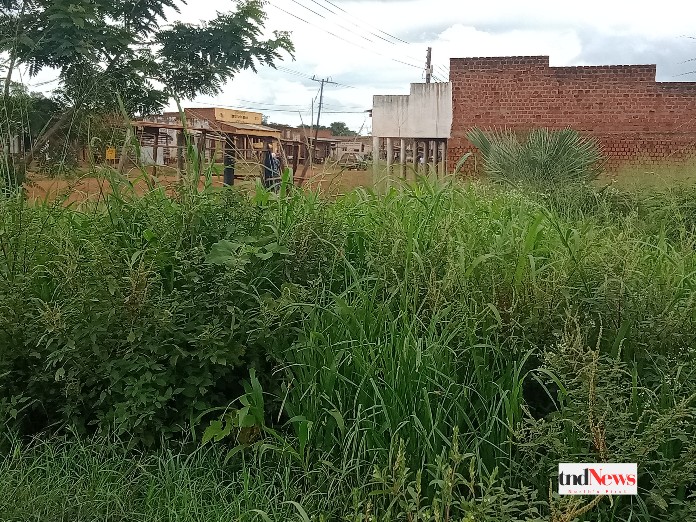
Lamwo | Residents of Padibe town council in Lamwo district have raised serious concerns over the rampant growth of bushes within the town.
The residents accuse local leaders of neglect and failure to maintain cleanliness and proper management.
Margaret Ayaa, a town resident said the overgrown vegetation is not only making the area unsightly but is also posing significant health and security risks.
“The town is becoming a jungle. Snakes and other dangerous animals are hiding in the bushes. We fear for our children’s safety,” Ayaa said.
Many residents blame town council authorities for failing to organize regular cleaning and maintenance efforts. They allege that local leaders have neglected their responsibilities, despite continued tax payments from the community.
Peter Okot, another resident and boda boda rider, echoed similar concerns, highlighting that the unkempt environment has become a breeding ground for mosquitoes, increasing the risk of malaria and other diseases.
“We pay taxes, but we don’t see the benefits. The leaders must wake up and prioritize the cleanliness of our town,” Okot said.
In response, Richard Omo, the LC3 chairperson of Padibe town council, acknowledged the concerns but emphasized that hygiene is a collective responsibility.
He noted that residents should also play a role by slashing overgrown grass around their homes, constructing drying racks, and placing garbage in designated collection containers.
Omo also affirmed that it is the town council’s responsibility to collect waste and transport it to the designated dumping site, in line with existing policy.

Despite these assurances, residents continue to demand urgent action, warning that the situation could worsen if immediate steps are not taken.
In Uganda, the existing policy framework governing garbage collection and solid waste management by urban councils and divisions is primarily guided by the Local Government Act (Cap. 243).
The Act mandates urban councils: municipalities, town councils, divisions to plan, manage, and deliver services, including solid waste management.
The Act decentralizes services and assigns responsibility to Local Governments, meaning town councils and divisions must provide and supervise garbage collection and disposal.
The National Environment Act, 2019 empowers the National Environment Management Authority (NEMA) to set standards and guidelines for environmental protection, including waste management.
It further requires local authorities to ensure proper disposal of waste and prohibits illegal dumping or burning of waste.
The Public Health Act (Cap. 281), provides for the sanitary inspection of communities and empowers local governments to ensure cleanliness, including removing refuse and enforcing hygiene standards. It gives authority to penalize those who fail to manage waste properly.
The Uganda National Solid Waste Management Policy (Draft of 2020), among others, define roles of different stakeholders (including private sector and community-based organizations)
It also mandates urban councils to provide garbage collection infrastructure, such as: Collection points, dump trucks and landfills.
For town councils like Padibe, it is their duty to provide garbage bins, organize routine collection, and transport waste to a designated disposal site.
Meanwhile, residents are expected to sweep, slash grass around their premises, store waste properly, and participate in community clean-up days while councils can pass local ordinances/bylaws to enforce proper waste handling.
Discover more from tndNews, Uganda
Subscribe to get the latest posts sent to your email.