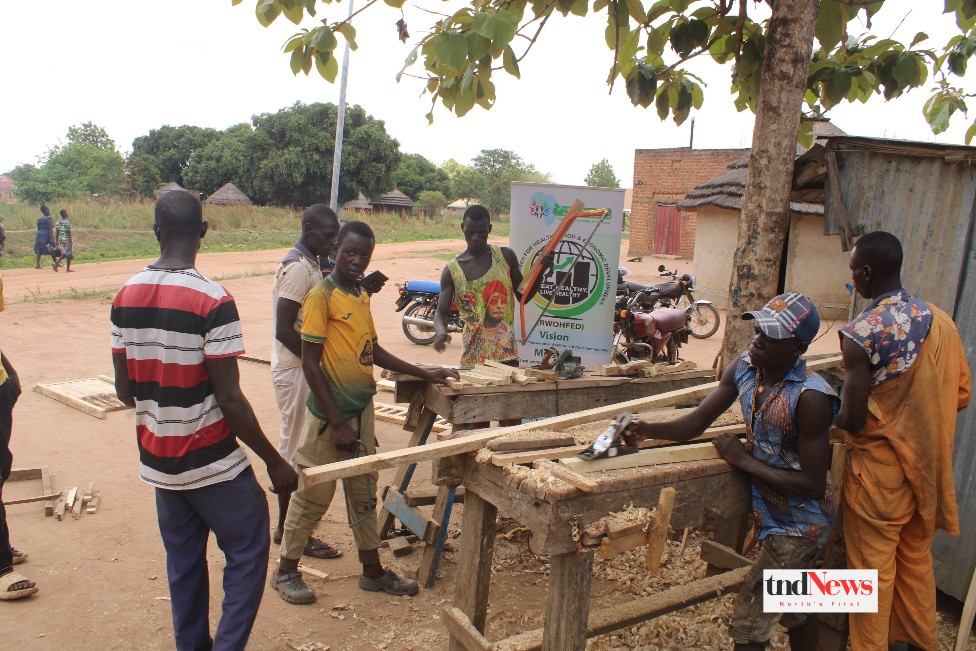
Adjumani | More than 400 at-risk youths in Pakele town council, Adjumani district, have signed up for a transformative skilling initiative aimed at securing a brighter future.
The Youth and Adolescent Project (YARP), led by Rural Women for Healthy Food and Economic Development, is providing a lifeline to school dropouts and young people who have previously engaged in substance abuse and criminal activity.
The project, funded by the MasterCard Foundation through the Children’s Rights and Violence Prevention Fund (CRVPF), is being carried out in collaboration with Voice of Humanity and Response for Social Development.
The program will be implemented over a four-year period in the Boroli and Ayilo refugee settlements, as well as the Pakele town council.
The trainees gain hands-on experience in vocational fields such as carpentry, construction, welding, tailoring, hairdressing, ICT, arts and crafts, and hospitality.
These skills not only help them earn a living, but they also promote self-confidence and community development.

Among the beneficiaries is Baru Willison, a primary seven dropout and orphan who is now studying building construction.
“After losing my parents, I had to leave school. Life was tough, but my neighbors gave me hope. This training has given me a new beginning,” he said.
Hairdressing trainee Harriet Iracha called the program “the greatest gift” she’s ever received. “Even if I don’t receive any more support, what I’ve learned here will help me live a dignified life,” she said.
Scovia Dikua, who is training in tailoring, is already generating income and supporting her family. “I’ve managed to pay my children’s school fees even before completing the course,” she proudly shared.
John Bosco, a former bodaboda rider and Senior Four dropout, found new purpose in metal fabrication. “This job is not only more rewarding but also more satisfying than what I was doing before,” he said.
Margarete Masudio, Executive Director of Rural Women for Healthy Food and Economic Development, confirmed that 429 youths have been enrolled in the first intake.
The program ultimately aims to reach 6,000 vulnerable youth, with a 70% female and 30% male target, equally divided between nationals and refugees.
“This project goes beyond job creation,” Masudio explained. “We’re also tackling mental health issues, with 30% of trainees having faced such challenges, including 10 known drug users. Our mission is to help them rediscover their sense of purpose.”
Board Chairperson Ms. Rose Limio Lilly highlighted the broader impact of the project: “These young people are not just gaining skills—they’re becoming productive members of society. It’s a ripple effect of hope and transformation.”
To further support the transition into entrepreneurship, the program will provide graduates with start-up capital to help launch their own businesses.
This initiative is consistent with the Ugandan government’s broader goal of providing youth with practical, marketable skills to promote self-employment and national development.
The participants’ resilience and determination demonstrate the powerful impact such programs can have on individuals and communities.
Discover more from tndNews, Uganda
Subscribe to get the latest posts sent to your email.