Gulu |The bright morning sun filtered through the hospital window as Okello Omollo [not his real name] sat on his bed, reflecting on the ordeal he had survived.
At 36, Okello never imagined that a routine infection would turn into a life-or-death battle against an invisible enemy, one that the world is only now beginning to confront.
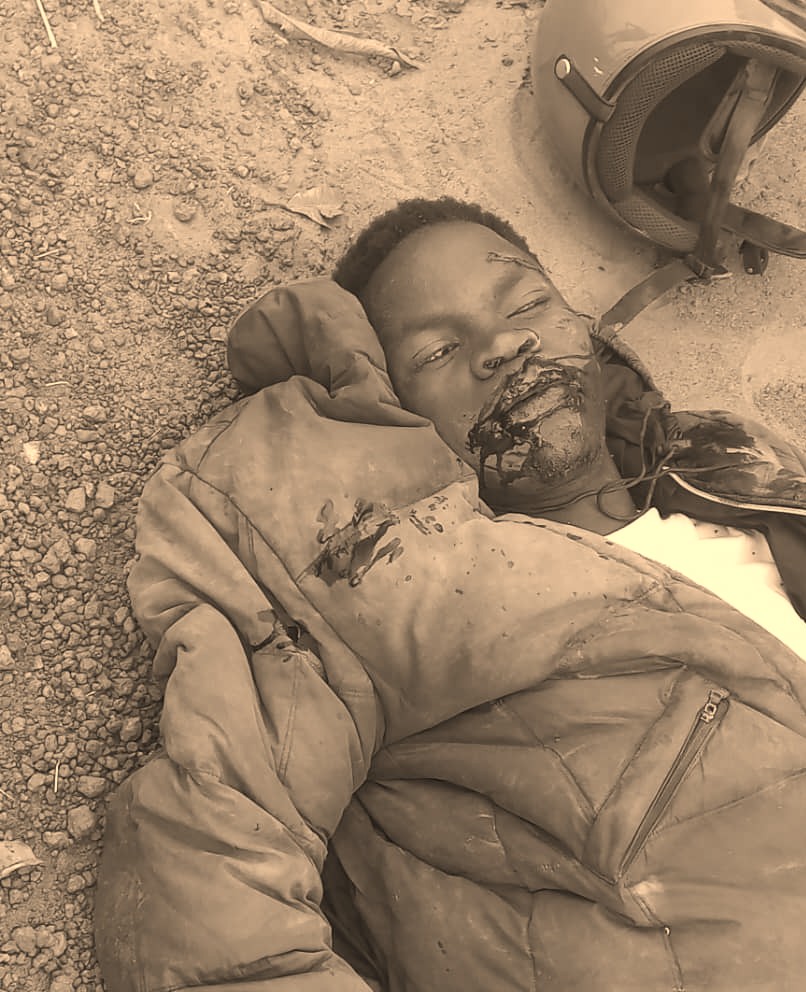
“In 2017, I was 27 years old when I was involved in a serious motorcycle accident on the Gulu-Kitgum highway in Northern Uganda, and I ended up in the hospital with severe injuries.”
Okello recalled being resuscitated on the side of the road, being put on life support, and suffering from multiple fractures in his face.
“I also had a head injury, a major abdominal injury, a fractured pelvis, and a back injury. It took me 6 years to recover from them.”
According to Okello, he did not even know what antimicrobial resistance was and to him, antibiotics were magic pills and he took them to get better and life went on but later it was different.
He did, however, mention that he was diagnosed with an antibiotic-resistant form of MRSA infection and would be unable to undergo any further surgeries for a year because doctors needed to wait for tissue to heal first.
“I lost most of my life between 27 – 35 years of age, dealing with the hospitalization and discharge, and not being able to walk and bed-ridden,” Okello explained.
Okello went on to say that he almost died due to a bloodstream infection and sepsis. However, he is living with a severe disability, which was caused in part by the accident and exacerbated by his inability to treat the infection.
AMR is unidentifiable but those who suffer are not
Dr. Holy Teneg Akwar, Deputy Head of the Antimicrobial Resistance and Veterinary Products Department at the World Organization for Animal Health [WOAH], stated that AMR is faceless, and when it affects or contributes to the mortality of an animal, person, or plant, underlying diseases are blamed.
“The underlying disease gets the blame and AMR may go unnoticed, so, most of the AMR estimates we see could be underestimates,” Dr Teneg said.
He further added, “We have to enhance access to high quality vaccines along with good animal husbandry practices, biosecurity, diagnostic tools, and develop alternatives to antimicrobials.”
Dr. Teneg, on the other hand, urged governments to work toward adding defined animal vaccination strategies to WOAH’s priority list of diseases where vaccines could reduce the use of antimicrobials, along with a funded implementation plan by 2030.

The report went on to say that 62 countries participated in veterinary monitoring and surveillance for substandard and falsified veterinary medicinal products, with Africa accounting for the most [34.5%], Asia [23.6%], the Americas [21.8%], and the Middle East [5.4%].
Because antimicrobials are used in a variety of industries and are frequently dispersed throughout the environment, the impact of AMR is felt in all of them and beyond.
As a result, preventing and responding to AMR requires a One-Health approach that recognizes the interconnectedness of animal, human, plant, and environmental health.
Dr Junxia Song, Senior Animal Health Officer at the Food and Agriculture Organization of the United Nations [FAO], explained that AMR is a complex crisis that affects all aspects of human life, particularly the food system.
“The misuse of essential drugs in food production, livestock farming, acquacture, or crop production, accelerates the emergence and spread of resistance strains. These resistant strains of disease-causing microbes can transfer from animals to humans through direct contact or through the agriculture-environment or the food chain, worsening the AMR crisis,” Dr Junxia noted.
According to Dr. Junxia, it has significant implications for food safety, food security, and the economic well-being of millions of farming households, as common bacterial infections become more difficult, if not impossible, to treat.
“AMR threatens livelihood of 1.3 billion people who depend on livestock with the World Bank projects that in high AMR impact scenario, livestock production in low-income countries could decline by 11% by 2050,” Dr Junxia explained.
He added that, “AMR is raising costs for farmers and driving up food prices and one of the major challenges in addressing AMR in aquatic-food system is the limited funding available. We must promote responsible use of antimicrobial medicines in agriculture and food systems alongside promoting best practices at farm level to reduce reliance on medicines,” Dr Junxia elaborated.
AMR and the environment
According to experts, the environment plays an important role in the development, transmission, and spread of AMR; thus, addressing AMR necessitates a multi-sectoral, One Health approach that considers the health of humans, animals, plants, and the larger environment, including ecosystems, as interconnected and interdependent.
Mr Echeverria Aitziber, AMR Coordinator, Chemicals and Health Branch, Industry and Economy Division, United Nations Environment Programme [UNEP], explained that three economic sectors and their value chains have the potential to drive AMR development and spread.
“Pharmaceuticals and other chemical manufacturing, agriculture and food production, healthcare systems and also municipal systems [waste and wastewater], all are potential drivers,” Mr Aitziber said.
He added, “We have to enhance environmental governance, planning and regulatory frameworks, generate evidence and knowledge to inform policy [to improve reporting, surveillance and monitoring, research] and raise awareness.”
Aitziber further explained that there must be scaling up of preventive actions with private sector engagement and addressing key value chains affecting AMR in the environment.
Dr. Yvan JF Hutin, Director, Department of Control, Surveillance, and Prevention of Antimicrobial Resistance, World Health Organization [WHO], explained that as new antibiotics are discovered, it is important to note how quickly resistance is reported.
“Sulfonamides were discovered in 1930s and within 10 years, there were Sulfonamide-resistant microbes; in 1940s, penicillin was discovered, and resistance was reported in next few years. Research pipeline for new antimicrobials is drying up, that is why we need stronger commitments at the UNHLM on AMR to save our medicines,” Dr Hutin said.

Urgency to prevent AMR if we are to deliver on health for all and SDGs
In 2019, drug-resistant bacterial infections caused 4.95 million deaths, with 1.27 million deaths directly attributed to bacterial antimicrobial resistance. Twenty percent were children under the age of five.
Therefore, without a stronger response to prevent AMR, there will be an estimated average loss of life expectancy of 1.8 years globally by 2035, as well as US$ 1 trillion to 3.4 trillion in GDP losses per year by 2030.
It is now estimated that treating drug-resistant bacterial infections alone will cost up to $443 billion.
Dr. Jean Pierre Nyemazi, Healthcare Delivery Scientist, urges world leaders to fully fund the AMR response through effective governance and prevention, while also accelerating research and development and prioritizing issues of inequitable access to diagnostics and antimicrobial medicines.
“What the world needs now are bold, transformational, and firm commitments from heads of state to ensure that the implementation of AMR action plans is accelerated and effective,” Dr. Nyemazi stated.
Dr. Nyemazi added, “There is no time to waste; we must work together to preserve the effectiveness of these global public goods in order to ensure a safe planet for our children.”
He also explained that AMR is currently one of the most serious global threats, causing millions of deaths, long-term disabilities, and increased health-care costs, as well as severe impacts on livelihoods, threatening food security, and resulting in the loss of animal lives.
The primary cause of AMR is the misuse and overuse of antimicrobials [antibiotics, antivirals, antifungals, antiparasitic] in human, animal, and plant health. It is exacerbated by an increase in infection rates as a result of poor drinking water quality, limited sanitation access, and insufficient infection control in healthcare facilities.
It is further complicated by the improper disposal of waste, particularly those containing antimicrobials, which contributes to the spread of Antimicrobial Resistance [AMR].
“Rising levels of AMR will hinder progress towards many of the Sustainable Development Goals [SDGs], particularly those focusing on heath and well-being, poverty reduction, food security, environment and economic growth,” Dr Nyemazi explained.
Human AMR surveillance in Uganda takes place at national and regional referral hospitals, as well as select public universities, where bacterial isolates from patients are tested for drug susceptibility.
However, after testing, the results are used in real time to provide patient care, and isolates are sent to the National Microbiology Reference Laboratory (NMRL) for re-analysis to generate national AMR surveillance data and global reporting.
According to a study conducted by the Uganda Institute of Public Health, drug resistance to antibiotics such as ciprofloxacin, ceftriaxone, meropenem, imipenem, and tetracycline [among Gram-negative organisms] is increasing significantly in Uganda.

As a result, the Institute advocates for continuous monitoring of AMR trends at the national level in order to improve efforts to reduce AMR in Uganda through public health policy and planning.
Discover more from tndNews, Uganda
Subscribe to get the latest posts sent to your email.