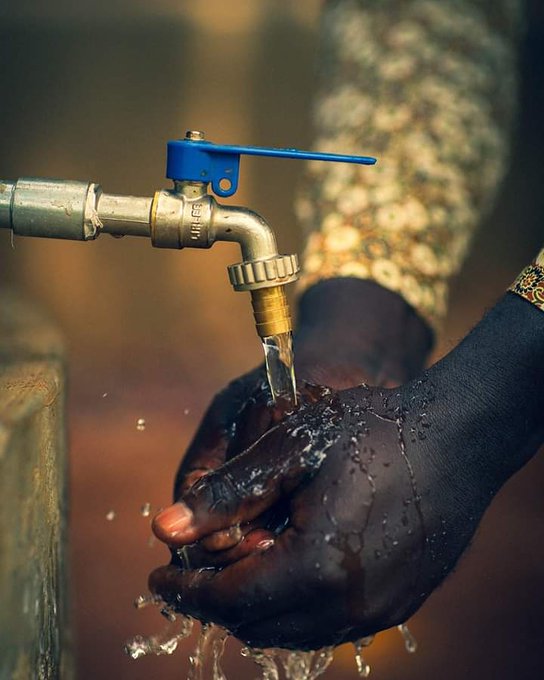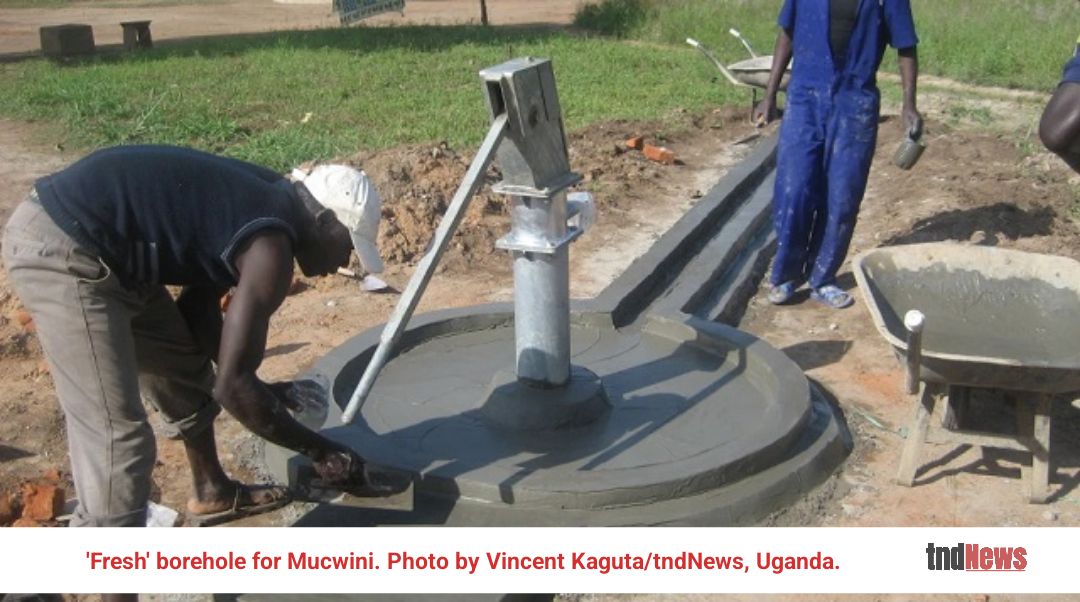
Residents of Yepa B village in Mucwini sub-county, Kitgum district, erupted in celebration after their only borehole was repaired following months of breakdown that had left families struggling to access safe water.
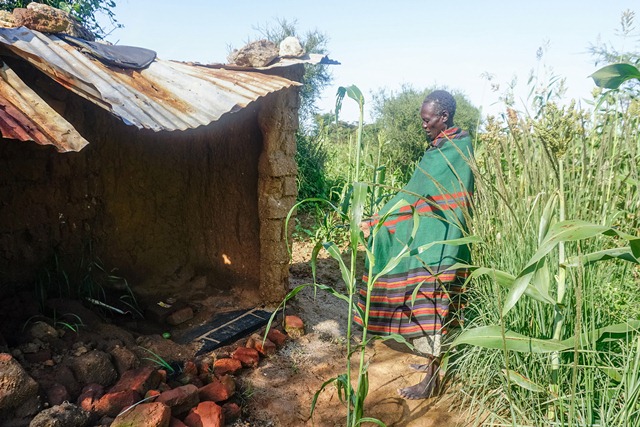
For between seven and nine months, the borehole had remained non-functional, forcing the community to depend on unsafe water sources such as ponds, open wells and seasonal streams.
The crisis exposed residents to waterborne diseases and long daily walks in search of water, with women and children carrying the heaviest burden.
The borehole was restored through the support of a well-wisher, Ojera Wod Pader, a Ugandan living in London, whose contribution has now brought relief to the village.
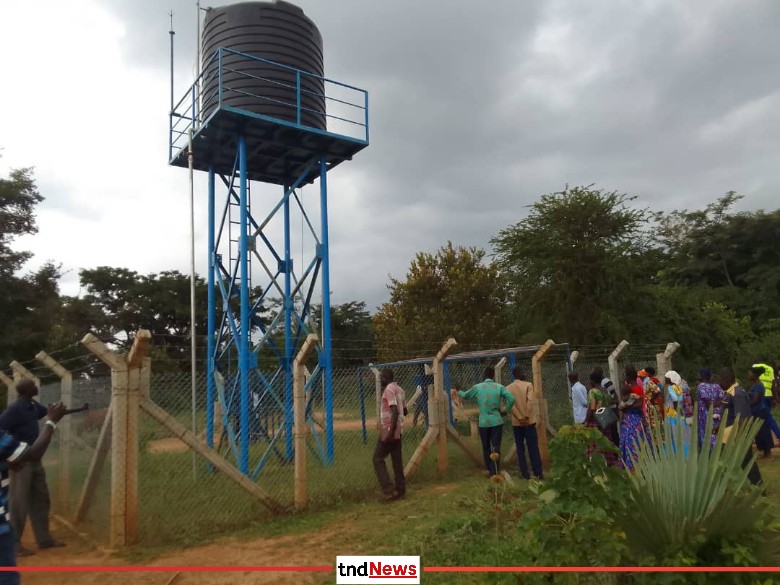
As water began flowing again, residents gathered at the site with songs, ululations and prayers, describing the moment as life-changing.
Atto Pamela, a mother of four, said the months without clean water had been painful for many households. “We have been suffering a lot looking for water far away and sometimes using dirty water,” she said. “Our children have been falling sick, but now we are very happy because we have safe water again.”
Pamela said many children often reported late to school because they first had to help fetch water, while women spent hours each day moving between distant sources.
Another resident, Joyce Akot, said the burden on women had been severe. “As women, we wake up very early to search for water, and it has been stressful and risky,” she said. “This borehole repair has brought us relief and dignity. We thank the well-wisher for remembering us.”
The celebrations in Yepa B come against a broader backdrop of water access challenges in Kitgum District, where authorities continue efforts to improve coverage and functionality of rural water sources.
According to district statistics, Kitgum has an estimated 81 to 83 percent safe water coverage overall, with roughly 89 percent access in rural areas.
More than 1,400 water points serve a population of over 217,000 people, including six piped water schemes.
However, despite this progress, disparities remain across the district. Some urban centres such as Central Division enjoy water coverage of around 95 percent, while some sub-counties like Namokora report lower access levels.
Omiya Anyima sub-county is among the most water-stressed areas, with more than 40 villages reportedly lacking a single safe water source.
Orom sub-county also faces serious challenges due to poor groundwater potential, rocky terrain and the high cost of drilling viable boreholes.
District officials say functionality remains another concern. While rural water point functionality is estimated at about 83 percent, at least 662 water points have reportedly been abandoned or remained non-functional for more than five years.
Speaking on the importance of maintaining water facilities, Frank Kidega, Secretary for Works and Technical Services at Kitgum District Local Government, said the district welcomes all support aimed at reducing water stress in communities.
“Water is a basic need and a key public service. When a borehole breaks down for a long period, the community suffers greatly,” Kidega said. “We appreciate well-wishers and partners who complement government efforts, but communities must also take responsibility for protecting and maintaining these facilities.”
He urged residents to strengthen local water user committees to ensure quick response when pumps develop faults. “When communities take ownership, repairs are faster and the water source serves people longer,” he added.
Kitgum District Water Officer Picho Willy said the district continues to work toward universal access to clean and safe water. “Our target is to achieve 100 percent safe water coverage by 2030,” Picho said.
“We are prioritizing rehabilitation of broken water points, expanding piped systems where possible and improving management structures.”
He noted that water management in the district is shared between local water user committees and the Northern Umbrella of Water and Sanitation, which supports operation and maintenance systems.
However, officials say some user committees remain weak, with only about 49 percent functioning effectively, affecting timely fee collection and maintenance planning.
Health workers warn that when boreholes fail, families often turn to contaminated sources, increasing cases of diarrhea, typhoid and other preventable diseases.
For residents of Yepa B, the repaired borehole means more than water. It means fewer illnesses, less time wasted walking long distances, improved hygiene and children returning to school on time.
Community elders said the joy seen at the borehole should remind leaders that access to clean water remains one of the most important investments in rural development.
For now, the people of Yepa B say they are grateful that after months of hardship, clean water is once again flowing and with it, hope for a healthier future.
Discover more from tndNews, Uganda
Subscribe to get the latest posts sent to your email.