Uganda Peoples Congress (UPC) party leader Jimmy James Micheal Akena has raised concern over the country’s child stunting crisis, describing it as “one of the greatest human rights, development and nation-building challenges facing Uganda.”
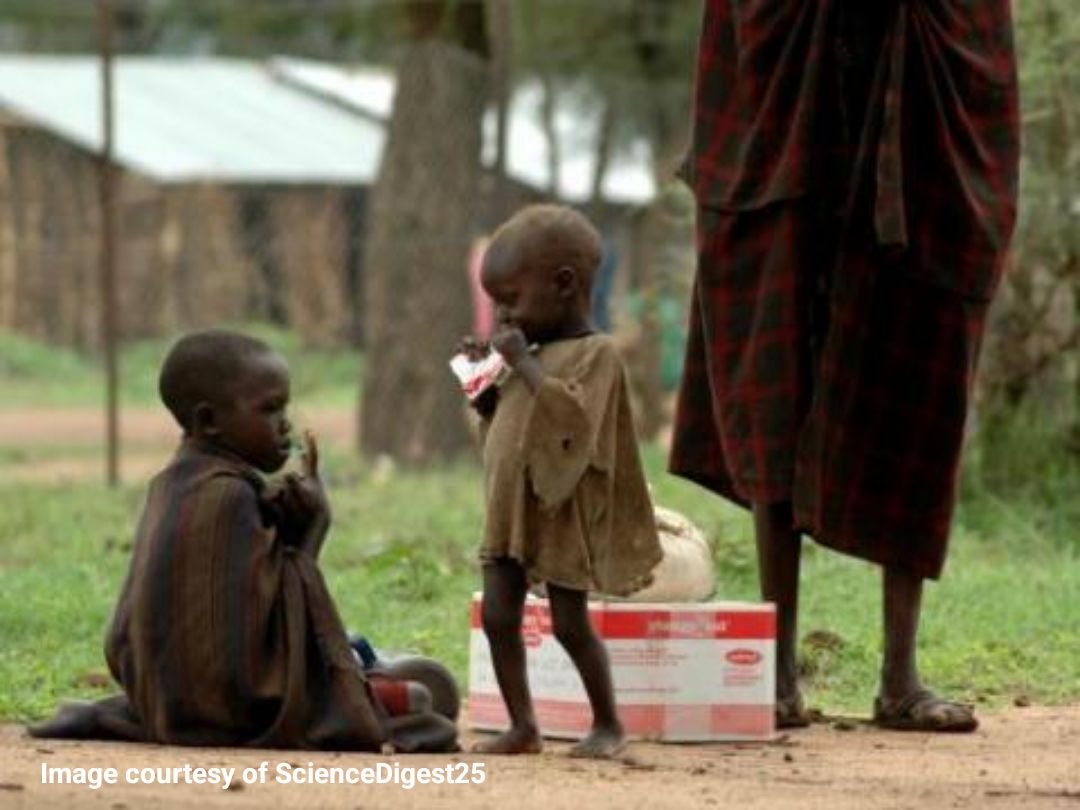
In a press statement issued on August 5, 2026, Akena said approximately 26 per cent of Ugandan children under the age of five – about two million children are stunted.
He said stunting permanently affects brain development, learning ability, physical growth, educational attainment, productivity and lifetime opportunities, with much of the damage being irreversible.
“These children are Uganda’s future,” Akena said, noting that within the next four to five electoral cycles, the affected children will become workers, farmers, teachers, entrepreneurs, doctors, engineers, Members of Parliament, presidents and voters.
He argued that Uganda’s future is being determined by the quality of nutrition available to its youngest citizens today.
Akena questioned why child nutrition outcomes vary significantly across regions, pointing to disparities in milk consumption.
According to the statement, Uganda consumes approximately 63–70 litres of milk per person annually, but consumption varies widely across regions.
Ankole consumes an estimated 160–170 litres per person annually, followed by Western Uganda at 130–140 litres and Central Uganda at 80–90 litres.
Karamoja consumes 70–80 litres, while West Nile consumes 50–60 litres and Busoga 45–55 litres.
Teso consumes 35–45 litres, Acholi 25–35 litres, while Lango has the lowest reported consumption at 16–20 litres per person annually.
Akena said the disparities are reflected not only in milk consumption, but also in child nutrition, anaemia and stunting.
“The question therefore becomes: Why should the opportunity available to a Ugandan child depend so heavily upon the region into which that child is born?” he asked.
He attributed some of the regional disparities to the destruction of productive livestock economies during conflicts in the late 1980s.
According to Akena, cattle were not merely a source of wealth but the productive foundation of rural life, providing milk, household income, school fees, medical care, oxen for cultivation and manure for maintaining soil fertility.
“When cattle disappeared, communities lost much more than animals,” he said.
He said affected communities lost nutrition, productive capacity, food security, income and the foundation upon which future generations would be raised.
The former Lira Municipality and Lira City East Division MP, Akena, cited historical records from the period of conflict, including a statement attributed to President Yoweri Museveni published in the New Vision on June 27, 1989, concerning the destruction of houses and granaries during military operations.
He also cited an acknowledgement that approximately 2.7 million people in Northern and North-Eastern Uganda had been rendered destitute by the conflict.
Akena said the Rehabilitation and Development Plan recognised the need to rebuild Uganda’s livestock economy through restoration of veterinary services, control of livestock diseases and rehabilitation of dip tanks.
The plan, he said, recorded that materials for repairing 214 dip tanks had arrived in the country, district repair teams had been re-equipped, and rehabilitation work had begun to restore livestock production.
According to Akena, the connection between livestock and child nutrition is straightforward: healthy cattle produce milk, milk nourishes children, healthy herds generate household income and support crop production, while strong rural economies contribute to healthier families.
However, he said the programme was never fully implemented in many areas that had suffered the greatest destruction.
As a result, Akena said, the productive livestock economy has never been fully restored, with the consequences still visible in regional disparities in milk consumption, child nutrition and stunting.
The UPC leader said he has personally chosen to rehabilitate dip tanks within his community as part of efforts to rebuild the productive foundation of rural life and improve children’s access to milk and better nutrition.
“Repairing one dip tank will not solve Uganda’s national challenge,” he said, adding that every functioning dip tank contributes to healthier cattle, which produce more milk and can improve child nutrition.
He argued that reducing child stunting should not be treated solely as a health issue.
“It is an agricultural issue. It is a livestock issue. It is a food security issue. It is an education issue. It is an economic issue. It is a constitutional issue. Above all, it is a human rights issue,” Akena said.
He cited Articles 22 and 34 of the Constitution, which provide for the right to life and special protection for children, respectively.
Akena said the constitutional guarantees should include every child’s right to develop physically and intellectually to the fullest extent possible.
He said the discussion should not be viewed as an attempt to reopen old wounds but as an effort to understand present realities and build a better future.
“Children do not create regional disparities. They inherit them. Our responsibility is to ensure that the next generation inherits opportunity instead of deprivation.”Akena said.
Discover more from tndNews, Uganda
Subscribe to get the latest posts sent to your email.