A fee dispute at Lokung Senior Secondary School in Lamwo district has exposed the financial and administrative challenges facing government-aided schools.
Parents, teachers, school management and district officials are struggling to balance the cost of running schools with learners’ right to education, tndNews, Uganda, has established.
The dispute came to a head on July 27, 2026, when students with outstanding payments were reportedly sent home to collect money from their parents. The school gate was later locked, leaving some learners outside.
The affected students contacted their parents, who sought intervention from the office of Deputy Resident District Commissioner Vincent Mugenyi.
Mugenyi visited the school and directed that the students be allowed back, arguing that Lokung is a government-aided school operating under Universal Secondary Education (USE), and that learners should not be denied education because they had failed to immediately clear school-related payments.
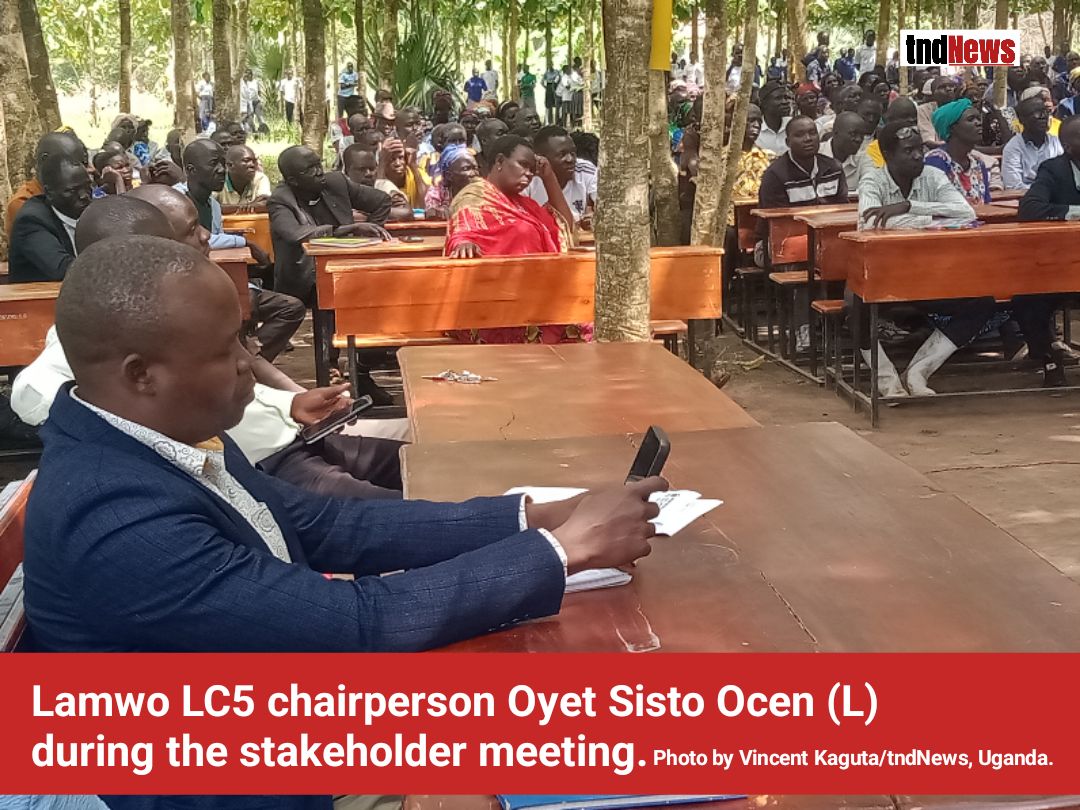
The incident has since generated a wider debate over the responsibilities of government, parents, school administrators and Parent-Teacher Associations (PTAs) in financing education.
A school caught between funding and reality
Lokung Senior Secondary School has an estimated enrolment of 875 students drawn from different parts of the Acholi sub-region. The school has 36 teachers, of whom 13 are employed on the government payroll, while 23 are supported through arrangements involving parents and the PTA.
According to information presented during an emergency parents’ meeting, PTA-supported teachers receive approximately shs820,000 each month. School leaders say these teachers are necessary to keep the institution functioning because government staffing and funding do not meet all the school’s human-resource needs.
Ochola Robert, chairperson of the Lokung Board of Governors, said the PTA plays an important role in sustaining the school. He argued that money contributed by parents helps the institution meet expenses that cannot easily be covered by government allocations, particularly the payment of teachers supported by parents.
However, Ochola acknowledged that sending students home because of PTA contributions requires reconsideration. He said the school board, PTA and administration would discuss better ways of recovering outstanding payments without forcing learners to leave school.
The position highlights the dilemma facing Lokung: while parents are expected to contribute to the running of the institution, students should not be made to suffer because of financial disagreements between adults.
Students lose learning time
The July 27 confrontation brought the disagreement into the open. Parents who attended the emergency meeting questioned the practice of sending students home over outstanding balances, especially where the amounts involved were relatively small.
One parent claimed that some students had been sent home over balances of shs1,000 and above. Another said his child was sent home with an outstanding balance of shs44,000 despite having already paid shs150,000 to the school.
Some parents also alleged that learners had been sent home over requirements such as toilet paper. Parents argued that the school should communicate directly with them about outstanding payments. They suggested that students could instead be given written notices to take home rather than being excluded from lessons.
For learners, however, the dispute has already had an impact on their education. One student reported that the disagreement, coupled with a teachers’ strike, had disrupted normal teaching. The learner complained that lessons were not proceeding normally and that extra lessons were not being conducted despite students having paid for them.
The student appealed to teachers to resume normal teaching, noting that the disruption was affecting Senior Four candidates preparing for mock examinations as well as learners in other classes.
The situation illustrates the immediate cost of the dispute: while adults debate school finances, PTA contributions, salaries and debts, learners lose valuable classroom time.
RDC calls for uninterrupted learning
Deputy RDC Vincent Mugenzi has maintained that students should remain in school regardless of whether they have immediately cleared school payments.
During the emergency parents’ meeting, Mugenyi argued that government-aided schools operating under USE receive government support through capitation grants.
According to figures presented at the meeting, Lokung Senior Secondary School receives approximately shs29 million per quarter in capitation support. Mugenyi also referred to a current capitation allocation of approximately shs58,000 per UCE learner.
His position is that students should not be excluded from learning because of outstanding payments. However, school management maintains that government funding alone is insufficient to meet all the institution’s operational requirements.
More than shs200 million in debts
The school’s financial difficulties became more apparent during the parents’ meeting. Okata Charles, a member of the school finance committee, said Lokung Senior Secondary School has accumulated debts of more than shs200 million.
He argued that money owed by parents should have been available to support the school’s operations and maintained that PTA contributions are permitted within the education system.
The school also requires parents to contribute food supplies. Information presented at the meeting indicated that each student is expected to provide approximately 18 kilograms of maize and 10 kilograms of beans per term.
School administrators say such contributions demonstrate the important role parents play in keeping the institution running. However, parents who struggle to meet the financial requirements argue that strict enforcement can create unnecessary conflict and place learners in the middle of disputes.
The central question remains how schools can recover legitimate and agreed contributions without disrupting the education of children.
Education as a shared responsibility
Oweka George, a district support officer representing the district education officer, said education should not be left to teachers alone.
He described education as a shared responsibility involving teachers, parents and learners, adding that the district was doing what it could to support schools and ensure that stakeholders have what is needed for schools to operate effectively.
His message was that the Lokung dispute should be resolved through cooperation rather than confrontation. Parents, he said, should take an active interest in their children’s education, while school administrators should maintain clear communication with parents and district authorities.
Board chairperson Ochola also called on parents to develop a closer relationship with the school. He urged parents to visit the institution regularly instead of waiting until problems become serious.
Frequent interaction, he argued, would allow parents to understand the school’s challenges and participate in finding solutions.
Parents should also feel free to approach school authorities whenever they have concerns or require clarification about payments and other requirements.
Concerns over confrontation
The dispute has also raised concerns about how disagreements involving schools and community leaders are handled.
Atii Florence, Secretary for Human Capital Development at Lamwo District Local Government, said the district would take the matter seriously. She also urged the office of the RDC and other leaders to avoid statements or actions that could incite violence involving teachers, students and the wider community.
The July 27 confrontation reportedly became heated. Sources claimed that some security personnel allegedly cocked firearms in an attempt to scare people involved in the confrontation. However, the circumstances surrounding the allegation could not independently be established.
The incident nevertheless highlighted the danger of allowing disagreements over school administration to become confrontational. Students, stakeholders noted, should not become victims of conflicts involving school administrators, political leaders, parents and government officials.
Head teacher reportedly threatens resignation
The dispute has reportedly left Lokung Senior Secondary School head teacher Ochola David threatening to resign.
His reported position reflects the pressure faced by school administrators who must operate between government education policies, parental expectations, financial obligations and demands from administrative and political leaders.
School management is expected to keep the institution functioning, pay staff, provide essential services and maintain academic standards, while dealing with parents who may not always be able to meet financial obligations on time.
The situation therefore presents a broader question about how school administrators can be supported to manage institutions where public financing and community contributions must work together.
Protecting a school with academic potential
Despite its current challenges, Lokung Senior Secondary School is regarded by district leaders as one of Lamwo’s better-performing schools. Lamwo district has 11 secondary schools.
According to district leadership, Palabek Secondary School leads in both A-Level and O-Level performance, while Lokung ranks second at O-Level.
The Lamwo district LC5 chairperson has warned parents against allowing financial disagreements and leadership conflicts to damage a school that has demonstrated academic potential.
He encouraged parents to work hard and support education, warning that continued conflicts and reduced parental contributions could eventually affect academic performance. He described Lokung as one of the schools that “should not die.”
A wider challenge for government-aided schools
The Lokung dispute extends beyond one school and reflects a broader challenge facing government-aided institutions. The government provides funding to schools, but institutions may also depend on parents and communities for food, additional teachers and other operational requirements.
The challenge is to establish transparent and lawful mechanisms for recovering approved contributions without making access to education dependent on a learner’s ability to pay.
The dispute also demonstrates the importance of dialogue. Parents who are struggling financially should have channels to communicate with school authorities.
School administrators should be able to explain the institution’s financial position, while district education officials should provide guidance when disagreements arise.
Political and administrative leaders, meanwhile, have a responsibility to ensure that their interventions calm tensions rather than intensify them.
For the 875 learners, the immediate demands are simple: they want their teachers back in class, lessons to continue and mock examinations and other academic activities to proceed without disruption.
The school’s motto, “Education is Pride of Life,” now carries a difficult lesson. Education may be a public responsibility, but sustaining a school requires cooperation between government, teachers, parents, learners and the community.
The lasting solution may therefore not lie in choosing between government funding and PTA contributions, but in establishing clear rules, transparent financial management and respectful communication.
Such an approach would allow schools to address legitimate financial challenges while ensuring that unpaid balances and disagreements among adults do not stand between children and their classrooms.
Discover more from tndNews, Uganda
Subscribe to get the latest posts sent to your email.