

Uganda’s pursuit of nuclear energy has entered a new phase after signing a cooperation roadmap with Russia, opening another chapter in the country’s ambition to become a nuclear-powered economy.
Through its state-owned nuclear corporation, Rosatom, Moscow is offering African governments an integrated nuclear package encompassing reactor technology, engineering, technical training, fuel services and, in some cases, financing arrangements.
Uganda’s emerging partnership with Russia therefore carries implications that extend beyond the proposed nuclear power station in Nakasongola and it potentially places the country within a network of long-term technological and commercial relationships whose consequences could shape its energy security, international partnerships and technological independence for decades.
Russia is already constructing the El Dabaa nuclear power plant in Egypt, a four-reactor project with a planned capacity of 4,800 megawatts and it is also pursuing nuclear cooperation with several other African governments.
During the Russia-Africa Summit in Moscow, Rosatom Director General Alexey Likhachev told Reuters that the corporation was discussing large nuclear power projects with Uganda, Ghana, Ethiopia and Egypt.
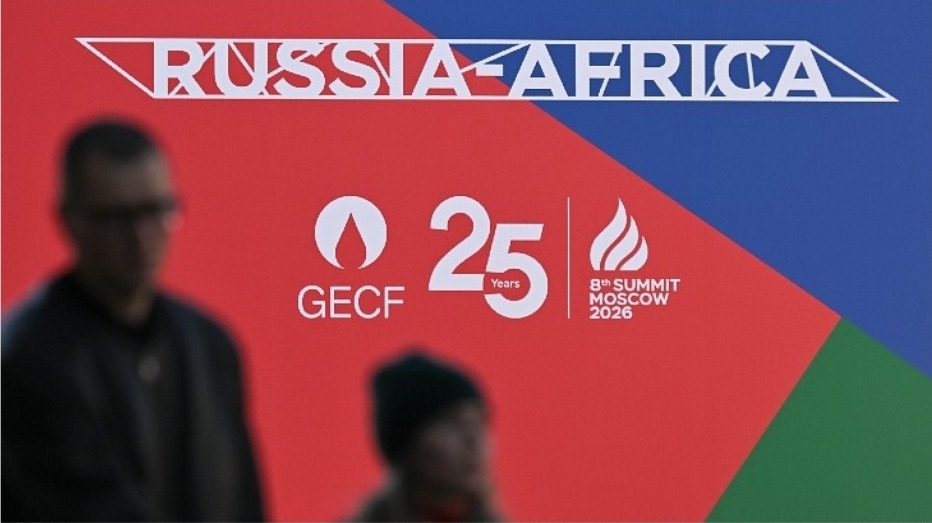
Signed on the sidelines of the Russia-Africa Summit in Moscow on October 30, 2026, the agreement between Uganda’s Ministry of Energy and Mineral Development and Russia’s state-owned nuclear corporation, Rosatom, establishes a framework for cooperation in the peaceful use of nuclear energy.
According to the roadmap, it provides for a dedicated working group to assess Uganda’s existing nuclear infrastructure and identify steps towards negotiating a contract for engineering surveys at a proposed nuclear power plant site in Nakasongola District.
The agreement was signed by Rosatom Deputy Director General Nikolai Spassky and Uganda’s Permanent Secretary in the Ministry of Energy and Mineral Development, Irene Batebe.
Rosatom Director General Alexey Likhachev said the cooperation would involve assessing Uganda’s nuclear infrastructure and developing the technical capabilities needed to advance the country’s nuclear programme.
“Together with our Ugandan partners, we intend to assess the state of the national nuclear infrastructure and determine next steps to move forward with contract negotiations for engineering surveys to select the Nakasongola NPP site,” Likhachev said.
He added that training Ugandan personnel would be an important component of the cooperation.
Also read: Russia’s influence soars among Africa’s youth as Moscow summit opens
For Kampala, the agreement represents an opportunity to access Russian nuclear technology, engineering expertise and training and for Moscow, it provides an opportunity to deepen its nuclear energy presence in East Africa.
However, the roadmap should not be confused with a construction contract and it does not, by itself, establish that Russia has been awarded the Nakasongola project, and that financing has been secured or that construction is about to begin.
Therefore, that distinction is important because Uganda’s nuclear ambitions are considerably larger than the latest diplomatic announcement.
A new nuclear partnership, but where does it fit?
Uganda has been exploring nuclear energy for years as part of its long-term strategy to diversify electricity generation, support industrialisation and meet growing demand.
Under the Energy Policy for Uganda 2023, the government envisages nuclear electricity generation capacity of approximately 24,000 megawatts by 2040, within a wider national generation target of more than 52,000 megawatts.
The nuclear roadmap identifies four proposed locations of Buyende, Nakasongola, Kiruhura and Lamwo.
The Russia agreement therefore adds another dimension to an already internationalized programme involving several nuclear technology partners.
In August 2023, President Yoweri Museveni announced that Russia and South Korea had been selected to develop two nuclear power projects with a combined proposed capacity of 15 gigawatts.
South Korea has since taken a more defined step towards the Buyende project.
In May 2025, Uganda’s Ministry of Energy and Mineral Development contracted Korea Hydro & Nuclear Power (KHNP) to conduct a 26-month evaluation of a proposed site at Kasaato Hill in Kidera sub-county, Buyende district and the assessment, scheduled to run until July 2027, includes geological conditions, climate, natural hazards, cooling water availability and other safety considerations.
South Korea’s involvement is centred on evaluating Buyende, while the newly signed Russian roadmap identifies Nakasongola as the proposed location for engineering surveys.
Uganda is therefore pursuing nuclear cooperation with different international partners across its national programme rather than simply handing its entire nuclear ambition to one country.
The arrangement could allow Uganda to compare technology, expertise and commercial proposals but it also raises questions about how the government will coordinate different reactor designs, contractors, financing arrangements, fuel supplies and regulatory requirements.
The World Nuclear Association’s 2026 assessment identifies financing, technology selection, site licensing and the establishment of a nuclear plant owner-operator among the outstanding requirements for Uganda’s programme.
Therefore, until those decisions are made, the country’s nuclear ambitions remain at different stages of development.
Why Russia matters to Uganda
Russia’s involvement is significant because Rosatom is not simply a supplier of nuclear equipment.
The corporation operates across the nuclear industry, including reactor design, engineering, construction, fuel supply, technical training and nuclear infrastructure development.
Its international projects demonstrate its capacity to offer integrated packages to countries seeking to establish nuclear power programmes.
For a country such as Uganda, which has no commercial nuclear power station, this could reduce the challenge of acquiring specialized technology and expertise from multiple suppliers and the potential benefits extend beyond electricity production.
However, a properly structured partnership could support the training of Ugandan nuclear engineers, scientists, radiation protection specialists, technicians and safety inspectors and it could also strengthen universities, research institutions and the country’s capacity to regulate sophisticated nuclear installations.
Additionally, the government could potentially negotiate local employment opportunities, technology transfer, scholarships, research partnerships and participation by Ugandan companies in construction and maintenance supply chains.
These benefits, however, are not automatic consequences of signing a cooperation roadmap and they will depend on the eventual contracts, financing arrangements, training commitments and enforceable local-content provisions.
A 2023 academic study published in Nature Energy, examining Russian nuclear energy diplomacy, explains that Rosatom’s international appeal partly rests on its ability to combine reactor construction, technical support, workforce training and financing options.
The study also examines the strategic implications of Russia’s integrated nuclear partnerships, particularly where foreign companies retain significant ownership or operational control over infrastructure.
Chia-Yun Po, a legal scholar specializing in arms control, nuclear non-proliferation and international law and an associate at Yale Law School, told DW that buying nuclear facilities from Russia involves a long-term package of support and reliance that can last “at least four to six decades”.
“Through this nuclear diplomacy, by engaging with foreign hosts, Russia would be maintaining a very long-term relationship with other governments,” Po said.
However, academic researchers Marco Siddi and Kristiina Silvan, in their 2024 study published in International Politics, caution against treating nuclear dependence as identical to dependence on oil and gas.
Their research, titled Nuclear Energy and International Relations: The External Strategy of Russia’s Rosatom, explains that nuclear supply chains involve several different stages, including uranium extraction, enrichment, fuel production, reactor construction and operational services.
They argue that Rosatom’s strong position in enriched uranium supply and reactor construction enables Russia to deepen economic and political relationships with countries that use its technology.
Importantly, the researchers also caution that deliberately exploiting nuclear supply relationships for geopolitical pressure could undermine Russia’s reputation as a reliable supplier.
A nuclear partnership that goes beyond electricity
According to, Professor Hartmut Winkler, a physics professor at the University of Johannesburg and contributor to the World Nuclear Industry Status Report, believes several Russian nuclear cooperation agreements with African governments are still at an early stage.
“Russia has set up these cooperation agreements with the aim of someday building a nuclear power plant. But they’re still very far down the line,” Winkler told DW.
His observation is particularly relevant to Uganda because the newly signed roadmap does not constitute a final construction agreement.
The document establishes a working group to assess Uganda’s existing nuclear infrastructure and identify the next steps towards negotiating a contract for engineering surveys at the proposed Nakasongola site.
Winkler also argued that countries hosting Russian-built nuclear power stations could acquire a long-term diplomatic relationship with Moscow because of their dependence on Russian technical services and electricity infrastructure.
Uganda’s interest in nuclear energy is partly driven by the need to build a reliable electricity system capable of supporting industrialization.
According to the Electricity Regulatory Authority, the country had installed generation capacity of approximately 2,098.6 megawatts by the end of 2025.
Hydropower accounted for the largest share, with 1,721.7 megawatts, followed by thermal generation, cogeneration and solar photovoltaic electricity.
Therefore, this dependence on hydropower makes diversification an important consideration as electricity demand grows.
Nuclear power plants can generate large quantities of electricity continuously, providing a source of baseload power that is not directly dependent on daily weather conditions.
If successfully developed, Uganda’s nuclear programme could strengthen electricity supply for industries, manufacturing, mineral processing, transport infrastructure and expanding urban centres.
Further, it could also help the country develop technical capabilities in nuclear medicine, research and other peaceful applications of atomic energy.
However, installing additional generation capacity does not automatically mean that electricity will become affordable or accessible to ordinary Ugandans.
The country must also invest in transmission infrastructure, distribution networks, industrial connections and household electrification.
The financial cost of nuclear electricity will depend on construction expenses, financing rates, fuel contracts, maintenance, insurance, waste management and the eventual cost of decommissioning.
Without transparent financing and electricity pricing arrangements, a nuclear plant could become an expensive national infrastructure commitment without delivering the anticipated benefits to consumers.
The government must therefore demonstrate how the proposed Russian-supported project would complement existing hydropower, solar and other generation investments rather than simply increase the country’s installed capacity targets.
The financial and sovereignty test
Perhaps the most important question surrounding the Russia-Uganda partnership is who will pay for the project and who will ultimately control it.
Nuclear power stations require substantial upfront investment, specialized construction and long-term financial planning.
Unlike smaller energy projects, they can tie governments into complex contractual relationships involving suppliers, financiers, operators and fuel providers.
Russia has used different commercial models in its international nuclear projects, including engineering, procurement and construction arrangements and build-own-operate structures.
These models carry different implications for ownership, financing, electricity tariffs and operational control.
For Uganda, the terms of any eventual agreement will determine whether the project strengthens national energy independence or creates long-term dependence on external financing, technology and technical services.
A build-own-operate arrangement, for example, could allow a foreign developer to retain ownership and operational responsibilities under an agreed commercial framework and an engineering and construction contract could instead leave ownership with a Ugandan entity, provided the country establishes the necessary technical and institutional capacity.
Uganda needs to understand the full financial obligations, sovereign guarantees, foreign-exchange exposure, electricity purchase commitments and risks of construction delays before signing a binding contract.
The government should also publish the essential commercial terms and explain how the project will be financed without undermining other national development priorities.
The World Nuclear Association’s 2026 country assessment identifies financing and the absence of an established nuclear plant owner-operator among the significant outstanding challenges facing Uganda’s programme.
This suggests that the most consequential stage of the Russian partnership may not be the signing of the roadmap, but the negotiations that follow it.
Nuclear energy presents opportunities, but its development requires a level of institutional preparedness that goes beyond constructing a power station.
Uganda will need an effective regulatory system, independent safety oversight, emergency response arrangements, qualified personnel and long-term radioactive waste management systems.
The Atomic Energy Council, established under the Atomic Energy Act, has responsibility for regulating the peaceful application of atomic energy and protecting people and the environment against the harmful effects of ionizing radiation.
The council says Uganda’s regulatory framework is being strengthened, including a review of the existing legislation to address issues involving nuclear material, safety, security and the regulator’s mandate.
Its published safety principles also recognize the importance of independent regulation, radiation protection, emergency preparedness, civil liability and arrangements for managing spent nuclear fuel and radioactive waste.
These responsibilities are particularly important for communities living near proposed nuclear sites.
Residents in Nakasongola and other potential project areas deserve timely information about land acquisition, environmental assessments, water resources, resettlement, employment opportunities and emergency preparedness.
The International Atomic Energy Agency’s milestones approach identifies 19 infrastructure issues that countries entering nuclear power must address and these include funding, legal frameworks, nuclear safeguards, regulatory capacity, human resources, environmental protection, emergency planning, nuclear fuel management and radioactive waste.
Therefore, the approach demonstrates why nuclear development must be treated as a long-term national undertaking rather than a conventional construction project.
Uganda’s previous IAEA infrastructure review in 2021 examined these areas as part of the country’s preparations for nuclear power development.
Nuclear power is not nuclear weapons
The growing Russian partnership also comes at a time when Uganda’s position in international nuclear diplomacy deserves attention.
Nuclear electricity generation and nuclear weapons are fundamentally different activities and a civilian nuclear power programme does not automatically imply an intention to develop nuclear weapons.
Uganda is a party to the Treaty on the Non-Proliferation of Nuclear Weapons and has an agreement with the IAEA covering nuclear safeguards.
However, Uganda has not signed or ratified the 2017 Treaty on the Prohibition of Nuclear Weapons (TPNW), despite having supported its adoption at the United Nations.
The Nuclear Weapons Ban Monitor records that Uganda voted in favour of the treaty in 2017 and has continued supporting relevant UN resolutions.
A parliamentary committee report in 2023 recommended that the executive study the treaty and make an appropriate decision on whether Uganda should sign and ratify it.
This creates an important diplomatic question about how Uganda intends to reconcile its stated support for nuclear disarmament with its expanding civilian nuclear ambitions.
There is no inherent contradiction between developing nuclear electricity and supporting nuclear disarmament. The central issue is ensuring that civilian nuclear technology remains subject to international safeguards, transparency and non-proliferation obligations.
The Russian agreement is therefore not evidence of a weapons programme. Its stated purpose is peaceful nuclear cooperation.
Nevertheless, Uganda should use the expansion of its nuclear programme as an opportunity to demonstrate a consistent commitment to nuclear safety, international safeguards and disarmament diplomacy.
Discover more from tndNews, Uganda
Subscribe to get the latest posts sent to your email.


