What began as a village savings initiative in 2020 has evolved into a community-based organisation supporting women and girls affected by gender-based violence, domestic abuse and economic vulnerability.
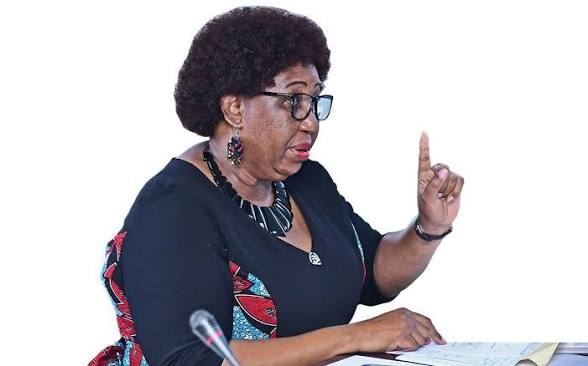
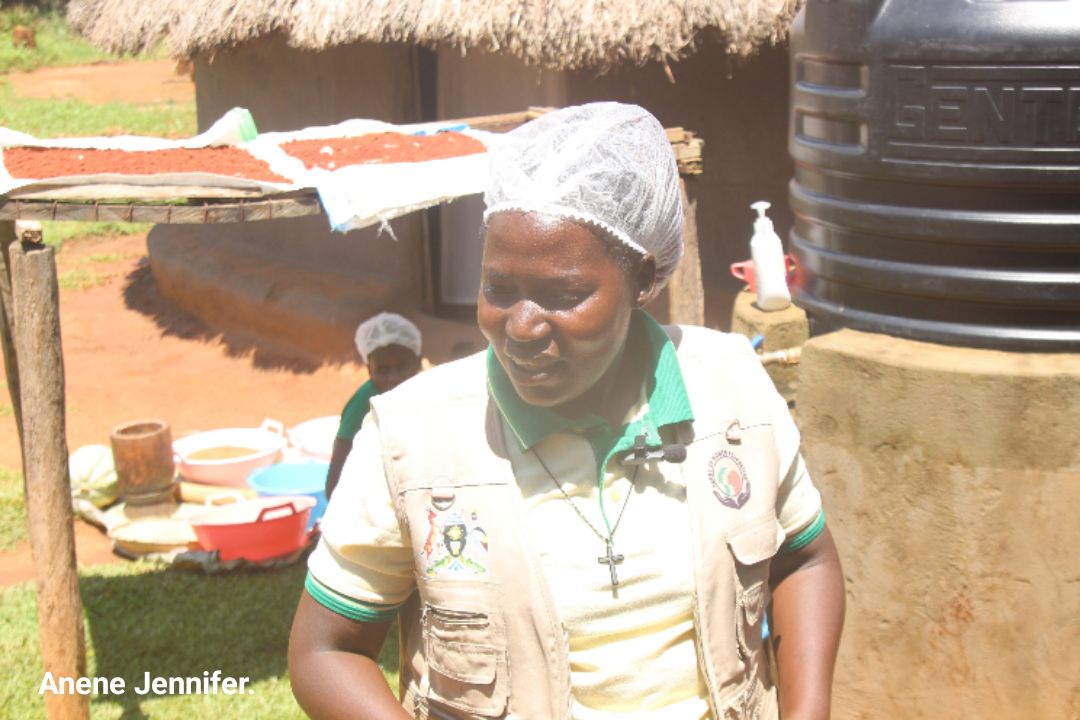
For Anena Jennifer, founder of Hand of Women Foundation, the decision to establish the organisation was rooted in a disturbing incident involving a nine-year-old girl who had reportedly been sexually abused by her stepfather, but whose case was not handled appropriately.
The experience exposed gaps in community protection and support systems for vulnerable children, prompting Jennifer to turn a grassroots savings initiative into a broader intervention addressing gender-based violence, child protection and women’s economic empowerment.
In 2021, Hand of Women Foundation was registered as a community-based organisation to strengthen efforts to prevent and respond to gender-based violence and domestic challenges affecting women and children.
“We had to register Hand of Women Foundation as a grassroots community organisation to make sure that we can prevent different kinds of gender-based violence and domestic issues affecting women and children,” Jennifer said.
“We are supporting these young girls and creating awareness in the community to ensure that issues relating to gender-based violence (GBV) and child protection are prevented,” she added.
The foundation envisions a self-reliant community in which women and girls, including those with disabilities, can overcome barriers affecting their livelihoods and well-being.
Its mission centres on improving women’s quality of life through practical skills, livelihood opportunities and economic independence.
“Our mission is to improve the quality of life of women through self-reliance and economic empowerment, ensuring that their lives improve through different livelihood activities and skills,” Jennifer explained.
Turning skills into economic independence
The foundation’s interventions focus on five major areas, with women’s economic empowerment and livelihood support forming a central part of its work.
Through vocational training, the organisation equips young mothers and girls aged between 15 and 60 with practical skills in hairdressing and tailoring, enabling them to explore income-generating opportunities and become less economically dependent.
It also promotes household nutrition and food security through food processing and value addition, training women to transform locally available agricultural products into nutritious foods such as porridge flour and peanut butter.
Among its products are millet-pumpkin flour, millet-tamarind flour, millet-cocoyam flour and Nutri-Blast, which the organisation says are intended to improve nutrition among children under five and adults.
“One of our best-selling products right now is millet-pumpkin flour, millet-tamarind flour, and millet-cocoyam. We also have Nutri-Blast. We have developed products aimed at improving the nutritional status of young children under five and adults because we conducted research to understand the food security situation of our agents of change,” Jennifer said.
The foundation deliberately refers to the women it supports as “agents of change” rather than beneficiaries, reflecting its belief that women who overcome difficult circumstances can become drivers of transformation in their communities.
“Some people call them beneficiaries, but for us, we call them agents of change because we believe that, despite the heartbreaking circumstances they have gone through, once their lives improve, they become agents of change who bring transformation to their communities,” she said.
Beyond improving nutrition, the processed products provide women with opportunities to generate income, support their families and meet household needs.
Keeping vulnerable children in school
Recognising the relationship between household poverty and children’s vulnerability, the foundation also provides educational assistance to children from disadvantaged households.
Jennifer said the organisation identifies and assesses vulnerable families before extending school-fee support to children who might otherwise struggle to continue their education.
“We pay school fees for children at the primary level, but next year we are moving into secondary education because two children have already sat for their Primary Leaving Examinations (PLE) this year. Next year, we will have four children joining secondary school,” she said.
The organisation also provides emergency assistance to young mothers experiencing gender-based violence and domestic abuse, particularly those who have nowhere safe to seek shelter.
Depending on individual circumstances, the support includes food, household essentials, psychosocial assistance and temporary accommodation.
Jennifer said the foundation sometimes rents accommodation for survivors to give them time to recover and establish independent livelihoods.
“We rent a house for her for a period of two years, and after those two years, we believe she will have been empowered enough to start living independently,” she added.
Taking awareness and protection services to rural communities
Beyond its direct support programmes, Hand of Women Foundation reaches out to rural communities to raise awareness about women’s rights, child protection, nutrition and available support services.
Jennifer said women and girls in remote communities often face additional barriers to accessing information and reporting violations of their rights.
“We move into rural villages to make sure that this kind of message reaches people in hard-to-reach areas,” she said.
The organisation works with farming communities in Patiko County, Paja and Ajulu in Gulu District, where it combines awareness activities on nutrition, gender-based violence and other household challenges.
“We have groups in Patiko County, Ajulu and Paja in Gulu District. These areas are really far away, but they are farming groups that we have mapped. We reach out to them on different issues because nutrition is a cross-cutting issue, and gender-based violence is also a cross-cutting issue,” Jennifer explained.
By integrating these interventions, the foundation hopes to ensure that community members understand their rights, recognise different forms of abuse and know where and how to report cases safely.
“We make sure we combine all these activities so that once someone understands their different legal rights, he or she can report safely. They are also able to understand which cases can be reported and where to report them because they are already aware of what is happening,” she said.
The foundation also supports village savings and loan associations (VSLAs), which have remained an important part of its work since its establishment.
In addition, it provides free legal assistance and connects affected girls with lawyers to help them pursue justice.
Jennifer cited a case involving a two-year-old girl who was allegedly sexually abused by her stepfather, saying the organisation was following up on the matter.
“In September 2026, we registered a young girl, aged two, who had been sexually abused by her stepfather. Right now, the man is on remand, and we are still following up on the case,” she said.
Linking farmers to nutrition and markets
The foundation’s economic empowerment activities also extend to agricultural production, where it encourages women in savings groups to grow crops that can be processed into nutritious products.
Jennifer said the organisation is promoting the production of grains, orange-fleshed sweet potatoes and yellow maize, which can provide raw materials for its value-addition activities.
“We are encouraging those in the villages under our savings groups to produce grains, orange-fleshed sweet potatoes and yellow maize. Yellow maize is rich in vitamin A, and it is a product that has been introduced by Makerere University and the National Agricultural Research Organisation (NARO),” she said.
According to Jennifer, the processed products are sold at approximately shs10,000 per kilogram, creating an additional income opportunity for women involved in production.
However, the severe drought experienced earlier in the year disrupted agricultural activities, leaving some farmers who had received seeds and planted crops with almost nothing to harvest.
The setback has prompted the organisation to encourage farmers to consider crops that can withstand prolonged dry conditions.
“We are encouraging farmers not to lose hope but to venture into drought-resistant crops. We are trying to connect with NARO to ensure that, next year, they provide us with drought-resistant varieties,” she said.
Jennifer said her exposure to exhibitions and conferences in Burundi and Rwanda further strengthened her interest in agricultural value addition, food waste reduction and household nutrition.
“I have been to Burundi and Rwanda with this vision, exhibiting these products. In every fellowship and conference, people talk about value addition and food waste, and how we can reduce it. When I returned, I had to start creating awareness because gender-based violence also affects the nutritional status of households, including children,” she added.
From trainee to trainer
For some women, the foundation’s impact is reflected in the opportunity to move from receiving skills training to teaching others.
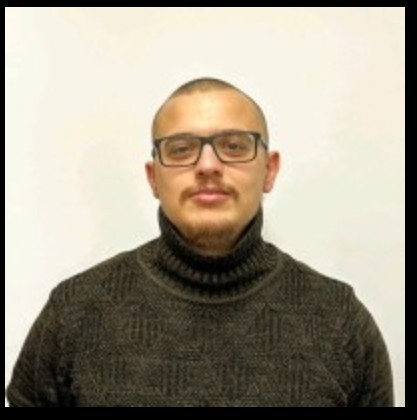
Angle Apio, who initially joined the organisation’s hairdressing programme as a trainee, has since become an instructor, helping young girls, married women and women from different backgrounds acquire practical vocational skills.
Her transition from learner to trainer demonstrates how vocational programmes can create opportunities for women to develop their abilities and share them with others.
However, managing trainees from different educational, cultural and language backgrounds has presented challenges.
Angle said some learners understand English, while others have limited knowledge of Luo. The presence of Sudanese nationals in the training programme has also introduced additional communication barriers.
To address these differences, she said the instructors organise learners into smaller groups and encourage cooperation.
“We always have Friday meetings to give them time to ask questions and share what is really bothering them, including the burdens they may be carrying. That’s what we do to encourage them,” she said.
She explained that learners with limited formal education sometimes struggle to understand instructions, creating misunderstandings during practical lessons.
“Those who are not educated are sometimes difficult to teach because helping them understand what you are saying is not easy. Sometimes, during meetings, they complain about you as the teacher.
“But when we bring them together again and talk to them, they eventually understand and work with us. However, we are facing many challenges because I am the only teacher, and managing all the students is really difficult,” she explained.
Balancing morning and afternoon training sessions, particularly when some learners are sitting examinations, also requires careful coordination.
“You have to manage both the morning and afternoon shifts. For example, when some learners are taking their tests, others have to remain outside while those taking the tests stay inside. You have to balance everything,” she added.
Rebuilding livelihoods after setbacks
For Auma Skobia, joining the hairdressing programme came at a time when she was searching for an alternative source of income after leaving her teaching job following the birth of her second child.
Auma said she left teaching after giving birth in June and turned to plaiting hair from home to earn money to support her household.
She explained that the income, although modest and sometimes inconsistent, helps her purchase basic household necessities.
“In June, I delivered and left teaching. At the school where I was working, they did not want women who had given birth to continue with that work. So, I started plaiting my hair from home. I earn shs2,000 or shs7,000, which helps me buy soap, sugar and other necessities. You know, as women, when you are at home, you also need to help your husband,” she said.
Auma learnt about the training programme through friends who encouraged her to enrol and improve her practical skills.
“Not only me, but also this friend of mine and another friend who lives near Asia, where we stay. They told me about this school, and I said, let me go and try. That’s why I came and joined. This school is very good, and I am very happy with what I can do now,” she said.
As the organisation prepares for its next programme, Jennifer said she plans to relocate to a larger facility that can accommodate all the women and girls expected to enrol.
For a foundation that began with a village savings initiative, the ambition is to create more opportunities for women to rebuild their lives, develop practical skills and become economically independent.
Its experience illustrates how community-based interventions can connect protection, education, vocational training, nutrition and livelihood support in addressing the challenges facing vulnerable women and girls.

For women such as Angle and Auma, that support is not simply about acquiring a skill. It is also about finding an opportunity to regain confidence, contribute to household income, and shape a more secure future.
Reporting by Aromo Agnes.
Discover more from tndNews, Uganda
Subscribe to get the latest posts sent to your email.