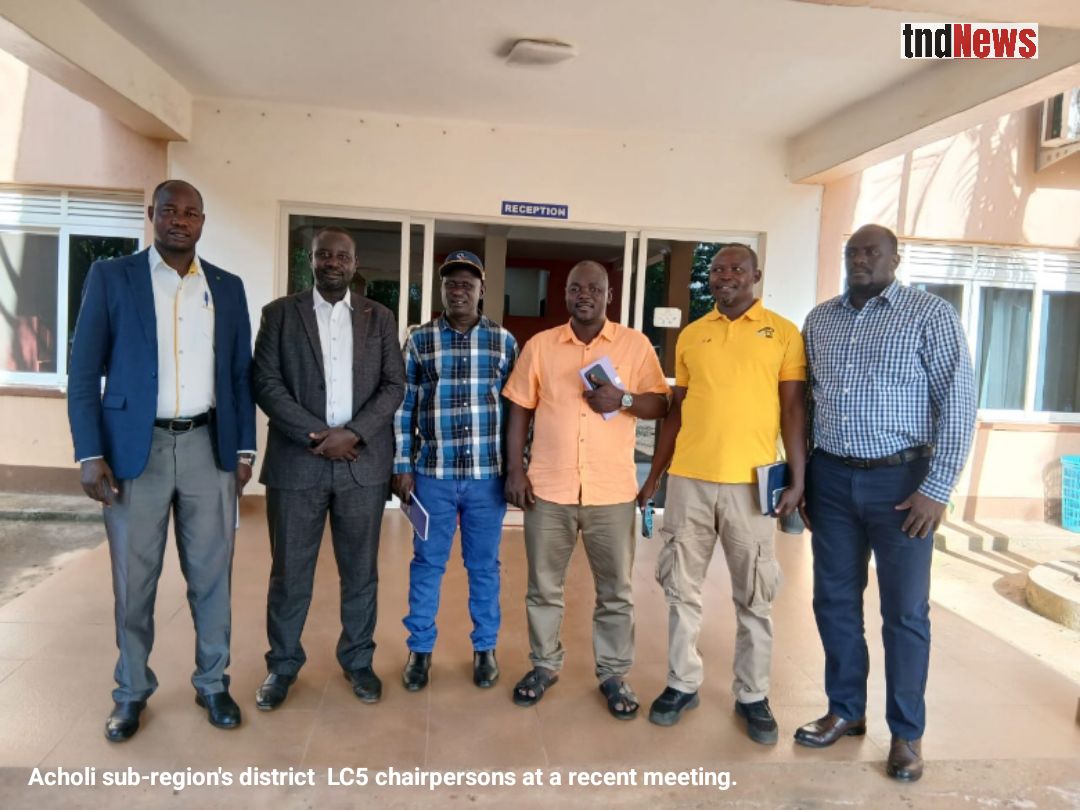
District chairpersons from across the Acholi sub-region have renewed calls for greater regional cooperation after electing a new leadership team to strengthen collaboration among local governments and advance a shared development agenda.
The leaders, drawn from the eight local governments that make up the Acholi sub-region, agreed that many of the challenges facing their districts including insecurity, land conflicts, infrastructure gaps and cross-border trade can be addressed more effectively through a united regional approach rather than individual district efforts.
During a meeting held in Kitgum, the district chairpersons elected Pader district LC5 chairperson Alfred Akena as chairperson of the forum.
Justine Obol, the LC5 chairperson of Gulu City, was elected vice chairperson, while Oyet Sisto Ocen, the LC5 chairperson of Lamwo district, was chosen as secretary general.
Speaking after his election, Akena said the forum represents a renewed commitment by district leaders to speak with one voice on issues affecting the Acholi sub-region.
“Our people face many common challenges that do not stop at district boundaries. By working together, we shall be able to engage the government more effectively, coordinate development priorities and ensure that the needs of the Acholi people receive the attention they deserve,” Akena said.
He explained that the forum will work closely with Members of Parliament, cultural institutions, technical leaders and development partners to promote a coordinated regional development agenda.
Among its priorities, Akena said, is the establishment of a joint Acholi council that would serve as a platform for discussing regional concerns, coordinating policy positions and advocating for investments that benefit the entire sub-region.
Gulu district LC5 chairperson Justine Obol said stronger cooperation among local governments is essential for addressing issues that affect both urban and rural communities.
“No single district can solve these challenges alone. When local governments coordinate their planning and advocacy, we are in a better position to improve service delivery, attract investment and respond to emerging challenges facing our people,” Obol said.
He added that regular consultations among district leaders would strengthen accountability and promote the sharing of successful development initiatives across the region.
Lamwo district LC5 chairperson Oyet Sisto Ocen described the forum as an opportunity to build stronger partnerships among district leaders while promoting peace and socio-economic transformation.
“We must put the interests of the Acholi people first. Whether it is improving roads, expanding agricultural production, addressing insecurity or resolving land disputes, our collective voice will carry greater weight than individual district efforts,” Ocen said.
He noted that border districts such as Lamwo continue to face unique challenges related to cross-border security and trade, making regional cooperation increasingly important.
The newly elected leaders identified several issues requiring coordinated action, including cross-border insecurity, land disputes, the movement and activities of Balaalo cattle keepers, youth unemployment, and the need for improved road infrastructure and social services.
The forum also expressed its intention to strengthen collaboration with central government ministries and development partners to mobilise resources for regional priorities.
For many leaders, the election of the new executive marks more than a routine administrative exercise. It reflects a growing recognition that sustainable development in Acholi depends on unity, coordinated planning and collective advocacy.
As the region continues to recover from the legacy of past conflicts while pursuing economic transformation, district leaders say working together will improve their ability to influence national policy, attract investment and address long-standing challenges that affect communities across district boundaries.
With a new leadership team in place, the Acholi district chairpersons hope the forum will become a stronger platform for advancing regional development, promoting peace and ensuring that the collective aspirations of the Acholi people remain at the centre of local governance.
Discover more from tndNews, Uganda
Subscribe to get the latest posts sent to your email.