Yumbe | For years, Fatuma Ijodri, 55, relied almost entirely on crop farming to support her family in Kulacha village, Komgbe parish, Kululu sub-county in Yumbe district.
Like many smallholder farmers in West Nile, she cultivated rice, cassava, maize and groundnuts. However, changing weather patterns, declining soil fertility and inconsistent rainfall gradually reduced her harvests, making it increasingly difficult to earn a dependable income.
By 2021, she realised crop farming alone could no longer sustain her household.
Looking for an alternative source of livelihood, Ijodri joined a Village Savings and Loan Association (VSLA), where members pooled savings and accessed small loans. The savings scheme became the turning point that introduced her to commercial goat farming.
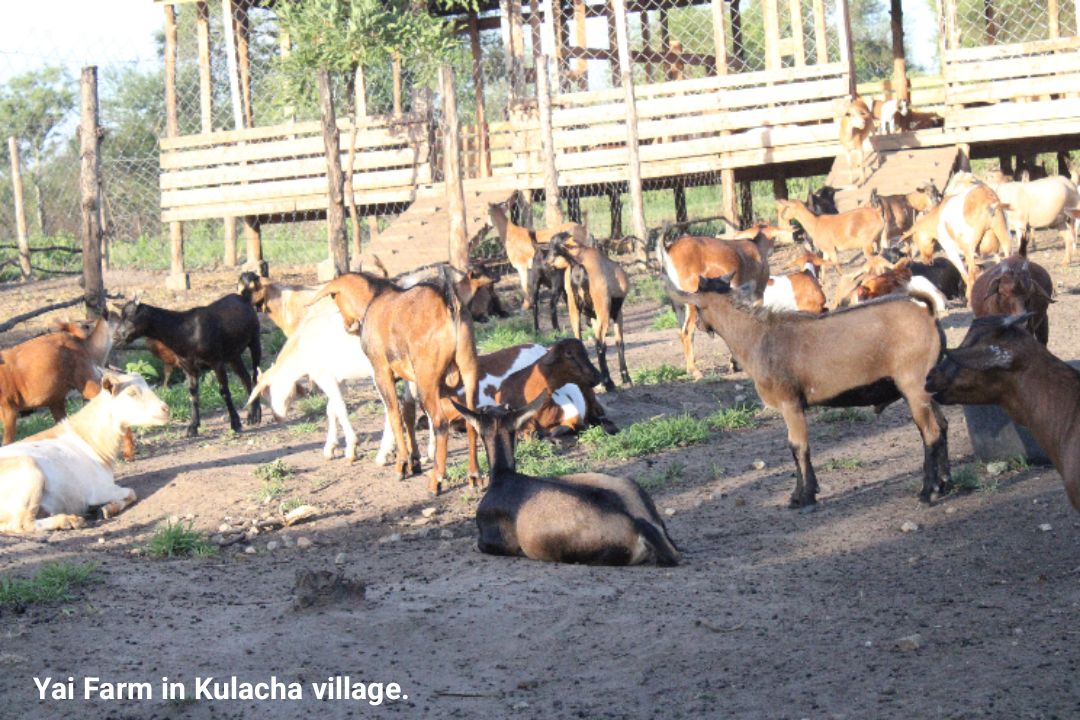
Today, she is among the pioneers behind Yai Mixed Farm Limited, a farmer-owned enterprise that is becoming a model for improved goat breeding in Yumbe district.
“We realised that depending only on crops was becoming risky. Goats offered us another opportunity to earn income while continuing with crop production,” she says.
Building a community-owned livestock enterprise
The idea was born when members of the VSLA agreed to venture into commercial livestock farming.
Initially comprising 30 members, the group resolved to establish a communal farm where they would rear goats using improved management practices.
Ijodri contributed five local goats as her share to the enterprise. Over time, membership reduced to eight active farmers—five men and three women—including one South Sudanese refugee, reflecting the integrated livelihoods promoted in refugee-hosting communities.
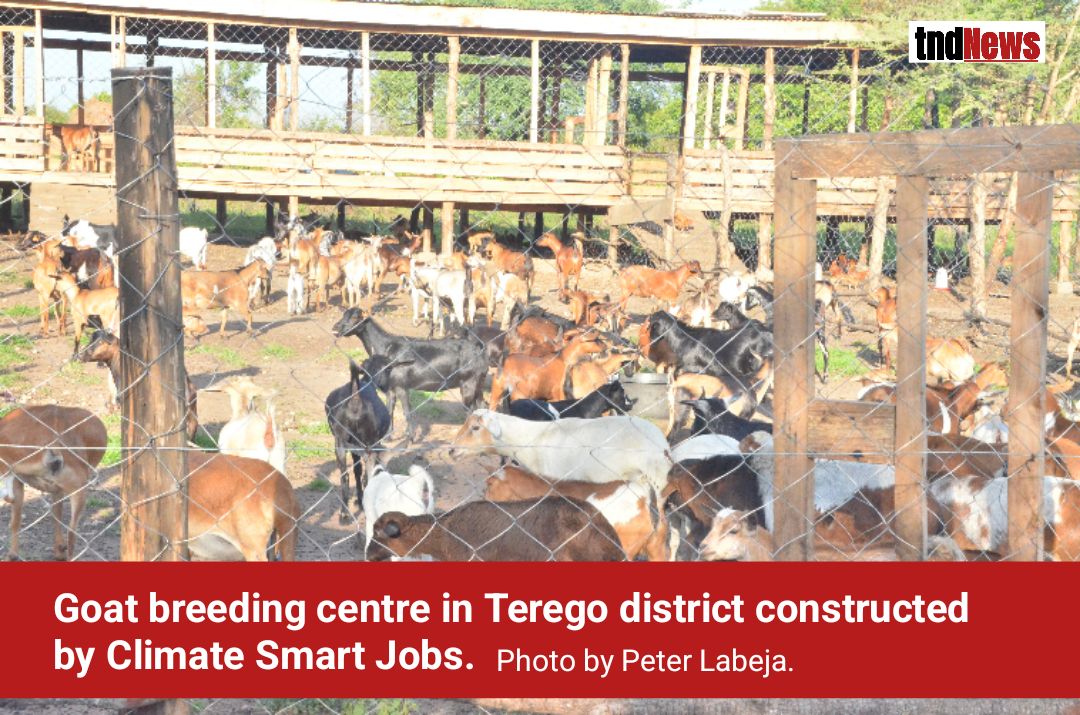
The farm started with only 20 indigenous goats.
Four years later, the herd has expanded to approximately 150 animals, consisting of local goats alongside improved Savannah and Boer breeds.
The transformation has been driven not only by farmers’ determination but also by growing awareness of the commercial potential of improved genetics.
A visit to Genesis Farm exposed members to high-value goats that mature faster and attain much larger body sizes than local breeds.
“Seeing those goats completely changed my thinking,” Ijodri recalls.
“They grow quickly and reach market weight much earlier than our local goats. We believe we can also achieve that if we continue improving our breeds.”
A diversified farming model
Yai Mixed Farm has evolved into more than just a goat enterprise.
The farm occupies nearly 1,000 acres of land, part of which is allocated to block farming by humanitarian agencies supporting refugee livelihoods.
The remaining land supports an integrated farming system that combines livestock and crop production.
Besides goats, the enterprise keeps cattle, sheep and poultry while also producing rice.
Farmers say the diversified model reduces risks associated with relying on a single agricultural enterprise.
Income generated from poultry, for instance, provides quicker cash returns that can finance the longer investment cycle required in goat production.
Introducing improved genetics
The biggest boost to the enterprise came through the Climate Smart Jobs project implemented by Palladium.
The initiative supports livestock farmers in Yumbe, Madi-Okollo and Pakwach districts by introducing improved goat breeding through systematic cross-breeding.
The project provides farmer groups with improved Boer bucks, constructs modern goat shelters and trains farmers in improved husbandry practices.
Each participating group received two Boer breeding males in April this year.
The objective is for every buck to mate with at least 50 local female goats, gradually improving the genetics over successive generations.
Livestock experts estimate that within about five years, farmers could establish herds consisting almost entirely of pure Boer goats.
Bigger animals, better returns
For Zainab Chandiru, 80, another member of Yai Mixed Farm, the arrival of Boer goats represents a major economic opportunity.
Local goats currently fetch up to shs200,000 at the market, depending on size and condition.
Improved Boer goats, however, are expected to command prices exceeding shs300,000 because of their larger body weight and better meat quality.
“The improved breeds will significantly increase our income,” Chandiru says.
“We expect buyers to pay much higher prices because these goats are bigger and more attractive.”
Higher prices are particularly important for households seeking to diversify incomes amid increasingly unpredictable crop production.
Livestock also serves as a financial reserve that families can sell during emergencies such as school fees, medical expenses or poor harvests.
Water remains the biggest challenge
Despite the optimism, farmers continue to grapple with one major obstacle—water.
Yai Mixed Farm currently depends on a stream located nearly two kilometres away.
Members walk long distances to fetch water for both domestic use and livestock.
Besides the labour involved, farmers worry about the safety and reliability of the water source, especially during prolonged dry spells.
With rainfall becoming increasingly erratic, members say investment in water infrastructure has become essential.
They hope government and development partners can support the farm through borehole drilling or extension of piped water to improve animal welfare and enable small-scale irrigation.
Without reliable water supplies, they fear gains made through improved breeding may be undermined.
Expanding the breeding programme
Yai Mixed Farm is among six farmer enterprises in Yumbe that benefited from improved breeding bucks.
Others include Omucha Farm Enterprise, Dezo, Alibamviti Mixed Farm, Salamu Joined Farm and Lodenga Farm, all located within Kululu Sub-county, which hosts parts of Zone Three of Bidibidi Refugee Settlement.
The programme also extends beyond Yumbe to Panyimur Farm in Pakwach district and Jingili Farm in Madi-Okollo district.
At Omucha Farm Enterprise, programme officer Taban Yasir says the group’s journey demonstrates how quickly organised livestock farming can grow.
The enterprise started with only five goats in 2024.
Within a year, the herd expanded to 20 animals before increasing further to 56 goats ahead of receiving the improved Boer breeding males.
The group is now exploring arrangements that would allow neighbouring farmers to access breeding services.
“We are developing guidelines so that even farmers outside our group can improve their local goats,” Yasir explains.
“We are considering a system where farmers either pay cash or provide a goat in exchange for breeding services.”
Such arrangements could rapidly spread improved genetics throughout surrounding communities.
Refugees and host communities benefiting together
The initiative reflects Uganda’s refugee response model that promotes joint economic development for refugees and host communities.
Under the 70:30 approach, approximately 70 per cent of beneficiaries are refugees while 30 per cent come from host communities.
This inclusive model enables both populations to access livelihood opportunities, reducing competition over resources while strengthening social cohesion.
The participation of refugee farmers in livestock enterprises has also expanded knowledge sharing and improved collaboration between neighbouring communities.
Overcoming misinformation
According to Faruk Buran, a Community-Based Facilitator under Climate Smart Jobs, establishing the farmer enterprises was not without challenges.
Many of the groups had already been engaged in crop farming and local goat rearing before receiving project support.
Climate Smart Jobs assisted them to formalise their operations through registration with the Uganda Registration Services Bureau and local Community Development Offices.
Each enterprise reportedly received support worth nearly shs12 million.
However, misinformation initially threatened the programme’s success.
Some community members believed the project was intended to grab land, while others politicised the intervention.
As rumours spread, several members withdrew from farmer groups.
“The original target was 15 members per group,” Buran explains.
“But misinformation caused some farmers to leave. Now many are returning after seeing the progress made by those who remained.”
Improving Yumbe’s livestock sector
The breeding initiative aligns with Yumbe district’s broader livestock development strategy aimed at transforming subsistence agriculture into commercial production.
Goats remain one of the district’s most important livestock species because they require relatively low investment, adapt well to local conditions and provide quick income.
Beyond commercial value, goats continue to play significant cultural roles, including payment of bride price, traditional ceremonies and family celebrations.
The district is therefore investing in genetic improvement while preserving the resilience of indigenous breeds.
Combining local resilience with improved productivity
According to Amaku Mansur, Assistant Animal Husbandry Officer attached to Midigo town council, the district is promoting cross-breeding rather than replacing indigenous goats altogether.
Local goats possess valuable characteristics, including disease resistance and adaptation to harsh climatic conditions.
However, they grow slowly and attain relatively low market weights.
Improved Boer and Savannah breeds mature faster, produce more meat and command higher market prices.
“Our objective is to combine the strengths of both breeds,” Mansur explains.
“We want goats that retain the hardiness of local animals but grow much faster and produce higher returns.”
Under the community breeding programme, improved male goats have been distributed across sub-counties to gradually improve genetic quality through controlled breeding.
Development partners are also supporting complementary interventions.
For example, Samaritan’s Purse has established pasture gardens in Kochi and Ariwa sub-counties to ensure livestock have adequate feed during the dry season.
A growing market for goat farming
Demand for goats continues to expand across Uganda and neighbouring countries.
Farmers in Yumbe regularly sell goats to traders supplying markets in South Sudan, the Democratic Republic of Congo and several Ugandan sub-regions, including West Nile, Acholi and Bunyoro.
To support future planning, Yumbe District has begun profiling livestock farmers to establish accurate records on goat numbers and breed composition.
Reliable data will guide breeding programmes, disease control and investment priorities.
National trends point to growing opportunities
Uganda’s livestock sector presents enormous opportunities for goat producers.
According to the 2021 National Livestock Census, the country’s goat population increased from shs12.4 million in 2008 to about shs17.4 million in 2021, representing a growth of 39.2 per cent.
Indigenous goats still account for 97.2 per cent of the national herd, while exotic and crossbreeds make up only 2.8 percent, highlighting the vast potential for genetic improvement.
West Nile remains one of Uganda’s leading goat-producing regions, with nearly two million goats.
The region also has more than 354,000 households engaged in goat keeping, underlining the enterprise’s importance to rural livelihoods.
Within West Nile, Yumbe ranks among the districts with substantial goat populations, making investments in improved breeding particularly significant.
Towards a modern livestock economy
For farmers like Fatuma Ijodri, improved goat breeding represents far more than introducing larger animals into village herds.
It signals a gradual transition from subsistence farming towards commercial agriculture capable of generating reliable household income despite increasing climate uncertainty.
As improved genetics spread across communities, farmers anticipate higher productivity, better market prices and stronger resilience against weather-related shocks.
Although challenges such as water shortages, misinformation and limited infrastructure remain, the early results demonstrate the potential of combining organised farmer groups, improved livestock genetics and inclusive development programmes.
If sustained, the initiative could help position Yumbe as one of northern Uganda’s leading centres for commercial goat production while improving incomes for both refugee and host community households.
Reporting by Robert Mone Ojok & Marko Taibot
Discover more from tndNews, Uganda
Subscribe to get the latest posts sent to your email.