What began as a cultural homecoming for the Acholi people is increasingly becoming a platform for shaping the region’s development agenda, with leaders calling for greater investment in education, agriculture and collective action to address long-standing socio-economic challenges.
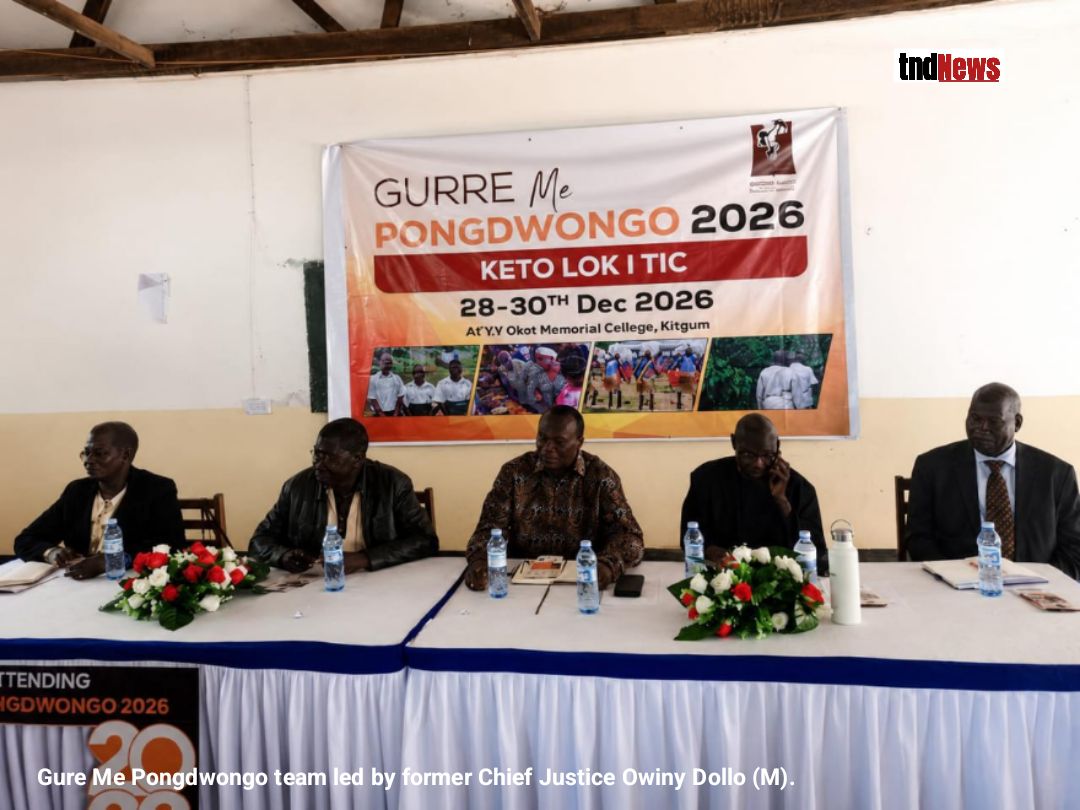
During the launch of preparations for the 2026 Gurre me Pongdwongo festival in Kitgum Municipality, organisers unveiled a shs20.216 billion fundraising target to support the annual event and its wider development activities including Dero Kwan at shs20 billion and Gure me pongdwongo.
Rather than focusing solely on cultural celebrations, leaders said the gathering has evolved into a forum where Acholi communities discuss practical solutions to poverty, education, food security and economic recovery.
Charles Odoch Langol, the Finance Chairperson of Gurre Madit me Pongdwongo, said the fundraising campaign will rely on transparency, accountability and broad community participation.
According to Langol, contributions will be mobilised from the business community, schools, local governments, clans, religious institutions, Members of Parliament, development partners, members of the Acholi diaspora, financial institutions and individual well-wishers.
He said combining traditional fundraising methods with digital platforms is intended to widen participation and encourage every Acholi person, regardless of location, to contribute to the region’s development.
The initiative comes at a time when many communities across the Acholi sub-region continue to grapple with unemployment, climate-related crop failures and the need to create more opportunities for young people.
Speaking at the launch, Ambassador Dr. Olara Otunnu, Co-Chair of the Acholi Initiative, said development will only be achieved if communities invest in education while expanding productive economic activities.
He said education remains one of the strongest tools for transforming societies, urging families and leaders to prioritise learning, innovation and skills development for young people.
Otunnu also called for stronger community participation in development programmes, arguing that lasting change cannot depend entirely on government interventions or external support.
Chief Justice Emeritus Alfonse Chigamoy Owiny-Dollo, the Chairperson of Gurre Madit me Pongdwongo, challenged households across Acholi to embrace agriculture as a pathway to economic transformation.
He encouraged families to increase the cultivation of bananas and other food crops, noting that stronger agricultural production would improve household food security while creating opportunities for income generation.
Owiny-Dollo said agriculture has historically sustained Acholi communities and remains one of the most practical ways of reducing poverty if households invest consistently in farming.
Rose Mary Auma, a farmer from Mucwini sub-county in Kitgum district, said community discussions should increasingly focus on helping farmers improve production instead of only celebrating culture.
“Culture is important because it brings us together, but what people also need are better farming methods, access to quality seeds and reliable markets. If those issues are addressed, families will improve their livelihoods,” she said.
In Lamwo district, Ochan David Kasisi, a resident of Lukung East sub-county in Lamwo district, said agriculture offers hope for many communities and young people struggling to find formal employment.
“Many youths have land but lack capital and skills. When leaders encourage farming, they should also connect young people to training, affordable inputs and markets so agriculture becomes a real business,” he said.
Education advocates also welcomed the emphasis on investing in schools. Gladys Oyat, a former headteacher of Y.Y. Okot memorial secondary school in Kitgum municipality, said improving education would have lasting benefits for the region.
“Every family wants a better future for their children. When communities support education alongside cultural values, they prepare the next generation to compete nationally and internationally,” she said.
Development experts have increasingly observed that cultural institutions can play an important role beyond preserving traditions by mobilising communities around issues such as education, environmental conservation, health and economic development.
Across northern Uganda, traditional leaders have in recent years become more involved in promoting peacebuilding, land conflict resolution, environmental protection and community development initiatives.
The annual Gurre me Pongdwongo gathering has similarly expanded from being primarily a cultural celebration into a platform where professionals, policymakers, cultural leaders and ordinary citizens exchange ideas on the future of the Acholi sub-region.
The 2026 edition will be held from December 28 to 30 at Y.Y. Okot Memorial College Grounds in Kitgum municipality under the theme “Translating Discourse into Action” (Keto Lok i Tic).
Organisers say the theme reflects a growing desire to move beyond discussions and ensure that commitments made during the gathering translate into practical action that improves people’s lives.
As Acholi communities continue rebuilding livelihoods and seeking sustainable economic opportunities, many residents hope the conversations held during Gurre me Pongdwongo will inspire partnerships and investments that extend well beyond the three-day event, turning cultural unity into lasting social and economic progress.
Discover more from tndNews, Uganda
Subscribe to get the latest posts sent to your email.