Beneath the rolling hills of Agoro sub-county in Lamwo district, close to Uganda’s border with South Sudan, a renewed investment in irrigation infrastructure is offering fresh hope to thousands of farming households.
The government officials, district leaders and local farmers believe the ongoing rehabilitation of the Agoro Irrigation Scheme could significantly increase agricultural production, strengthen food security and improve household incomes across the Acholi sub-region.
The Ministry of Water and Environment is undertaking hydraulic improvement works on the scheme at a cost of about shs3 billion.
The works are intended to complete and strengthen the existing irrigation infrastructure so that water reaches all six irrigation blocks, benefiting more than 1,500 farmers.
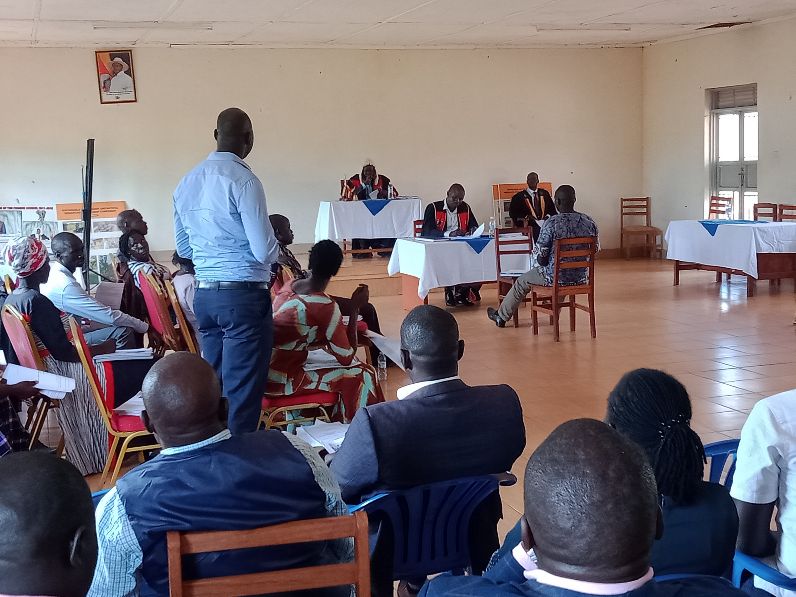
During a joint monitoring visit involving officials from the Ministry, Lamwo district leaders, contractors and farmer representatives, stakeholders reviewed the progress of the project and discussed measures needed to ensure its successful completion and long-term sustainability.
The Ministry delegation was led by the Commissioner for Multipurpose and Bulk Water Development, Eng. Gilbert Kimanzi, representing the Permanent Secretary, Dr. Alfred Okot Okidi.
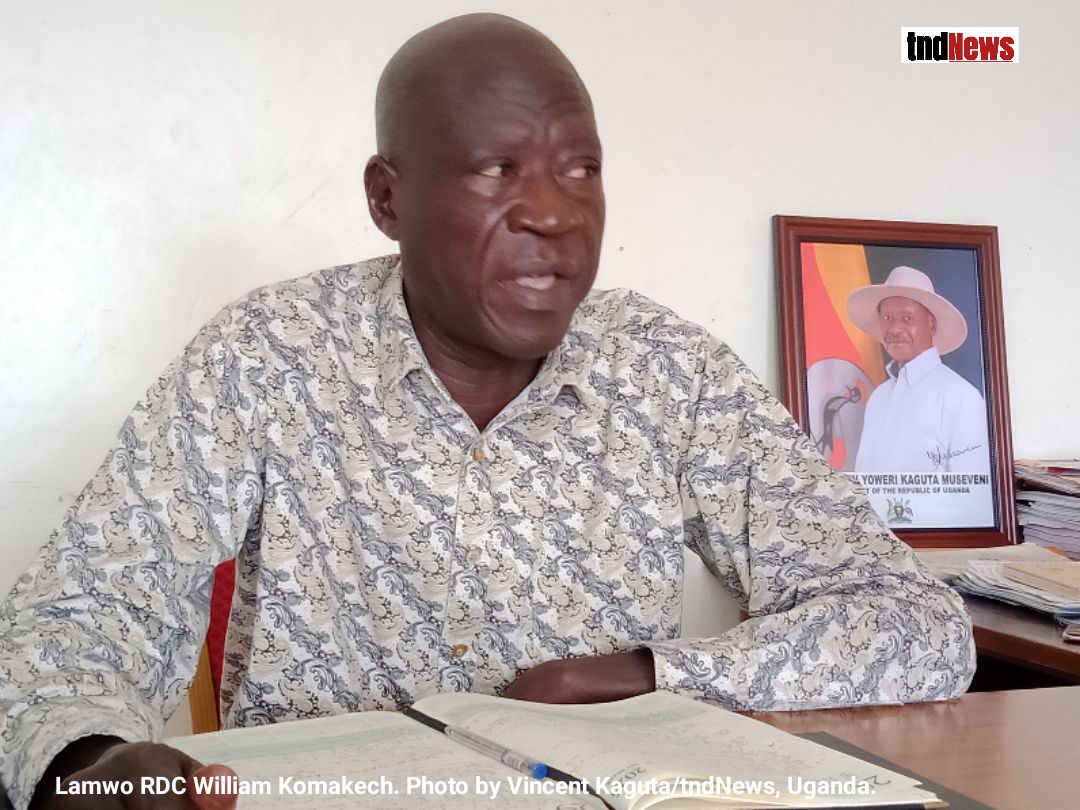
Also present was Assistant Commissioner and Project Coordinator Eng. Ronald Kasozi. Lamwo district was represented by LC5 chairperson Oyet Sisto Ocen, Resident District Commissioner William Komakech and Deputy Chief Administrative Officer Samuel Lagu.

A strategic investment in agriculture
Agriculture remains the backbone of Lamwo District’s economy, with the majority of households relying on crop production for both food and income.
However, farmers have long faced unpredictable rainfall, prolonged dry spells and limited irrigation facilities, making year-round production difficult.
The rehabilitation of the Agoro Irrigation Scheme is expected to address these challenges by providing a reliable supply of water throughout the year, enabling farmers to cultivate multiple seasons and diversify into higher-value crops.
The Resident District Commissioner said local leaders have mobilised communities to support the contractor so that the remaining works can be completed on schedule.
He noted that, beyond improving agricultural productivity, the irrigation project complements other government investments, including the ongoing Agoro piped water supply project, which is expected to improve access to safe water and reduce sanitation-related diseases in the border communities.
District Chairperson Oyet Sisto Ocen described the irrigation scheme as a strategic investment that could position Lamwo as one of northern Uganda’s leading food-producing districts.
He said increasing irrigation coverage would allow farmers to move away from subsistence farming and produce sufficient food for both local consumption and commercial markets across the Acholi sub-region and neighbouring South Sudan.
Land access slowed implementation
Officials from the Ministry clarified that delays experienced during implementation were largely caused by limited access to farmers’ land rather than weaknesses in the engineering design.
According to Eng. Gilbert Kimanzi, many farmers initially declined to allow survey teams and engineers onto their land after misinformation circulated that the government intended to acquire private land permanently.
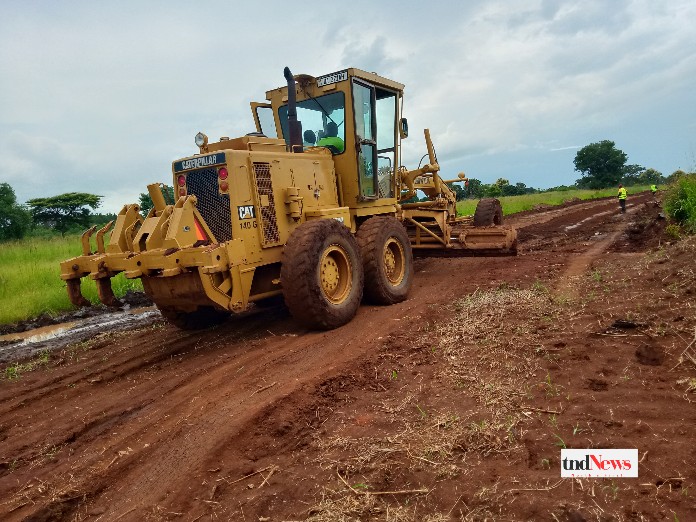
The resistance delayed important activities, including land surveys, levelling of fields, desilting irrigation channels and construction of tertiary canals needed to distribute water directly to farms.
Assistant Commissioner Eng. Ronald Kasozi emphasized that the core infrastructure of the irrigation scheme has been functioning as designed.
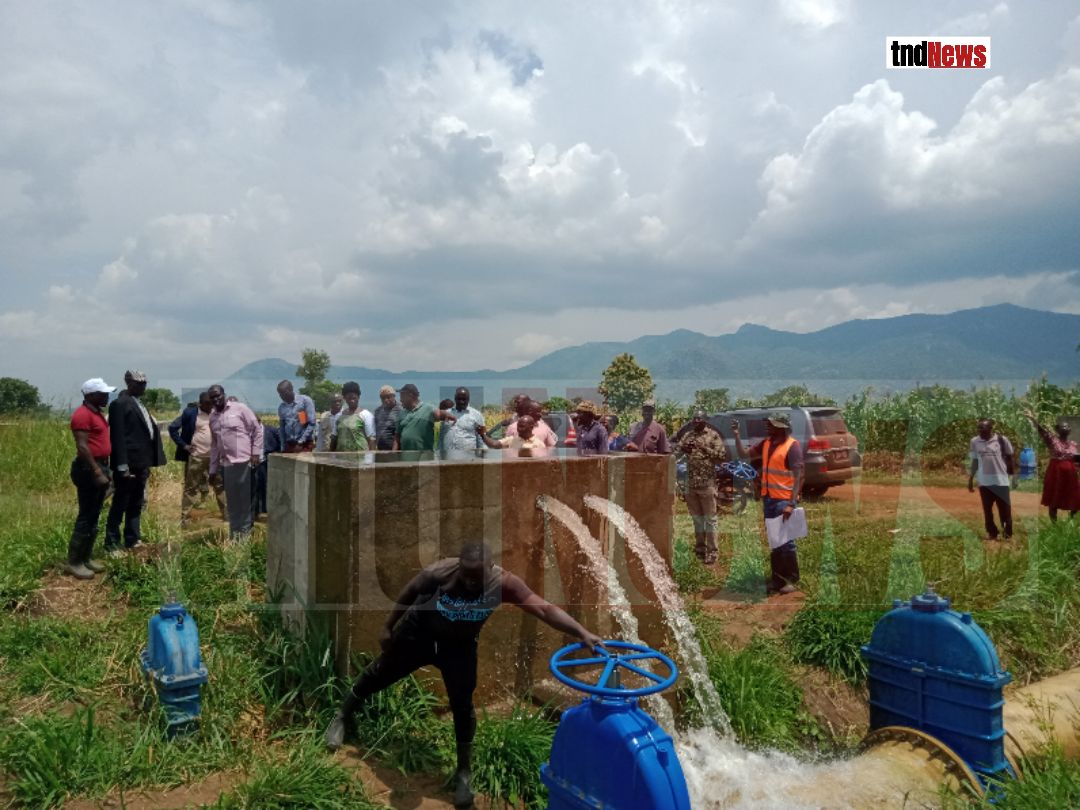
He explained that the headworks, bulk conveyance steel pipeline, storage reservoir and main distribution system have continued to perform effectively.
The remaining work focuses mainly on completing tertiary canals serving irrigation Blocks Three, Four, Five and Six.
Kasozi added that farmers in Blocks One and Two are already receiving irrigation water following the completed improvement works, demonstrating that the system is operational.
The current improvement works build on earlier government investments in the scheme. The initial construction was undertaken at a cost of approximately shs27 billion by Dott Services Limited, followed by improvement works worth about shs1.2 billion implemented by Gets Technical Services Limited.
The final completion works, valued at about shs1.9 billion, are being executed by Vidas Engineering Services.
Modern irrigation and farmer support
The rehabilitation incorporates a combination of open canals and closed pipe systems designed to improve water distribution while reducing maintenance requirements.
Engineers are also constructing approximately 33 kilometres of tertiary canals and a similar length of drainage channels, together with turnout structures, junction boxes and supporting infrastructure needed to deliver water efficiently to individual farms.
To minimise disruption, engineers are routing canals along farm boundaries wherever possible to protect standing crops.
The Ministry has deployed engineers and irrigation support officers to supervise implementation and prepare farmers for effective utilisation of the scheme once construction is complete.
Farmers will receive training on modern irrigation techniques, efficient water management, certified seed selection, fertiliser application, pest management and post-harvest handling to improve productivity and reduce losses.
Officials also want to strengthen the Agoro Cooperative Society to manage the scheme sustainably. Plans include exposure visits to successful irrigation projects elsewhere in Uganda, including the Tochi Irrigation Scheme in Oyam District, and the establishment of Irrigation Water User Committees for each irrigation block.
Eng. Kimanzi said organised farmer groups would be better placed to collect maintenance contributions, safeguard infrastructure and ensure long-term sustainability.
Protecting communities and workers
During the monitoring meeting, district officials also highlighted the importance of protecting workers’ rights and ensuring community ownership of the project.
Senior Probation and Welfare Officer Hellen Akidi urged the contractor to pay workers fairly, treat male and female employees equally and maintain a zero-tolerance policy on child labour.
Deputy Chief Administrative Officer Lagu Samuel Jones encouraged residents to actively participate in regular project meetings and protect the infrastructure from vandalism, saying the irrigation scheme represents a long-term investment for future generations.
Farmers anticipate better livelihoods
Many farmers have already begun preparing for expanded production once the remaining irrigation blocks become operational.
Angee Irene, a farmer from Agoro Central Village, hopes the project will provide reliable water for her 19 acres, where she grows rice, soybeans and maize.
She believes year-round irrigation will improve yields, reduce dependence on seasonal rainfall and increase household income.
Another farmer, Kenneth Onek, described the rehabilitation as a major opportunity to improve family livelihoods through commercial agriculture.
With irrigation already reaching some farms and work continuing on the remaining distribution network, both government officials and local communities are optimistic that the completed scheme will unlock Agoro’s agricultural potential.
If successfully managed and maintained, the Agoro Irrigation Scheme could become one of northern Uganda’s most significant public investments in climate-resilient agriculture, supporting food production, creating rural incomes and strengthening economic growth in Lamwo district for years to come.
Discover more from tndNews, Uganda
Subscribe to get the latest posts sent to your email.