The Parliamentary Committee on Science, Technology and Innovation has urged Makerere University to accelerate the commercialisation of its research innovations.
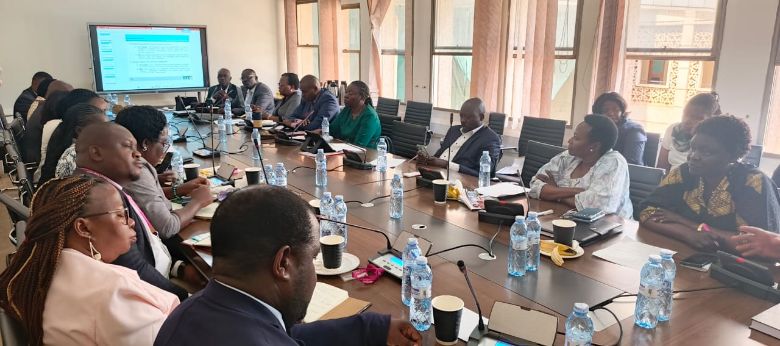
The committee, chaired by Kole North MP Dr Samuel Opio Acuti, made the observations during an oversight meeting with officials from Makerere University’s Research and Innovation Fund (RIF) on Thursday, 30 July 2026, at Parliament building.
The committee’s call comes after the university received shs100 billion in government funding over the past four years to support research and innovation across various sectors.
The funding was distributed through competitive grants covering agriculture, health, engineering, education, public sector transformation and other fields.
Dr Samuel Opio Acuti said Parliament recognised the university’s achievements in research but remained concerned that many innovations were failing to move beyond the laboratory.
“Our mandate is to monitor public entities involved in science, technology and innovation. We have seen impressive research outputs, but the real challenge is translating these innovations into commercial products that generate value for the country,” Acuti said.
The chairperson noted that many promising innovations remain stalled because of inadequate financing to establish start-up companies, scale production and enter the market.
“We do not want these innovations to remain in laboratories. We want to see them in supermarkets, on our roads, in our farms and in our industries solving real problems,” Acuti added.
According to the committee, the fund has already supported over 1,337 researchers through competitive grants, producing numerous prototypes, patents and innovations with commercial potential.
However, Parliament also identified budget reductions and delayed release of government funds as major obstacles affecting research implementation.
During the meeting, Christine Apolot, the Kumi District Woman MP, said institutions across Northern, Eastern, Western and West Nile regions should also benefit from government innovation funding to encourage locally driven research and harness indigenous knowledge.
“We want research and innovation spread across the country rather than being concentrated in one institution. Regional universities can contribute solutions tailored to the unique challenges facing their communities,” she added.
In response to the committee, Prof. Robert Wamala, Director of Research, Innovations and Partnerships at Makerere University, said the institution welcomed parliamentary oversight and remained committed to accountability for public resources.
Among the notable successes highlighted was the development of a drought-resistant, early-maturing soya bean variety now being grown in different parts of Uganda, alongside multiple accountability mechanisms to monitor research performance.
Prof. Wamala emphasised that the university’s greatest challenge is not generating innovations but securing investment to move successful projects from research into commercial production.
Among the projects highlighted was the PROMISE productivity measurement system, developed in partnership with the Ministry of Public Service to improve performance monitoring across government.
He also showcased Ocular, an artificial intelligence-powered diagnostic system developed by the Makerere AI Lab. The technology combines smartphone imaging, low-cost 3D-printed microscope adapters and AI algorithms to assist in diagnosing malaria, tuberculosis and cervical cancer.
The system is currently being piloted in more than 20 health facilities across Uganda and is being integrated with the Ministry of Health’s electronic reporting systems to improve disease surveillance and real-time reporting.
Also read: Govt to support Lira Regional Referral Hospital to punch above its current weight
Despite these achievements, Parliament noted that the overall return on public investment remains below expectations. The committee noted that more than 150 innovation projects have been developed, with an estimated 30 to 40 considered ready for commercialisation.
The Research and Innovation Fund initially received shs30 billion annually, but allocations were reduced to shs20 billion in the third and fourth years. The committee heard that the cuts disrupted multi-year projects, including clinical trials for a locally developed malaria treatment.
Researchers explained that delayed funding also affects procurement of specialised equipment and laboratory reagents, extending project timelines and slowing innovation.
The committee observed that sustained and predictable financing is essential for research programmes requiring several years to complete. Another recommendation from Parliament was to expand research funding beyond Makerere University to regional public universities.
The committee urged Makerere University to align more of its research with Uganda’s pressing development priorities. Members encouraged increased investment in research targeting non-communicable diseases such as cancer, diabetes and hypertension, while continuing efforts against malaria and other infectious diseases.
Researchers said the innovations have potential for adoption across other African countries facing similar disease burdens.
While acknowledging Makerere University’s growing research portfolio, Parliament maintained that future success will be measured by the extent to which innovations reach the market and contribute to Uganda’s economic transformation.
Discover more from tndNews, Uganda
Subscribe to get the latest posts sent to your email.