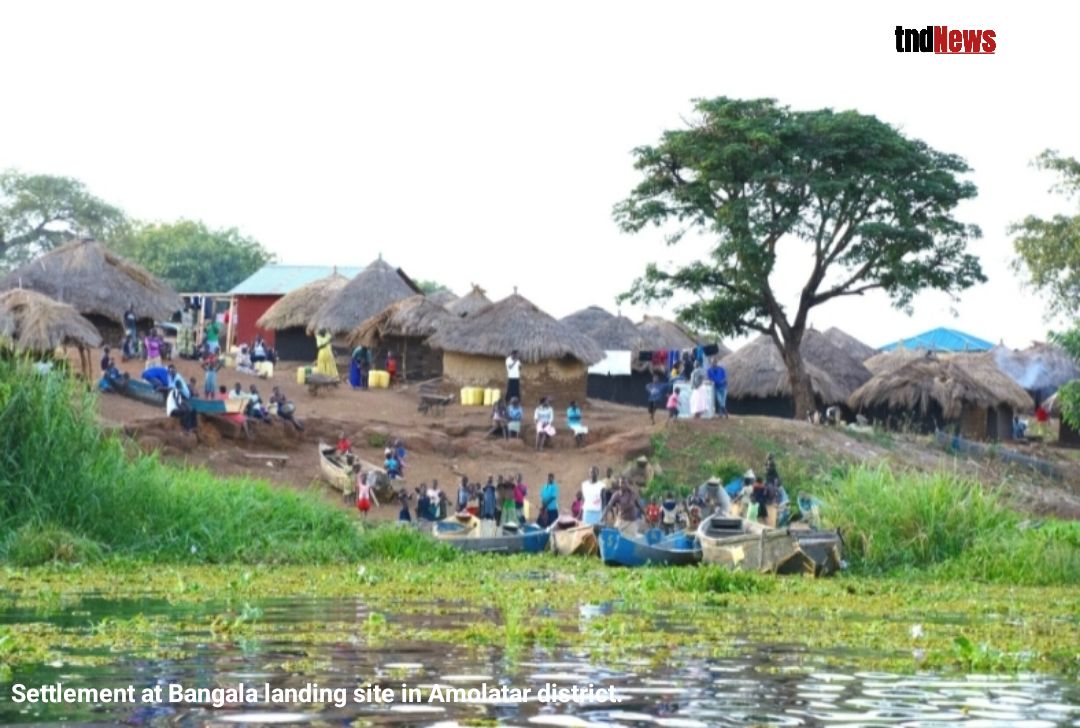
Amolatar | As the first light of dawn dances across the shimmering expanse of Lake Kyoga in Uganda, a small family steps ashore at the bustling Namasale landing site, Amolatar district.
Burdened with only their most precious belongings, they represent a growing tide of Ugandans displaced by the relentless forces of climate change. Once prosperous farmers, today, they are climate refugees—seeking refuge and renewal on the lake’s fragile shores.
For Mama Grace and her family, the story is painfully familiar. “We had no choice,” she says, clutching her youngest child close. “The rains changed. The floods came earlier, stronger. Our fields were swallowed.”
Every year, she continued, “We lost our crops.” This cyclical devastation has uprooted countless families from the flood-prone northern central districts surrounding Lake Kyoga, compelling them to forge new lives far from their ancestral lands.
Here, at the landing sites dotted along the lake’s edge, a remarkable transformation is unfolding. What were once mere stopping points for fishermen are now thriving informal hubs of resilience and hope—floating safety nets in the face of environmental upheaval.
The air around Namasale hums with activity. Fishermen mend nets while vendors weigh and sell fresh catches. Women sort and smoke fish, their practiced hands moving swiftly despite exhaustion.
Yet beneath this vibrant scene lies a complex reality shaped by shifting winds and water patterns that have altered both fisheries and social landscapes. “Ten years ago, these landing sites were simple fishing stops,” explains Yasin, chairperson of the fisheries management committee at Namasale.
“Now, families fleeing floods and failed harvests arrive every season. They bring challenges but also hope.”
Community solidarity is vital. Shelter often takes the form of makeshift huts or abandoned structures; older fishermen take newcomers under their wing, helping former farmers acclimate to fishing livelihoods.
But tensions simmer too. Resources are strained, and fish stocks pressured. “We do what we can,” Yasin reflects, “but these sites were never designed for such numbers.”
Okwir Patrick, fisheries management committee chairperson of Oulu landing site in Agwingiri sub-county, adds another layer to the struggle. Amid consistent mobility from flooded areas, new laws require people to sell fish 200 meters away from the lake, forcing many with no option but to turn elsewhere for survival.
Scientific data echoes these local experiences. Dr. Sarah Atim of Makerere University highlights rising temperatures and erratic rainfall as key drivers of intensified floods and droughts.
The Uganda National Meteorological Authority corroborates with records showing increased extreme weather events disrupting planting seasons and fish breeding alike. “These environmental shifts threaten food security,” Dr. Atim warns.
“Farmers can no longer predict planting times; fishing yields fluctuate wildly. Migration to landing sites emerges as a vital survival strategy—people move within Uganda to adapt.”
Despite limited formal support, grassroots ingenuity blossoms. At Biko landing site, community leaders like Amina Akello describe how pooled resources help newcomers build shelter and secure fishing work.

Women’s cooperatives process and market fish collectively; youth learn diverse skills, from boat repair to trade, expanding income avenues beyond the water.
Local government officials echo these observations. Molly Ayo, Environment Officer for Amolatar district, describes drastic landscape changes driven by climatic shifts.
“Flooding is more frequent and severe. Lake levels reached unprecedented highs in 2020,” she reports. Between 2019 and mid-2021, waters rose from 12.00 meters to a record 13.45 meters.
Fishermen confront unpredictable seasons worsened by invasive water hyacinth choking waterways and deteriorating water quality. Floodwaters submerge low-lying landing infrastructure and disrupt fish processing, striking at the heart of livelihoods. Poor fisher households feel the squeeze acutely.
Overfishing restrictions tighten even as fish stocks wane, limiting alternatives. Agricultural communities near the lakes suffer crop erosion and soil degradation, compounding food insecurity.
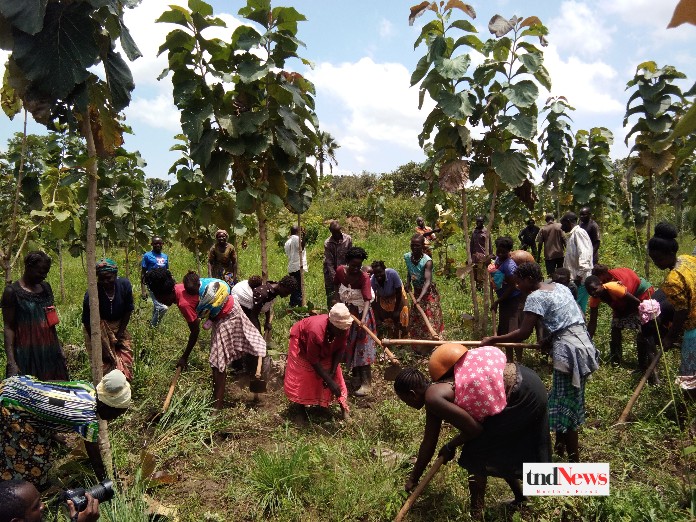
In response, Amolatar’s local government pursues a multi-faceted adaptation approach. Ecosystem restoration—including wetland and riverbank rehabilitation—and indigenous tree planting aim to reduce flood risks and bolster resilience.
Farmers adopt climate-smart agriculture practices supported by the Uganda Climate-Smart Agriculture Technologies Project (UCSATP), utilising micro-irrigation to grow vegetables and drought-tolerant crops during dry spells. The Parish Development Model provides loans facilitating diversified livelihoods such as poultry and livestock farming.
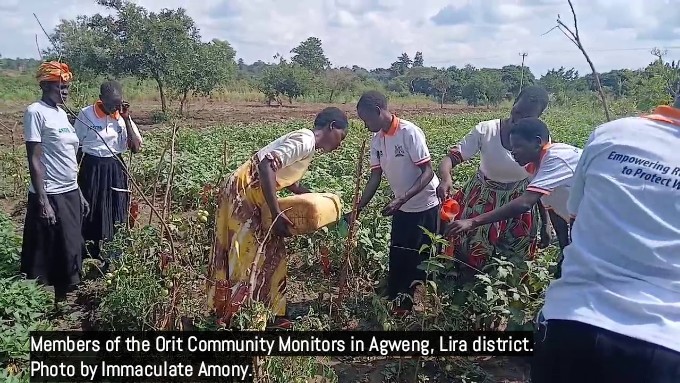
Silvia Alaba has turned to smart climate farming like kitchen farming using the four-hectare model, which she says is helping her in many ways. Governance reforms complement ecological and economic strategies.
A mandated 200-meter buffer zone seeks to curb encroachment, while a 2026 presidential directive dismantled corrupt landing committees, empowering indigenous fishermen to lead resource stewardship and community-driven adaptation—as only 33 boats and 100 fishermen are allowed at a gazetted landing site.
Lake Kyoga’s landing sites exemplify an emergent paradigm in climate adaptation—a community-crafted safety net woven from determination, cooperation, and innovation.
As climate-induced internal migration intensifies globally, these lakeside communities offer vital lessons in resilience. “Our survival depends on more than fishing,” emphasises environmental officer Ayo.
“We must embrace climate-smart farming, restore ecosystems, and strengthen governance. The challenge is enormous—but so is our will.”
For Mama Grace, each day remains a delicate balance of hardship and hope. “We lost our farm, but here by the lake, we have a lot to deal with again—with a new law at hand for recommended fishing gear, among other things. With the fish, the community, and faith—we will build a future for our children.”
However, concerns linger. Fishery Officer Anthony Otunga notes declines in key species like tilapia and Nile perch since 2024. “While stocks were healthy a few years ago, recent drops point to overfishing and environmental stress.”
He anticipates silverfish populations may rebound after a fishing moratorium, yet windier dry spells stir floating vegetation mats—sudds—that disrupt fishing operations further and prompt some landing sites to be abandoned.
Windier dry spells thus disrupt fishing activities by stirring these suds that interfere with nets and boats. Otunga also observes increasing abandonment of landing sites amid persistent poor catches, prompting plans to reduce fishing efforts by limiting boats and fishermen per site to sustainable levels.
Lake Kyoga’s evolving climate reality underscores the deep interplay between environment and human wellbeing.
Adaptive strategies are strengthening but must be scaled to preserve biodiversity, ensure food security, and sustain cultural heritage.
In the face of relentless change, these communities stand not just as victims but as pioneers—crafting resilience from adversity and charting a course toward survival and renewal.
Discover more from tndNews, Uganda
Subscribe to get the latest posts sent to your email.