By Charity Akullo, Lango | The communities in the Lango sub-region, northern Uganda, are still living through a crisis of displacement after rising lake waters swallowed homes and farm lands, forcing thousands into unwanted new lives defined by uncertainty and struggles.
Dokolo and Amolatar districts, and Lira City stand at the centre of this unfolding crisis, their streets and farmlands bearing witness to the human cost of displacement.
In Dokolo district, floods from Lake Kwania submerged farmlands and homes, displacing more than 15,000 households.
Official statistics from Dokolo district show that a total of 15,152 households were affected, pushing residents into overcrowded rentals or temporary shelters.
These include 5,357 in Agwata town council, 4,350 in Kwera sub-county, 2,400 in Adeknino sub-county, 1,220 in Agwata sub-county, 955 in Okwongodul, and 870 in Adok sub-county.
An example is David Ogwang, a 40-year-old resident of Akwate A village, Kachung Western Ward in Agwata town council, Dokolo district.
Ogwang, a father of five, is among thousands of flood victims whose homesteads, farmlands, and properties were submerged by the rising water levels of Lake Kwania.
He lost his six-acre piece of land to the floods and also lost his source of livelihood.
“Farming has been my source of livelihood. I used to grow maize, beans and cassava but the water came and took it all, including my home,” a visibly sad Ogwang said.
Once a maize and cassava farmer, Ogwang had to leave his farmland, a piece of land on which he had lived for several years, to start a new life in a rented two-room house.
He says he is struggling to sustain his family on a piece of land for which he pays shs100,000 annually for farming.
“The room I rent now cannot accommodate all my family members, including my grandchildren whom I am looking after. Often I am forced to request some of my neighbours for extra spaces to host my visitors,” he explained.
Ogwang has now ventured into fishing, which he says has come with an extra risk because of harassment by the fisheries officials and the army.
“Once in a while, when I go fishing, that’s when I can raise money through the sale of the fish to pay school fees for my children and pay their medical bills when they fall sick.”
“But raising money through fishing activities is also not easy since we are arrested by the fisheries protection unit for carrying out illegal fishing, and this puts our lives at risk. But because of survival, we are forced not to abide by laws,” he explains.
Like Ogwang, across the Lango sub-region, the floodwaters did not just destroy crops, it dismantled livelihoods, forcing farmers into fishing or casual labour, often under harsh conditions.
“If some well-wishers provide us with food relief, it’s not always sustainable because you would find that the 30 kilograms of beans and 20 kgs of posho only last for a week,” Ogwang appeals.
Sarah Akello, another victim, a mother of 4 and a resident of Akwoto A village, Kachung parish, Agwata sub-county in Dokolo, saw her home and gardens submerged.
She now faces hunger and homelessness, unable to rebuild due to scarce materials.
“This water chased me from my real home, and now I am facing difficulty in getting food and having good shelter for my family following the devastation that these floods caused us,” said Akello.
She said due to scarcity of building materials, many of the victims who were displaced by floods are unable to construct good houses.

Anna Apio, another victim, attempted to return to her flooded home, only to be displaced again as waters rose.
“If the government would help to relocate us, we would then ask good Samaritans to help us with other emergencies as we wait for the flood to subside,” she said.
“Increased crime”
Local leaders such as Moses Odur, the LC1 chairperson of Akwate A Village, Kachung Western Ward in Agwata town council, Dokolo district, accused the government of neglect, warning that without sustained support, the displaced risk sliding deeper into poverty.
According to him, high levels of poverty among the community members have fueled crime, prostitution, early marriages and domestic violence in the area, with unemployed youth resorting to waylaying and robbing people.

“Some young girls have been forced to marry at younger ages because they have nowhere to stay; the one single house given to their parents cannot be shared by them as grown-up girls cannot sleep under the same roof with their parents,” he said.
Odur denounced the government for not responding adequately to the ongoing floods, which have left over 15,000 households homeless since the beginning of the rainy season.
“When you’re being accommodated in someone’s residence, you are forced to not speak anything, as you are required to be obedient because if you do so, the owner of the home can decide to chase you away, hence leaving you homeless,” he added.
Similarly, in Amolatar district, in 2020, excessive flooding from Lake Kyoga waters also submerged two multi-million fish handling facilities, stripping locals of both livelihoods and safe spaces.
The two handling facilities included one in Bangladesh in Namasale sub-county that was constructed in 2012, costing about shs185 million with financial support from ICEIDA under the Ministry of Agriculture, Animal Industry and Fisheries, and another one at Nalubwoyo landing site in Agwingiri sub-county that cost about shs35 million, were all submerged by the lake.
The two facilities, divided into a fish wash, the weighing system, a water pump system, and the toilet system, were submerged in water, with a distance of about 50 meters away from the current landing site.
Wetlands under siege
In Lira City, the destruction of wetlands as a result of developers’ backfilling sections of Okole wetland for construction also worsened flooding, displacing slum dwellers and small business owners
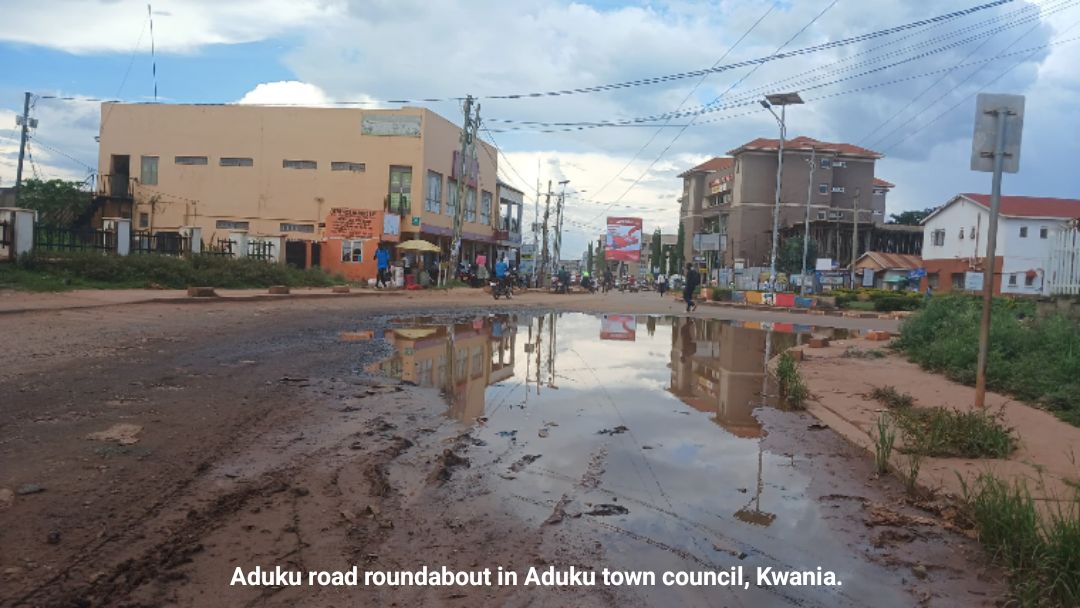
With the devastating effects of climate change coupled with heavy downpours, water clogging on city roads remained a big challenge to Lira City locals as they wade through the rainwater.
This has left several roads within the city centre blocked, affecting the movements of both pedestrians and motorists.
In some of the low-lying areas in the city slums, people’s businesses were always affected as their properties were washed away while others were submerged in the flooded water.
Also, with the human acts of dumping garbage inside the drainage channels, the existing channels within the city have not helped either because some of it does not have the capacity to carry a big volume of water due to their small size.
Some of the roads affected by flooding include: Kwania, Aroma Lane, New Generation, Te-atat, Aduku Road, Ogwang-guzi, Omodo, Abutoir, and Cuk-alok, among others.
But in a bid to address the recurrent challenge, the authorities of Lira City Council unveiled a detailed drainage system master plan as it aims to ease the flow of water in the city.
Under the drainage system master plan, the installations were put on both USMID (Uganda Support to Municipal Infrastructure Development) and other feeder roads in the city.
According to the City Environment Officer Leonard Otika, about shs35 billion is being used in the implementation of the master plan, and the works are being done in phases.
Otika says the new master plan is aimed at integrating flood and water quality management.
“Under the drainage system master plan, we will be doing reconstruction and redesigning of the drainage channels within the city. It will address the challenge of drainage maintenance and encourage members of the public not to dump garbage along the drainage systems,” he said.
He says the stages in preparing the master plan included, among other socio-economic analyses, the status of the drainage systems in the city, proposed flood mitigation and interventions.
“But we also have challenges with people dumping garbage and plastic bottles in some of these drainage channels, thus blocking them. Meaning when it rains heavily, water is difficult to run through the lower areas,” he adds.
“So in other words, the drainage channels and the culverts get blocked, hence causing an overflow. These overflows are very dangerous, and when water is clogged, there are associated communicable diseases which come up,” he explains.
Freddie Owiny, Lira City Engineer, said the drainage system master plan design is now allowing water from all the drainage channels within Lira City to be drained into Okole swamp in Lira City West Division.
He said using the drainage system master plan, Lira City Council has also established a drainage and road management committee alongside each of these roads.
“They are responsible for seeing that these roads and their drainage systems are functioning well, the drains are not clogged, and if you throw garbage anyhow, they take action against you,” he added.
Relief and gaps
The government, through the office of the Prime Minister, and Non-Governmental Organisations such as Afrah Uganda Relief Agency, through support from the Danish Emergency Relief Fund, have been offering aid in the form of food relief items to support the victims of floods; however, supplies are short-lived.
Victims say sustainable solutions such as relocation, housing support, and flood defences remain elusive without them.
Discover more from tndNews, Uganda
Subscribe to get the latest posts sent to your email.