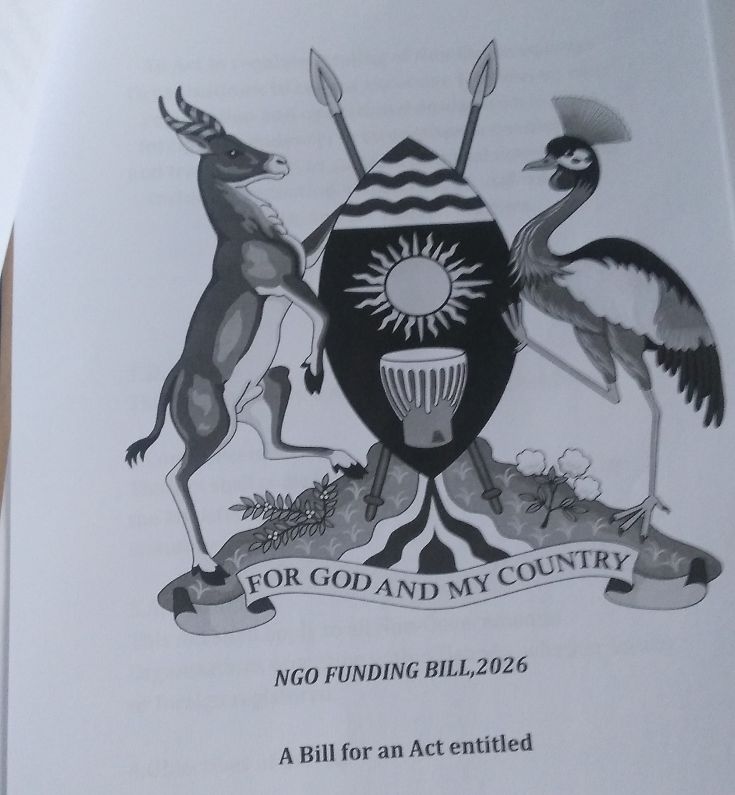
A proposed law seeking to regulate how non-governmental organizations (NGOs) access and use foreign funding is drawing growing scrutiny over both its strict penalties and broader implications for public accountability in Uganda.
The NGO Funding Bill further aims to introduce tighter state control over external financing to NGOs. Proponents argue the move is necessary to safeguard national sovereignty and improve transparency, but emerging debate suggests the bill also touches on how public resources should be monitored.
At its core, the bill seeks to establish a stricter legal framework governing how NGOs receive, declare, and utilize foreign funds. It proposes mandatory prior government approval before accessing external financing, alongside enhanced reporting obligations and oversight mechanisms.
In addition, discussions around the bill highlight a key underlying argument that misuse of public funds by government institutions remains a concern, and that NGOs play a critical role in oversight, accountability, and service delivery, often complementing state efforts.
Some lawmakers and human rights activists interpret this as reinforcing the idea that space and resources for NGOs should not be overly restricted, given their role in monitoring public expenditure and governance.
The proposal mirrors elements of the broader National Sovereignty agenda, which emphasizes limiting foreign influence in domestic affairs.
Focus on penalties
It is the bill’s penalty regime that has become the focal point of debate.
Under the proposed law, NGOs operating without proper authorization or outside the new funding guidelines could face heavy fines, suspension, or outright deregistration.
Organizations found receiving foreign funds without prior approval risk having those funds frozen or confiscated, with additional legal consequences for those involved.
The bill also introduces criminal liability for individuals, meaning directors and managers of NGOs could face personal fines or imprisonment for violations.
Further penalties apply to organizations accused of using funds for activities deemed contrary to “national interest” or “sovereignty.” In such cases, authorities would have powers to cancel operating licenses, seize assets, and initiate criminal proceedings.
Failure to comply with strict disclosure and reporting requirements could also attract sanctions, including operational bans and administrative penalties.
Accountability debate emerges
The bill has also sparked a wider conversation about accountability in public finance. Critics argue that while the legislation imposes stringent controls on NGOs, it comes at a time when civil society organizations are often at the forefront of exposing misuse of public funds and advocating for transparency.
They contend that limiting NGO access to funding could weaken independent oversight mechanisms, raising concerns about who will fill that accountability gap.
Supporters maintain that the measures are necessary to ensure transparency within NGOs themselves and to prevent external actors from influencing domestic policy through funding channels.
They argue that stronger penalties are essential to enforce compliance and restore public trust in the sector.
If enacted in its current form, analysts say, the law would mark a significant shift in how NGOs operate, with stricter state oversight potentially reshaping their role in both service delivery and public accountability.
Discover more from tndNews, Uganda
Subscribe to get the latest posts sent to your email.