To understand development outcomes in Uganda, we must understand the governing philosophy under which they are produced.
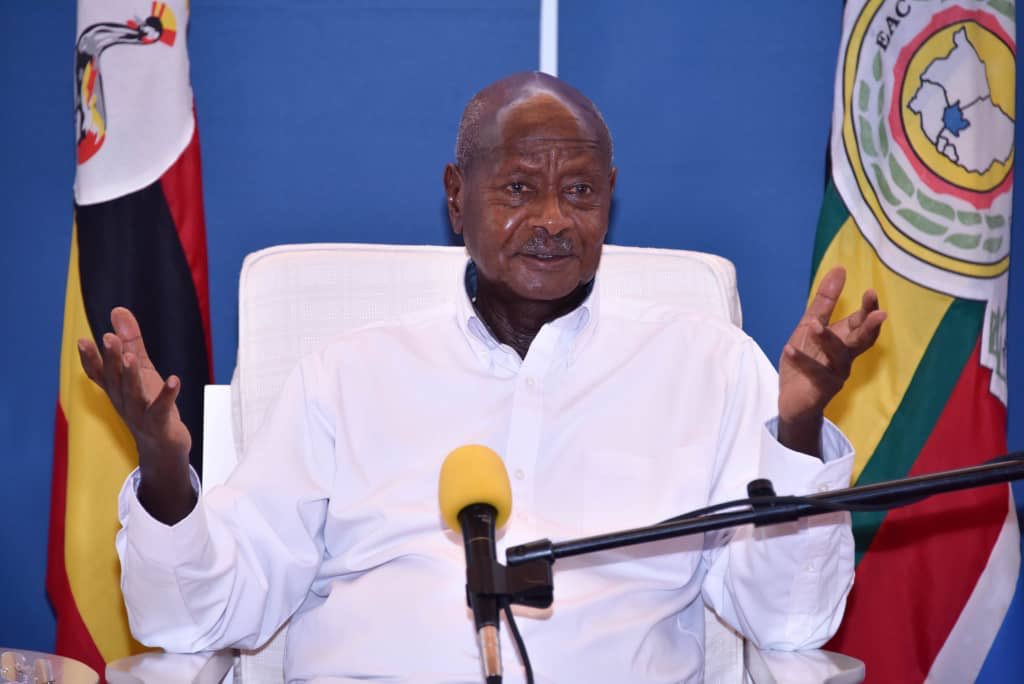
President Tibuhaburwa Museveni, in power since 1986, has articulated a clear prioritisation: infrastructure first, environment and nature next, and people and society last.
This philosophy is evident in the allocation of national resources. Uganda’s infrastructure budget reached shs5.9 trillion in the financial year 2024/25 – according to the Ministry of Finance in 2024.
This investment has produced tangible results: the national road network has grown from less than 1,000 kilometers of paved roads in 1986 to over 6,000 kilometers today.
Electricity access has expanded to every district except Buvuma and Obongi, as per Uganda Bureau of Statistics, 2024.
These are not trivial achievements. But they raise a fundamental question: development for whom, and for how long? Infrastructure built without parallel investment in social services, environmental protection, and community resilience becomes infrastructure for extraction—roads that enable the export of resources rather than the circulation of local benefits, electricity that powers industries owned by the elite rather than productive enterprises owned by the poor.
As Escobar in 2011 observed that development is never neutral; it always serves someone’s interests at someone else’s expense.
The contradiction of individual merit
We have previously argued that the “individual merit” approach is ecologically nonsensical. No human being exists as an individual in the sense required by this ideology. We are all, always, embedded in webs of relationships—with our families, our communities, our ancestors, our descendants, and the more-than-human world that sustains us.
But the ideology of individual merit serves a political function. It justifies the concentration of wealth and power in the hands of those who claim to have earned it through individual effort, while obscuring the social and ecological infrastructure that made their “merit” possible.
It delegitimises claims for redistribution, for social provision, for intergenerational obligation. It transforms politics from collective deliberation about shared futures into competitive jockeying for individual advantage.
As we have documented, this same individualistic logic pervades Uganda’s development programmes. The Emyooga programme distributes funds to individuals for enterprise development, without attention to the social and ecological contexts that determine whether those enterprises will thrive or fail.
Operation Wealth Creation delivers inputs to individual farmers, as if farming were an individual rather than a household and community endeavor. The Parish Development Model targets individual households, as if poverty were a property of individuals rather than of systems.
This individualisation of development is not neutral. It fragments communities, undermines collective action, and makes it impossible to address problems—ecological degradation, market volatility, climate change—that are inherently collective.
As we argued in IMAP to IMAD, the individual is a myth, and development built on myth cannot produce anything other than failure.
Specific programme failures
Let us be concrete. Uganda has witnessed a succession of programmes, each presented as the solution to poverty, each failing in predictable ways:
Bonna Bagaggawale (Prosperity for All).
Launched in the early 2000s, this programme aimed to lift households out of poverty through enterprise development. It failed because it treated poverty as an individual problem requiring individual solutions, ignoring the structural constraints—land tenure insecurity, lack of market access, inadequate infrastructure—that no individual could overcome.
National Agricultural Advisory Services (NAADS).
This programme, heavily financed by donors, was intended to transform agricultural extension services. It became notorious for corruption, with resources diverted to politically connected contractors and little reaching farmers.
The programme’s project-based structure, with its regular cycles of funding and evaluation, created perverse incentives that rewarded the appearance of activity over actual impact (Kjaer & Joughin, 2021).
Operation Wealth Creation (OWC)
Launched as a military-led initiative to deliver agricultural inputs, OWC has been plagued by diversion of inputs, inadequate veterinary and extension support, and a fundamental mismatch between the inputs distributed and the actual needs of farmers.
Emyooga
This programme, whose name means “savings” in Runyankore, was designed to provide revolving funds for enterprise development. It has been criticized for political capture, with funds distributed to ruling party supporters rather than through transparent, needs-based criteria.
Parish Development Model (PDM)
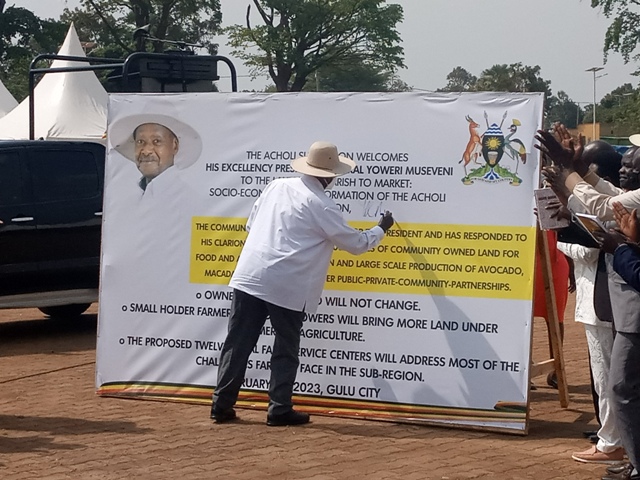
The current flagship programme, PDM aims to transition 3.5 million households from subsistence to market-oriented production through parish-level revolving funds. While its architecture represents an improvement—targeting the parish rather than the individual, emphasizing savings and collective enterprise—it remains trapped within the project logic.
Its success will be measured in short-term indicators (repayment rates, income increases) rather than in the long-term flourishing of communities and ecosystems.
Oil Palm Development Project
This project, promoted by IFIs and corporate interests, replaces diverse food systems with monocultures serving global commodity chains.
It prioritises the production of palm oil for industrial uses over the production of food for local consumption, undermining food sovereignty while enriching a small number of large landowners and processors.
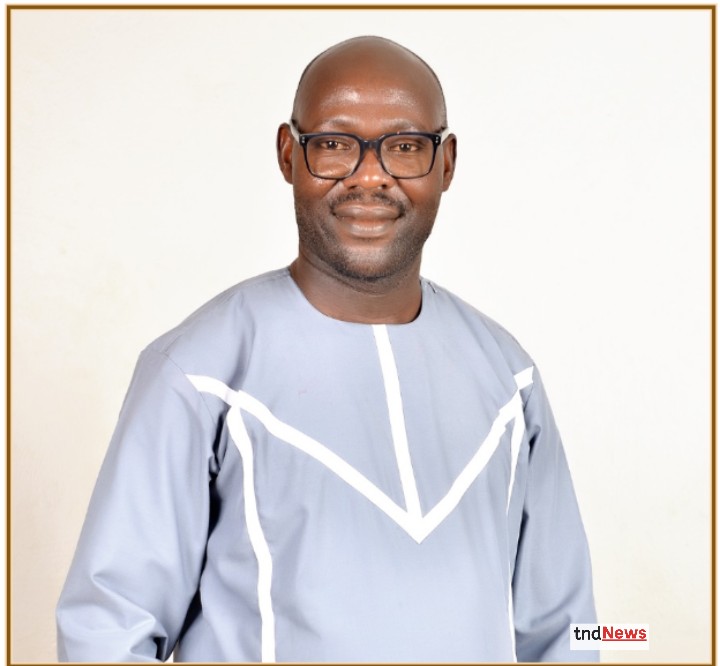
The author, Oweyegha-Afunaduula is a Conservation Biologist at Center for Critical Thinking and Alternative Analysis, Uganda.
Discover more from tndNews, Uganda
Subscribe to get the latest posts sent to your email.