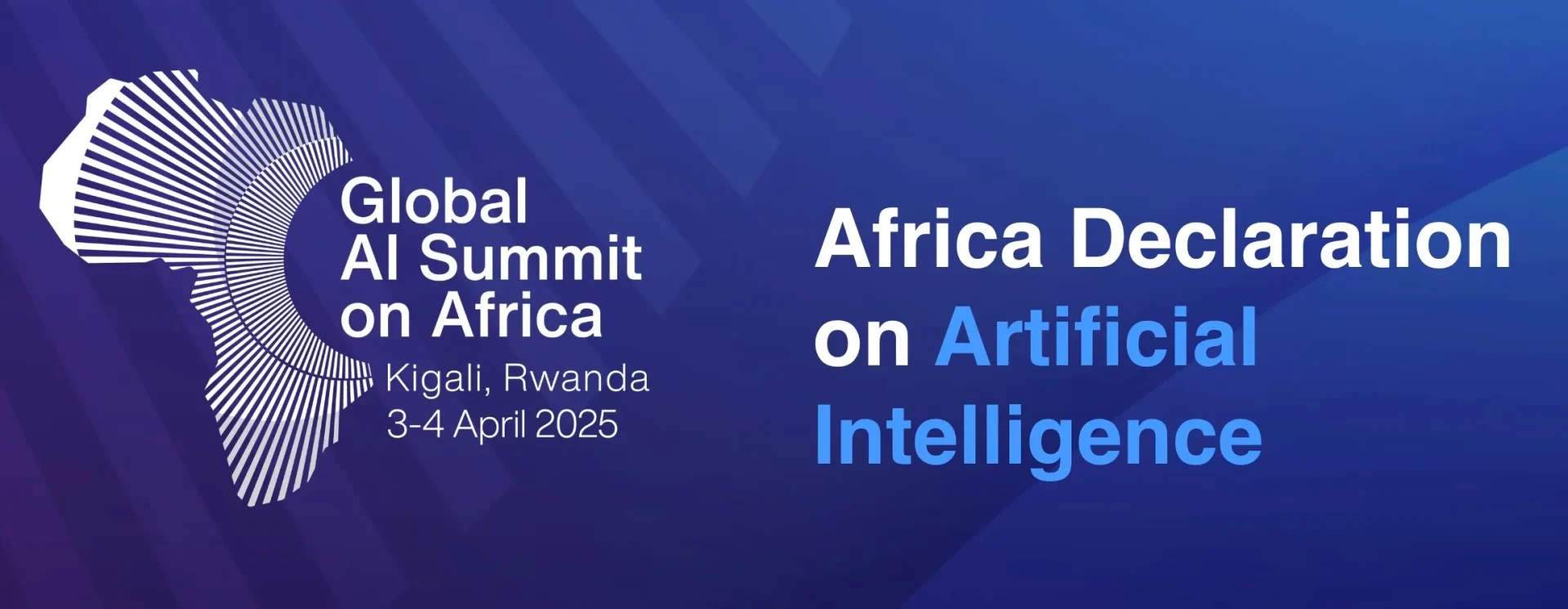
Kigali, Rwanda | East Africa has taken a significant step toward reshaping its scientific and technological future following the adoption of a landmark regional declaration on artificial intelligence (AI), placing open research systems at the heart of the continent’s innovation agenda.
The newly adopted East African Community (EAC) Declaration on Artificial Intelligence integrates key proposals aimed at strengthening open, inclusive, and collaborative research ecosystems across the region and the move is being hailed by policymakers and scientists as a turning point in Africa’s pursuit of equitable, locally driven innovation.
Further, the declaration emerged from deliberations at the 4th EAC Regional Science, Technology and Innovation Conference, where leaders emphasized that Africa’s AI ambitions cannot succeed without robust and accessible research systems and at the center of the discussions was a call to reimagine how knowledge is created, shared, and applied across the continent.
A shift toward open and inclusive research
The declaration underscores a growing consensus: that Africa must move beyond fragmented and siloed research efforts toward a unified, open research ecosystem that reflects its unique development priorities.
Speaking during the conference, Mahlet Teshome Kebede, Principal Policy Officer for Science and Technology at the African Union Commission, stressed the importance of tailoring global research frameworks to local realities.
“Open research must be designed with Africa’s realities in mind, and without this, we risk building systems that are open but not necessarily useful for our development priorities,” she said.
Therefore, this perspective reflects longstanding concerns among African researchers that global models of openness often fail to address structural inequalities, including limited access to funding, infrastructure gaps, and uneven participation in global knowledge production.
The declaration aims to correct this imbalance by promoting systems that are not only open but also equitable, inclusive, and responsive to Africa’s socio-economic needs.
While artificial intelligence has been widely promoted as a driver of economic transformation in Africa, experts at the conference warned that the continent’s ability to harness AI depends heavily on the strength of its research ecosystems.
Despite increasing investments in science and technology, many African countries still struggle to translate research findings into practical, deployable solutions. Persistent challenges include weak coordination among institutions, limited infrastructure, and insufficient financing.
Additionally, the declaration acknowledges these barriers and calls for coordinated action to address them through policy harmonization, sustainable funding models, and the development of interoperable digital infrastructure.
Prof. Brando Okolo, Head of Science, Technology and Innovation at the African Union Development Agency (AUDA-NEPAD), emphasized that open research must go beyond access to information.
“Open research goes beyond access and it is about building an ecosystem where knowledge is created, shared, and applied to solve African challenges,” he said.
Adding that, “we must ensure that this ecosystem includes the private sector and informal systems, which are critical to innovation on the continent.”
Building an African-led vision
A major highlight of the conference was the presentation of a draft Vision for Open Research in Africa, developed through a consultative process led by the African Union Development Agency and the Science for Africa Foundation.
The vision outlines an ambitious goal: that by 2034, Africa will have a globally influential, African-led open research ecosystem where knowledge is freely created, accessible, and reusable to drive equitable development.
Allen Mukhwana, Head of Programmes for Strengthening Science Ecosystems at the Science for Africa Foundation, described the vision as a blueprint for aligning fragmented efforts across the continent.
“This vision is about moving from fragmented efforts to a shared continental direction and it provides a foundation for aligning policy, infrastructure, and investment toward a system that works for Africa,” he said.
The initiative aligns closely with broader continental frameworks, including Agenda 2063 the African Union’s long-term development blueprint and the Science, Technology and Innovation Strategy for Africa (STISA 2034).
Furthermore, the conference and its associated side events resulted in three major outcomes that are expected to guide implementation of the declaration.
Firstly, stakeholders agreed on a shared continental vision for open research, marking a shift toward coordinated and collective action.
Secondly, participants identified practical entry points for implementation, including policy reforms, investment strategies, and capacity-building initiatives.
Third, the process fostered the emergence of a growing coalition of stakeholders — including governments, research institutions, funders, and development partners — committed to co-creating and operationalizing the open research agenda.
Dr. Moses Alobo, Head of Programmes at the Science for Africa Foundation, emphasized the importance of translating ideas into action.
“Our role is to support this transition by enabling dialogue, strengthening coordination, and helping translate ideas into actionable pathways and open research is not an end in itself, it is a means to accelerate science-to-impact across the continent,” he said.
In addition, one of the defining features of the declaration is its emphasis on integrating indigenous knowledge systems into modern research frameworks.
Experts argue that Africa’s rich repository of traditional knowledge spanning agriculture, medicine, climate adaptation, and more remains underutilized in formal research systems.
Therefore, by incorporating indigenous knowledge into open research ecosystems, the declaration seeks to create more contextually relevant solutions while preserving cultural heritage.
Hence, this approach also aligns with calls for decolonizing knowledge production, ensuring that African perspectives and experiences are central to the continent’s scientific advancement.
The adoption of the declaration was facilitated by a high-level side event co-convened by the African Union Development Agency (AUDA-NEPAD) and the Science for Africa Foundation.
The session brought together a diverse group of stakeholders, including policymakers, researchers, and funders, to advance an African-led vision for open research.
AUDA-NEPAD, the African Union’s technical agency for implementing development programs, has been instrumental in coordinating efforts to strengthen science, technology, and innovation across the continent.
Meanwhile, the Science for Africa Foundation continues to play a critical role in funding research, fostering collaboration, and building environments that enable scientists to thrive.
Together, these institutions are helping to mobilize resources, build partnerships, and accelerate the transition toward more open and inclusive research systems.
Implications for East Africa
For East African countries, the declaration represents both an opportunity and a challenge.
On one hand, it provides a framework for leveraging AI and open research to drive economic growth, improve public services, and address pressing challenges such as healthcare, education, and climate change.
On the other hand, achieving these goals will require significant investments in infrastructure, human capital, and institutional capacity.
Countries will need to strengthen data governance frameworks, expand digital infrastructure, and invest in education and training to build a skilled workforce capable of driving innovation.
Further, the declaration also calls for greater regional collaboration, recognizing that many challenges including data sharing, regulatory harmonization and cross-border research cannot be addressed by individual countries alone.
The inclusion of open research priorities in the EAC AI Declaration signals a broader shift in how Africa approaches innovation.
Rather than relying solely on external models and solutions, the continent is increasingly prioritizing homegrown approaches that reflect its unique context and aspirations.
By placing openness, inclusivity, and collaboration at the center of its research systems, Africa is positioning itself to play a more active role in the global knowledge economy.
The declaration also sends a strong message to international partners: that Africa is ready to lead its own innovation agenda and is seeking partnerships that respect and support this vision.
While the adoption of the declaration marks a significant milestone, experts caution that its success will depend on sustained commitment and coordinated action.
Implementation will require strong political will, adequate funding, and effective governance mechanisms to ensure accountability and transparency.
It will also require continued engagement with a wide range of stakeholders, including academia, industry, civil society, and local communities.
As Africa moves forward with its AI and open research agenda, the challenge will be to translate high-level commitments into tangible outcomes that improve lives across the continent.
For now, the EAC AI Declaration stands as a bold step toward a more open, inclusive, and impactful research ecosystem, one that has the potential to transform not only East Africa, but the continent as a whole.
Discover more from tndNews, Uganda
Subscribe to get the latest posts sent to your email.