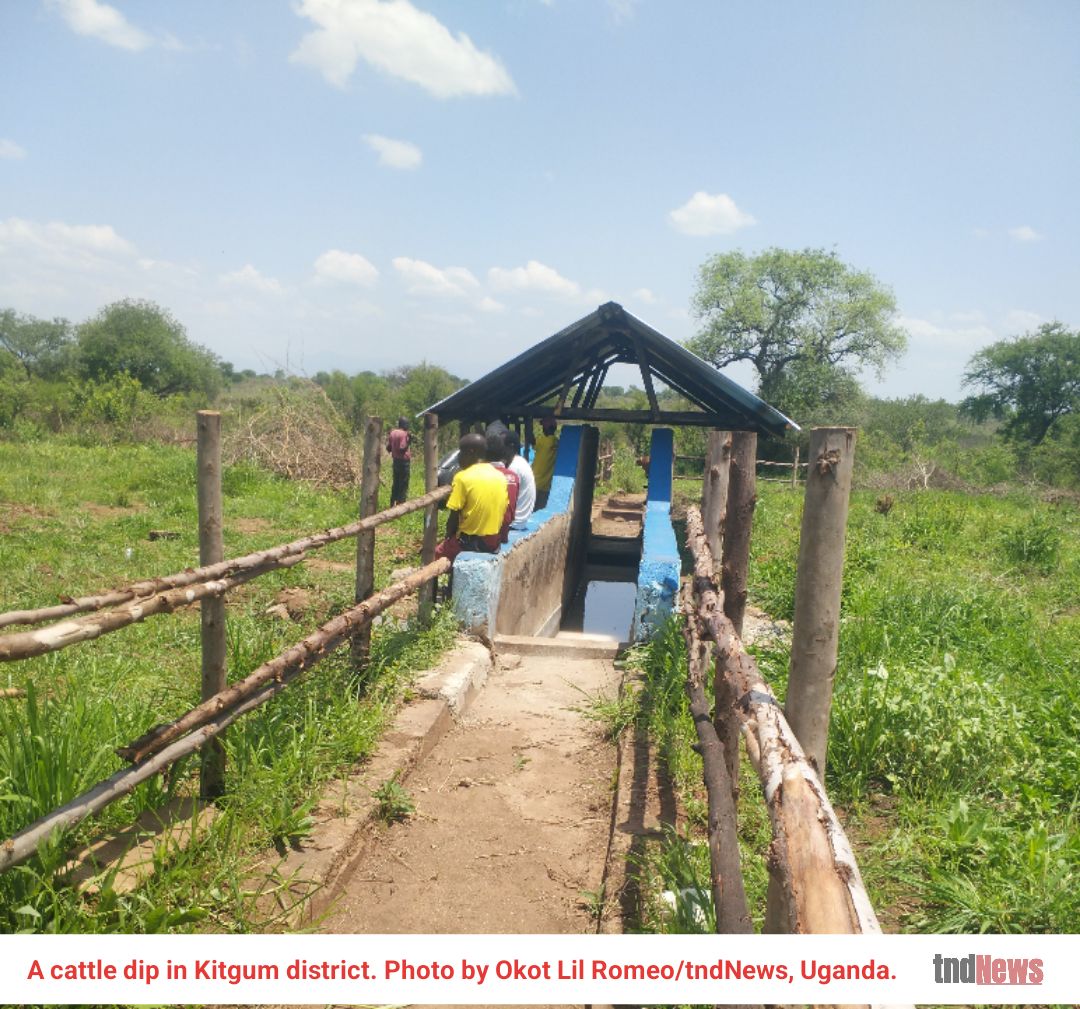
A 1970s-era cattle dip tank at Mucwini in Kitgum district has been brought back to life after 40 years of dormancy.
The facility, which became non-functional in 1987 due to conflict and cattle rustling, is now set to strengthen livestock health, curb tick-borne diseases, and support local farmers’ livelihoods.
Government dip tanks were historically established at parish levels to protect livestock from ticks, but decades of insurgency rendered them inactive. Farmers were forced to rely on private dipping services at high costs.
Today, alongside restoring traditional dip tanks, the government is introducing modern, environmentally friendly vector-control methods, such as cattle crush systems, which avoid chemical contamination of farmland and water sources.
“The revitalization of the dip tank will help us fight tick-borne diseases in Kitgum, which have been a major challenge for decades,” said Christine Lakot, a farmer from Kel-Polo village, Pubech parish.
Lakot highlighted seasonal challenges, noting that during dry spells, animals roam in search of grass, risking road accidents and increased disease spread.
She added that since leaving the IDP camps in 2007, her farm grew from one cow to over 30, and with the restored dip tank, she expects to reach 100 cattle in five years.
“We used to spend over shs100,000 a month treating animals manually and now, with a functioning dip tank, we can protect our herds efficiently while earning income from milk and cattle sales,” she said, adding that livestock farming has helped her cover school fees, domestic expenses, and healthcare.
Lakot urged households in Acholi to embrace cattle keeping as a sustainable livelihood that could reduce regional poverty.
Local landowner Toorach Wilfred raised concerns about compensation for the five hectares used by the dip tank, emphasizing transparency in government projects.
“We are not opposed to development, but the government must ensure fair compensation for our land. Our family has farmed here for over 40 years,” he said.
Richard Odong Abert, LC III Chairman of Mucwini sub-county, said the restored dip tank will improve livestock health and meat quality in Acholi East.
He confirmed that only three dip tanks were built during the Milton Obote era, all dormant for decades.
The sub county plans to form a committee to manage the dip tank, including charging a small fee of shs500 per animal to ensure sustainability and avoid crop damage with each parish to have designated dipping days to prevent mixing of herds.
Oola Garage Allan, Kitgum District Communication Officer, noted the district is training veterinary officers to diagnose and treat tick-borne diseases and is prepared to support livestock restocking programs.
He further noted that a regional vaccine and drug storage facility in Gulu now supports rapid response to disease outbreaks.
Jimmy Akena, UPC President, noted that 80 dip tanks are being restored in northern Uganda through his foundation in partnership with the government.
He stressed that controlling livestock diseases is key to reopening export markets in the EU and China, which have imposed bans due to past outbreaks.
“Restoring dip tanks prepares farmers for certification, allowing Uganda to export livestock products internationally. In five years, we could see 90 cargo planes passing through Uganda per month carrying beef and milk products,” Akena said.
The government’s focus on modern veterinary systems, livestock restocking, and crossbreeding programs is expected to revitalize the northern Uganda livestock sector.
Additionally, by improving disease control and facilitating commercialization, these initiatives could transform local economies, enhance food security, and reduce poverty across the region.
Uganda currently loses about USD 1.1 million annually to tick-borne diseases. Half of all livestock in the country is kept for subsistence rather than commercial purposes, and the total cattle population stands at 14.5 million.
Improved dip tank functionality is expected to boost commercial livestock production and help farmers meet international health standards.
Discover more from tndNews, Uganda
Subscribe to get the latest posts sent to your email.