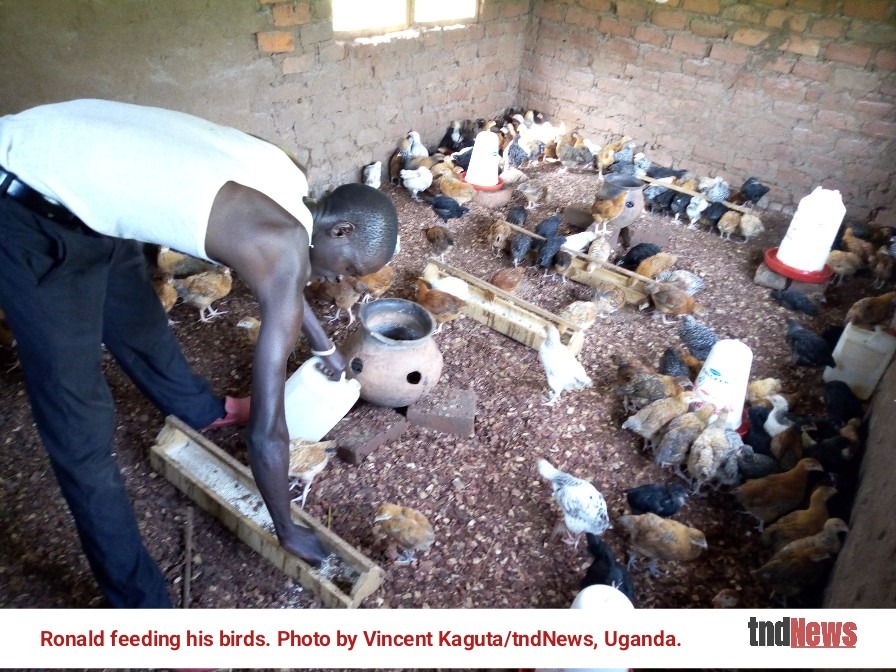
What began as a modest attempt to keep indigenous chickens has grown into a thriving agribusiness venture for Obalim Ronald, 24. The young man is a resident of Layamo sub-county in Kitgum district.
His story is a testament to how small-scale farming, when combined with innovation and persistence, can generate millions of shillings even on limited land.
After two years of rearing local chickens, Obalim made a bold decision to transition to Kuroiler poultry, a breed known for its high productivity and adaptability to local conditions. The shift, though not easy, has significantly improved his income and transformed his outlook on farming.
“I had grown used to local breeds, but I realized they were limiting my potential,” Obalim explains. “Kuroilers survive under the same conditions, but their productivity is far much higher.”
Kuroiler chickens, originally developed in India, are increasingly gaining popularity among Ugandan farmers due to their dual-purpose nature; they provide both meat and eggs in larger quantities than indigenous breeds.
While a local chicken lays about 40 eggs per year, a Kuroiler can produce up to 150 eggs within the same period. In addition, they mature faster, reaching market weight of about 3.5 kilograms in just 10 weeks, compared to several months for local breeds.
Encouraged by this potential, Obalim began his Kuroiler journey in April 2018 with 250 chicks purchased at shs2,000 each from a supplier in Mukono. With an initial capital of about shs600,000 to shs700,000 much of it spent on feed, he set out to build a sustainable poultry enterprise on a small piece of family land.
“I started from one of my father’s buildings,” he recalls. “At first, the cost of feeding was high, but I remained patient because I believed in the returns.”
 His patience paid off. Today, Obalim supplies over 500 chickens weekly to hotels and local markets, often working with a network of fellow farmers he has mobilised and mentored.
In a month, his supply can exceed 1,000 birds, creating a reliable income stream not only for himself but also for others in the community.
The financial difference between local and Kuroiler chickens is clear. While indigenous birds sell for at least shs20,000, Kuroilers fetch up to shs30,000 due to their size and productivity. Eggs from Kuroilers also command higher prices, sometimes nearly double those of local breeds.
“At the end of the day, it is about profit,” Obalim says. “With Kuroilers, I earn more from both meat and eggs.”
Currently, his farm keeps about 500 birds, which consume approximately 40 kilograms of maize bran daily. Despite the high feeding costs, the returns remain promising. Obalim estimates that he earns between shs700,000 and shs800,000 per month from poultry sales, translating into annual earnings of up to shs5 million.
He has also embraced good farming practices, including regular vaccination and deworming, to protect his birds from common diseases such as Newcastle, coccidiosis, and Gumboro. With guidance from poultry experts, he follows a strict health schedule to minimize losses.
“Vaccination is very important. Without it, you can lose your entire flock,” he notes.
However, the journey has not been without challenges. Obalim cites fluctuating feed prices, delayed payments from buyers sometimes extending up to two months and limited access to affordable credit as major constraints.
Like many small-scale farmers, he has avoided bank loans due to high interest rates, which can reach up to 20 percent.
Diseases and unpredictable weather also pose risks, occasionally affecting egg production and bird survival. Despite these setbacks, Obalim remains committed to expanding his enterprise through careful management and record-keeping.
“I keep records of all my expenses and income. This helps me understand whether I am making a profit or a loss,” he explains.
Beyond personal gain, Obalim’s venture has a social mission. He initially started poultry farming to support youth peer education initiatives and help vulnerable groups, including orphans and disadvantaged children.
“Peer education requires funding to reach more young people,” he says. “This project helps me contribute to that cause.”
His success has also been supported by family members who provided initial resources and encouragement. Today, he employs one full-time worker and continues to supervise daily operations to ensure efficiency.
Looking ahead, Obalim has ambitious plans. He hopes to acquire more land, increase production capacity, and become one of the leading poultry suppliers in Northern Uganda, particularly in the Acholi sub-region.
“My target is to earn between Shs 10 million and Shs15 million annually,” he says. “I also want to create jobs for young people and help reduce unemployment.”
In addition to farming, Obalim is mindful of environmental conservation. He has planted trees around his farm to provide shade for the birds and contribute to improved rainfall patterns.
Agricultural experts encourage such initiatives. Kitgum district agricultural extension officer Oyella Florence advises farmers to choose enterprises that are both profitable and suited to their environment, while also seeking continuous guidance from extension workers.
“Farmers must be proactive in managing challenges such as climate change and disease,” she notes. “Selecting the right breed or crop is key to success.”
Obalim’s story underscores the power of starting small and thinking big. From a handful of chickens to a growing agribusiness, his journey offers valuable lessons for youth and aspiring farmers across Uganda.
“I encourage young people not to despise small beginnings,” he says. “Start with what you have, stay committed, and you will grow.”
As demand for poultry products continues to rise, Obalim’s venture stands as a shining example of how determination, innovation, and smart farming practices can turn a small piece of land into a source of sustainable wealth.
Discover more from tndNews, Uganda
Subscribe to get the latest posts sent to your email.