A decade ago, Ali Walter was like many smallholder farmers in northern Uganda, working hard in the garden but earning little from his efforts.
Today, Ali, 46, a farmer from Lyelokwa village in Lela parish, Omiya Anyima sub-county in Kitgum district has transformed his fortunes through commercial cassava farming, earning tens of millions of shillings annually.
Ali’s journey into cassava farming was not planned from the start. For many years he mainly cultivated cereals and cotton on a small scale. Although the crops helped sustain his family, the income was limited and unpredictable.
Like many farmers in the region, he relied heavily on traditional farming practices that did not yield significant profits.
The turning point came when agricultural training programs supported by the Food and Agriculture Organisation (FAO) and the National Agricultural Advisory Services (NAADS) reached farmers in Omiya Anyima sub-county. Through these programs, Ali and other farmers were trained in modern farming methods, including large-scale cassava production.
Inspired by the training, Ali decided to try something different. In 2011, he sold part of his cotton harvest and used the money to buy 15 sacks of cassava stems worth shs250,000.
Around the same time, the government program, Operation Wealth Creation supported him with eight additional sacks of cassava stems, allowing him to expand his planting.
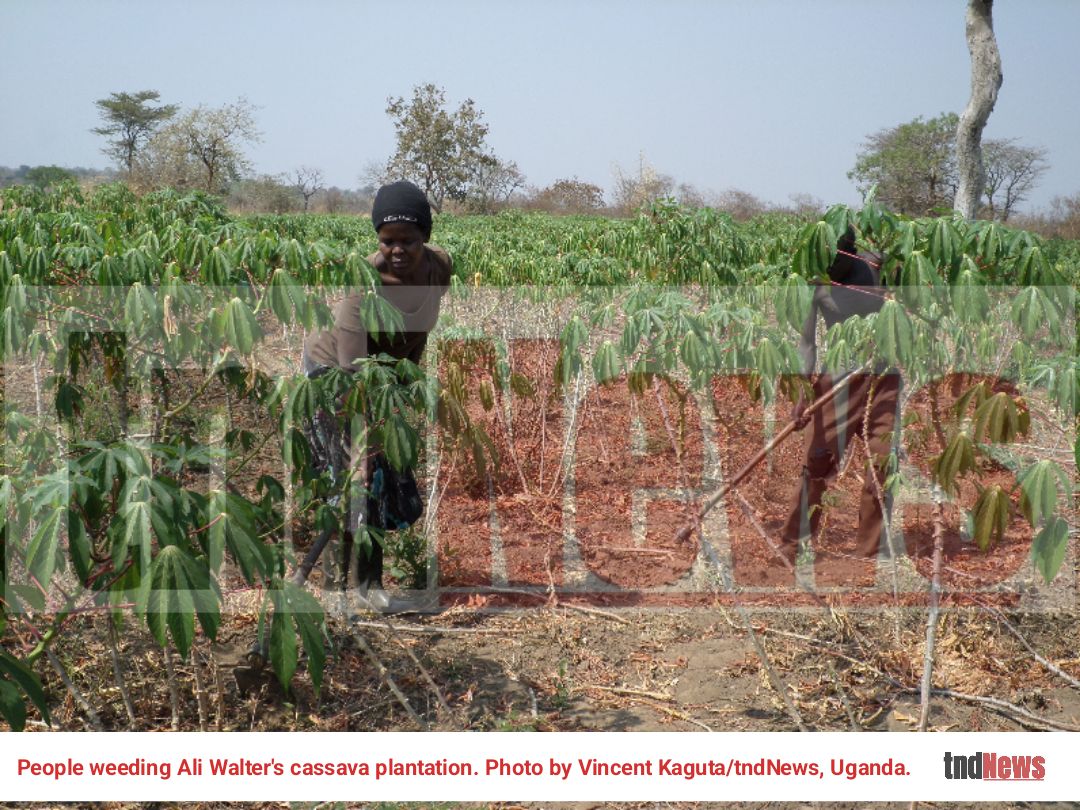
Ali planted the cassava on his land and carefully applied the farming techniques he had learned. The crop performed well, and within a few years, his efforts began to pay off.
In 2014, FAO provided him with 40 sacks of cassava stems on loan to boost his production. After harvesting, the organisation bought 500 sacks of cassava stems from him at shs40,000 each and also allowed him to keep 100 sacks for future planting.
The transaction marked a major breakthrough for the farmer and strengthened his confidence in cassava farming.
Since then, Ali has steadily expanded his farm. Out of the 200 acres of land he owns, he now cultivates cassava alongside other crops such as simsim, maize and cotton.
 However, cassava remains his most profitable enterprise. He currently earns about shs47million annually from selling cassava stems and tubers to farmers, traders and government programs.
Ali sells cassava stems to farmers in his community at between shs25,000 and shs30,000 per sack, while government initiatives purchase them at about shs40,000 per sack for distribution to other farmers.
He also sells cassava tubers locally at shs1,500 each or shs35,000 to shs40,000 per sack. Sometimes traders transport the produce to distant markets such as Kotido district, where food shortages often increase demand and prices can rise to between shs80,000 and shs100,000 per sack.
He says cassava farming has significantly improved his family’s livelihood. The income helps him pay school fees for his four children, two in secondary school and two in primary school.
Ali has also started constructing a commercial building in Kitgum Municipality, an investment that has already cost him about shs16 million.
The farm is very much a family project. His wife, Agnes Ali, says they work together with their children, especially during school holidays, to manage the farm. According to her, teamwork has played a key role in the family’s progress.
Ali’s success has also made him a source of inspiration for other farmers. Many farmers from neighbouring districts such as Gulu, Lamwo, Pader and Agago visit his farm to learn about commercial cassava farming and buy planting materials.
Despite his achievements, Ali still faces several challenges. During dry seasons, bushfires sometimes destroy cassava fields, while thieves occasionally steal the crop from his garden.
Transporting cassava to distant markets is also costly, and improved cassava varieties such as NASE 14 remain expensive for many farmers.
Nevertheless, Ali remains optimistic about the future. He plans to expand his cassava production and hopes to become one of the major cassava suppliers in the Acholi sub-region. His long-term goal is to earn at least shs80 million annually from farming.
Agricultural extension worker, Oyella Florence says Ali’s progress demonstrates how agriculture can transform livelihoods when farmers adopt improved practices and access better markets.
According to her, his work has also raised the profile of farmers in the region since programs like Operation Wealth Creation now source cassava stems from him for distribution to other districts.
For Ali, the lesson from his journey is simple: farming can change lives when farmers are willing to learn, work hard and invest in the right crops.
What began as a modest attempt to try cassava has grown into a thriving agribusiness one that continues to transform both his family and his community.
Discover more from tndNews, Uganda
Subscribe to get the latest posts sent to your email.