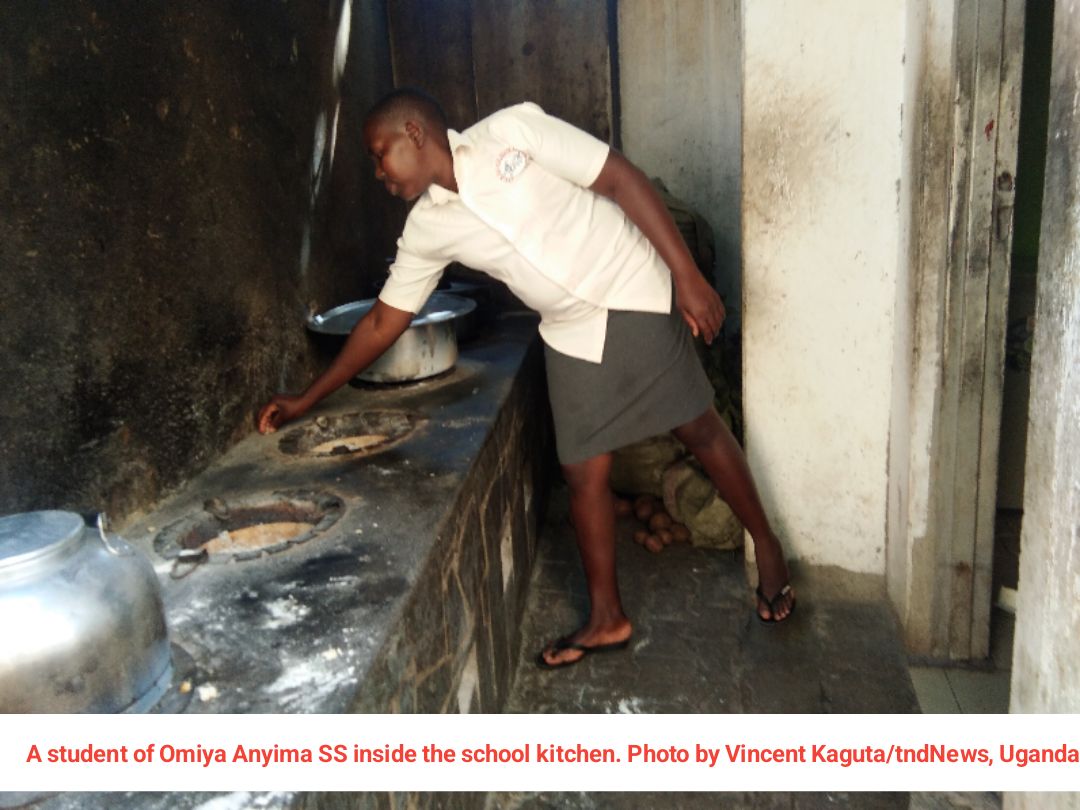
At dawn, as the first rays of sunlight stretch across the compound of Omiya Anyima Secondary School in Kitgum district, a group of students quietly gathers behind the kitchen.
Their hands are darkened with charcoal dust, their laughter soft but determined. What looks like an ordinary morning routine is, in fact, a quiet revolution, one that is changing how a community sees its environment, one briquette at a time.
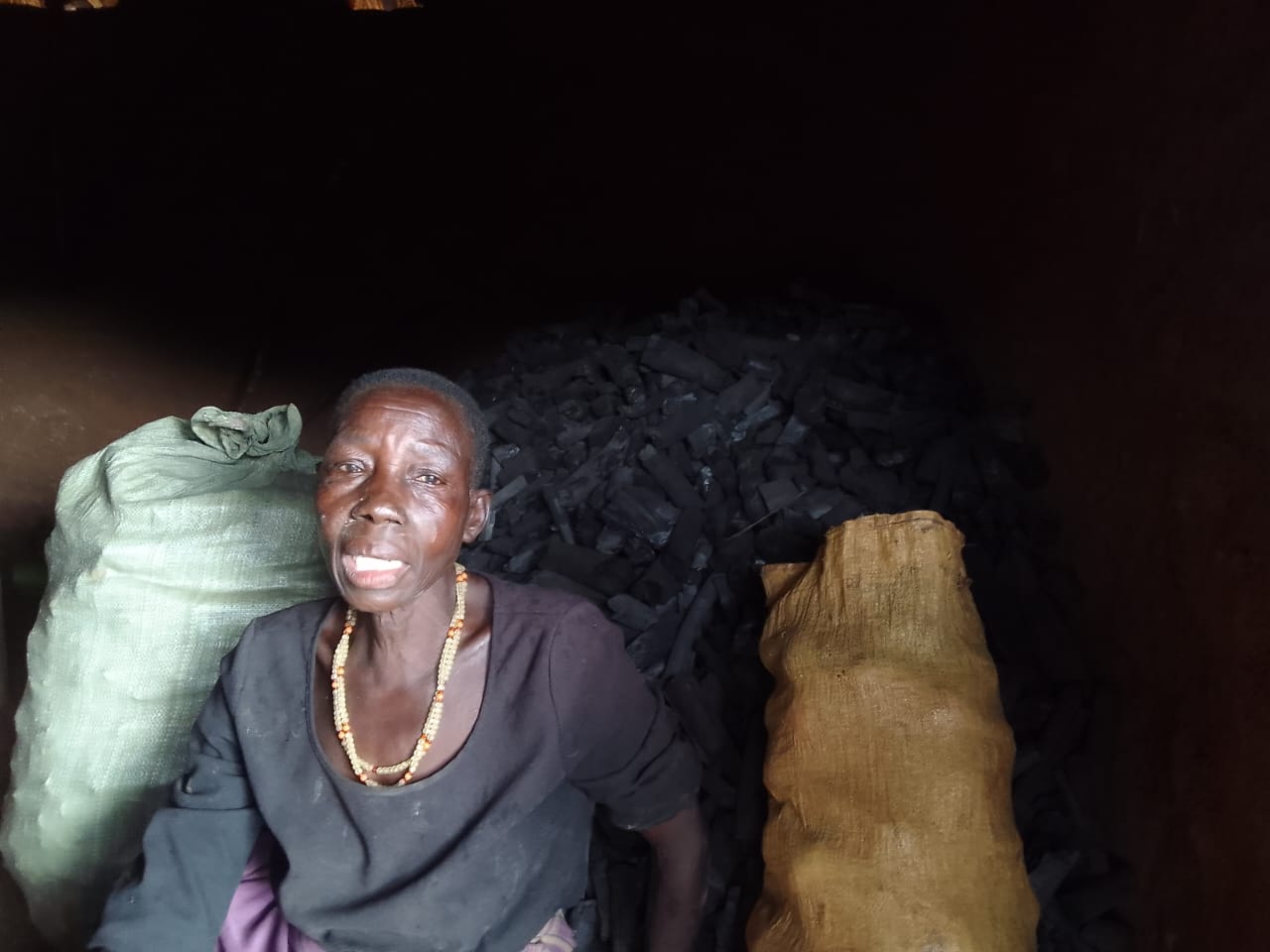
For years, the school, like many others across northern Uganda, depended heavily on firewood and charcoal to prepare meals for hundreds of students. Trees around the community steadily disappeared, and with them, the shade, the cool air, and the sense of balance that once defined the land. But today, a different story is unfolding.
Fifteen-year-old Ayaa Brenda wipes sweat from her forehead as she shapes another briquette. “Before, we never thought this dust was useful,” she says, holding up a finished piece. “Now we know it can cook food and also save trees.”
In a region where forests have steadily disappeared and temperatures continue to rise, the students of Omiya Anyima are quietly leading a transformation one briquette, one tree, and one idea at a time.
“We used to think cutting trees was normal,” says Ayaa and member of the school’s “Go Green Club.” “Now we see every tree as life.”
The transformation did not begin with funding or policy documents, it began with a conversation. Seated under one of the few remaining trees in the compound, students and their patron,
Sunday Comfort Lakwecwiny, started asking simple but powerful questions: What can we do differently? How can we protect what we have left?
From those conversations, ideas were born. Today, the school is using small, compact fuel blocks made from charcoal dust and clay soil to cook meals. What was once waste scattered in the environment is now a valuable resource. The briquettes burn longer, produce less smoke, and significantly reduce the need for cutting trees.
“In the past, we used a lot of charcoal, and the smoke was too much,” recalls one of the cooks. “Now, with briquettes, cooking is faster, and the air is cleaner. Even our health has improved.”
Nearby, an energy-saving stove built from locally available materials stands as another symbol of innovation. Unlike traditional open-fire cooking, the stove conserves heat, meaning less fuel is needed. For a school that feeds hundreds daily, the impact is immediate and tangible.
But perhaps the most visible change is happening in the soil. Across the compound, young trees sway gently in the breeze, some newly planted, others carefully nurtured since 2017.
Students take turns watering and protecting them, often guarding them against grazing animals that roam freely during the dry season.
“Each tree here has a story,” says Lakwecwiny. “When a student plants a tree, they feel responsible for it. It becomes part of them.”Beyond the physical changes, the school is nurturing something deeper: a shift in mindset.
Every week during assembly, a student steps forward to recite an environmental monologue, a short, powerful reflection on issues like deforestation, bush burning, and climate change. The compound falls silent as words echo across the grounds, challenging attitudes and inspiring action.
“These monologues are not just speeches,” Lakwecwiny explains. “They are seeds. They shape how students think, not just here, but when they go back home.”
And that is where the real impact lies. Many students come from families that rely on firewood for cooking and land for farming.
By carrying these lessons back to their villages, they become ambassadors of change encouraging parents and neighbors to adopt more sustainable practices.
Still, the journey is far from easy. Climate change remains a complex and often misunderstood concept in the community. “Some people think it is only about cutting trees,” Lakwecwiny says. “But there are bigger droughts, floods, and poor farming practices. We are trying to help people see the full picture.”
Challenges persist, from limited materials for building stoves to the constant threat of animals destroying young trees. Yet, the school presses on, driven by a sense of purpose that goes beyond the classroom.
Support from partners, including the Food and Agriculture Organization and the Swedish Embassy, has helped strengthen these efforts under the Green Schools Initiative. Training sessions and workshops have equipped both teachers and students with practical knowledge on environmental management.
Experts in the district have taken notice. Omwony Alfred, the district production officer, says initiatives like this are critical in a region where changing rainfall patterns are already affecting livelihoods. “Climate change is real,” he says. “And solutions must start at the grassroots.”
He points to programs like micro-scale irrigation and climate-smart agriculture as complementary efforts that can help communities adapt. But he emphasizes that awareness, especially among young people, is key.
Similarly, the district’s environmental office sees the school as a model worth replicating. “If more schools adopt such practices, the impact will be enormous,” says Oyok David, the senior environment officer. “Students are powerful agents of change.”
Back at Omiya Anyima Secondary School, the work continues quietly, steadily, and with growing confidence. As the sun sets, the kitchen fire burns low, fueled not by freshly cut wood, but by briquettes shaped by student hands.
 Nearby, a line of young trees stands silhouetted against the orange sky, their leaves.
Discover more from tndNews, Uganda
Subscribe to get the latest posts sent to your email.