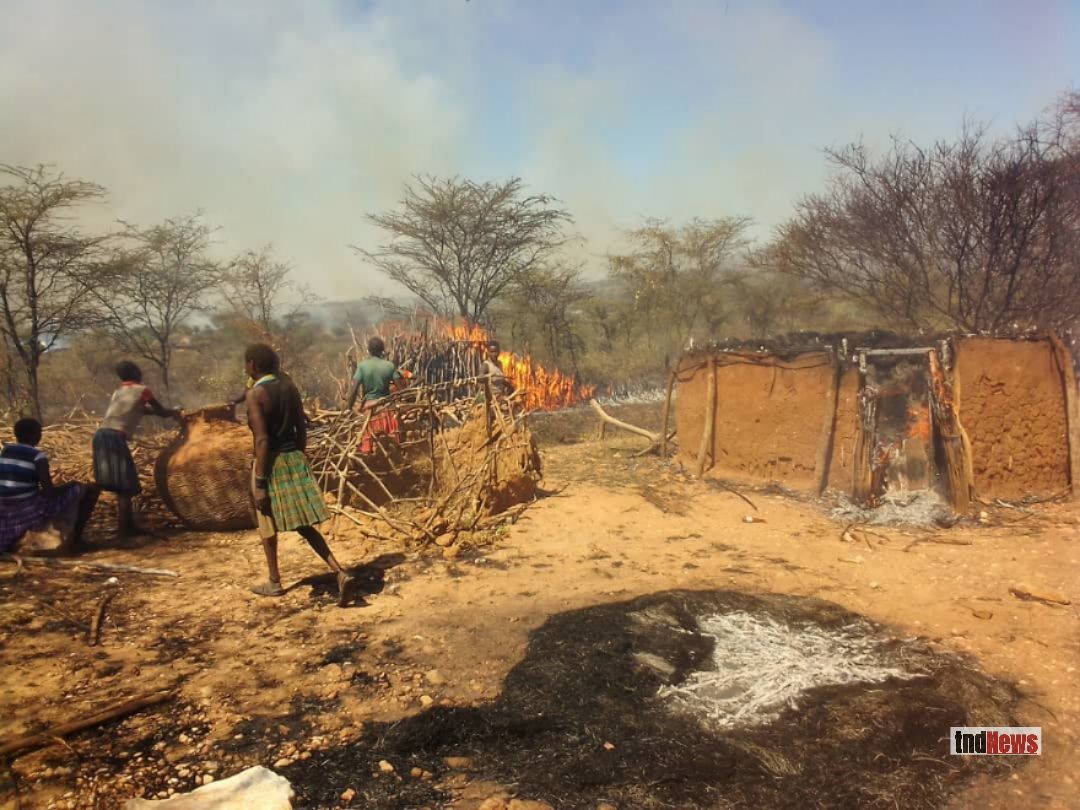
Kitgum, Uganda | Every dry season between December and January, vast stretches of Northern Uganda are set ablaze.
What begins as routine bush burning to clear land or regenerate pasture increasingly spirals into uncontrolled fires destroying crops, degrading ecosystems, and intensifying climate vulnerability in one of Uganda’s most climate-exposed regions.
In districts such as Kitgum, Lamwo, Agago, and Pader, farmers say seasonal fires have become more frequent and destructive over the past decade. Long-term crops including cassava, sorghum, peas, simsim, and fruit trees, some requiring up to a year to mature, are wiped out within hours.
“Fire does not choose,” says Okot Robert, a smallholder farmer in Padibe town council Lamwo district, who lost about three acres of peas. “You invest months in the garden, then in one afternoon everything is gone.”
According to Okot, climate change turns tradition into disaster where bush burning has long been practised in Northern Uganda for land clearing, hunting, and pasture renewal.
But climate scientists and local environmental officers warn that rising temperatures, prolonged dry spells, and stronger seasonal winds, key indicators of climate change, have transformed a traditional practice into an environmental hazard.
According to the district environment offices of Kitgum district David Oyok, vegetation now dries faster, fires spread wider, and communities struggle to contain them. These fires release significant carbon emissions, contributing to global warming and reinforcing a dangerous climate feedback loop.
 “The land is hotter and drier than before,” says David Oyok an environmental officer in Kitgum District. “Once fire starts, it is almost impossible to control.”
Food security on the brink
Northern Uganda is a critical food basket for Uganda, yet repeated fire outbreaks are undermining household food security.
Okello Denis, LC1 chairperson of Gangdyang village in Gangdyang parish, Padibe town council in Lamwo district reports shrinking harvests, rising food prices, and increasing dependence on relief food during prolonged dry spells.
According to Okello, Women and children bear the greatest burden. When crops fail, families are forced to sell livestock, withdraw children from school, or migrate temporarily for survival labour.
“Climate change is no longer a distant threat,” notes Okello Denis, a local leader in Lamwo District. “It is destroying food gardens today.”
Environmental loss beyond the flames, beyond crop destruction and bush burning is accelerating environmental degradation. Fires strip soils of organic matter, kill beneficial organisms, and leave land vulnerable to erosion once the rains return.
Tree cover and wetlands, natural climate buffers are disappearing, further destabilising rainfall patterns.
Awor Sandra, an environmental advocate, warns that continued burning will deepen water scarcity, biodiversity loss, and rural poverty if left unchecked. Awor said that where enforcement falls short, Uganda’s environmental laws regulate open burning, yet enforcement in rural Northern Uganda remains weak.
Oyet Sisto Ocen, the Lamwo district chairperson, cites limited funding, understaffing, and inadequate fire-response equipment. Meanwhile, community awareness of climate-smart alternatives remains low.
He said that without viable options such as mechanised clearing, mulching, or controlled pasture management, bush burning remains the cheapest and fastest method for many households despite its long-term costs.
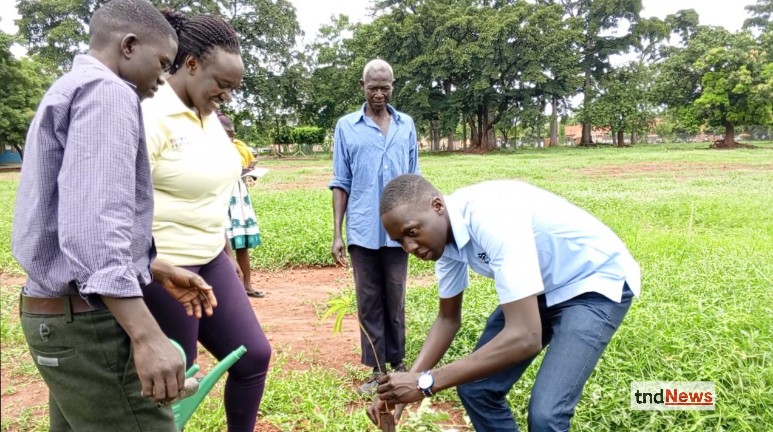
William Komakech, the resident district commissioner of Lamwo district and also a climate expert, argues that addressing seasonal fires requires climate-responsive policy, not just blame.
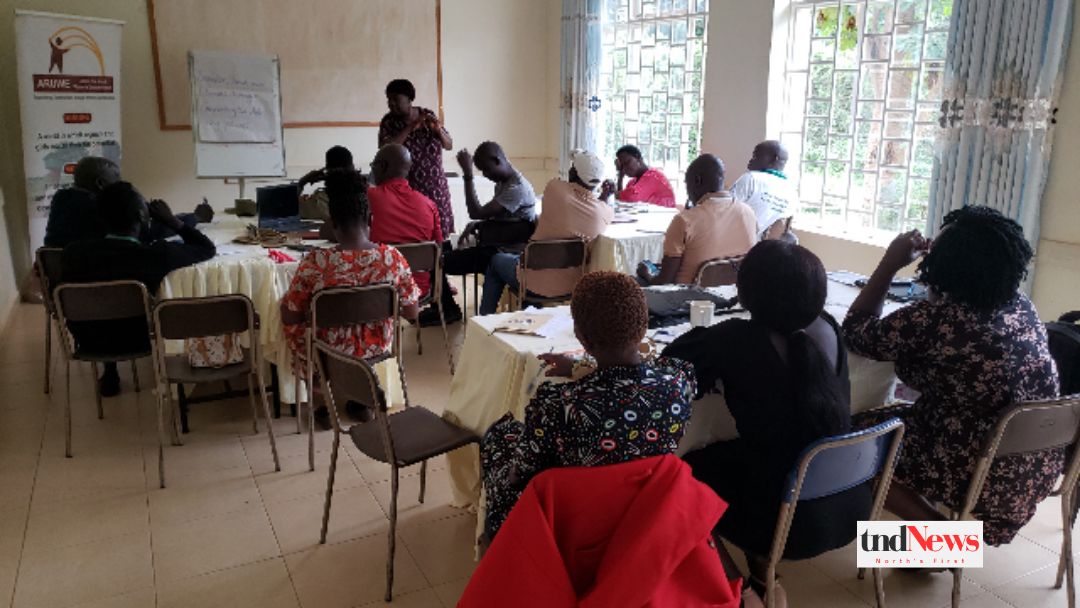
He proposed interventions such as community-led fire management committees during dry seasons, expansion of climate-smart agriculture and agroforestry and stronger local bylaws and early-warning systems.
He added that youth-focused climate education and alternative livelihoods need to be strengthened and Northern Uganda’s bush fires illustrate how local survival practices intersect with global climate change, turning vulnerable communities into frontline victims of a crisis they did little to create.
As the region enters yet another dry season, the urgency is clear: without decisive climate action, Northern Uganda risks burning its future one season at a time.
Discover more from tndNews, Uganda
Subscribe to get the latest posts sent to your email.