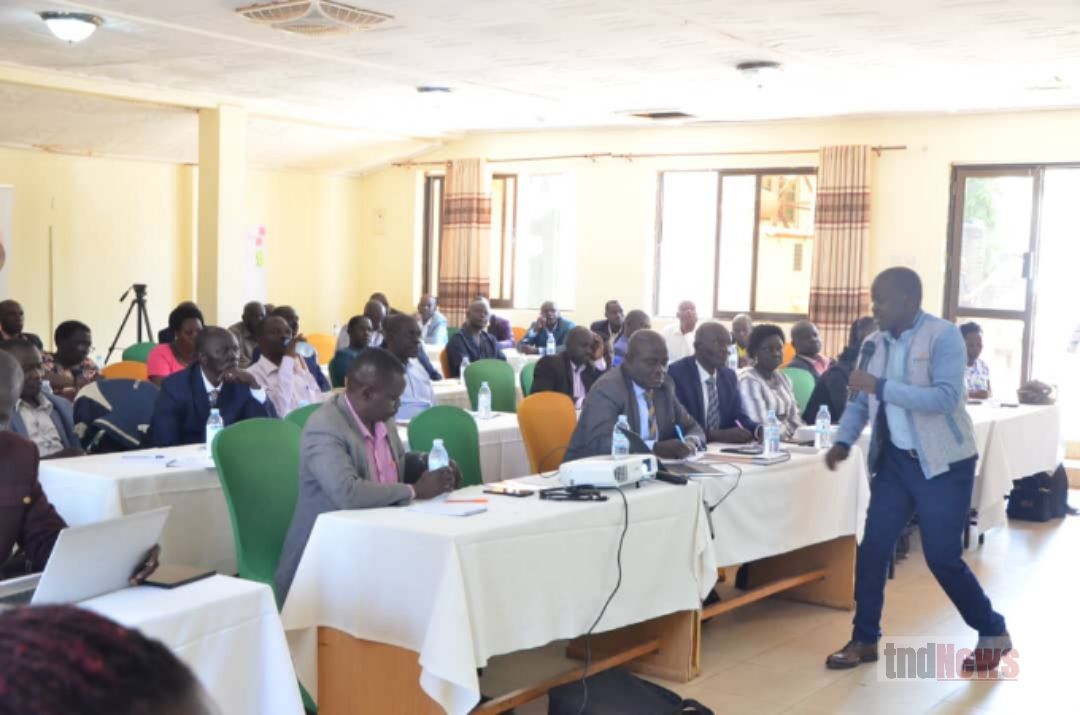
Lira | At the presentation of the baseline study by the Foundation for Inclusive Community Help (FICH) that revealed alarming social, economic, and educational challenges facing families across Northern Uganda, school leaders and district officials provided candid reflections.
The study, conducted between March and April 2025 across 32 government-aided schools in Alebtong, Arua, Kole, and Oyam districts was presented to education stakeholders in Lira City in the first week of September.
Despite steady enrollment under Universal Primary Education (UPE), learning outcomes remain critically low, with the study finding that 29 per cent of pupils in Primary Three to Five are “non-readers,” unable to recognise even the letters of the alphabet.
Read more: FICH’s study shows significant social gaps in northern Uganda
FICH attributed these results to multiple challenges, including overcrowded classrooms, inadequate teaching materials, high teacher and learner absenteeism, poor parental support, and the lack of school feeding programs.
District education leaders and headteachers echoed these findings, adding that poor supervision, low teacher morale, and domestic challenges in homes all contribute to the crisis.
The headteacher of Aloni Primary School, Anthony Nam noted that low performance among learners is largely due to weak support supervision and inadequate capacity building for teachers.
He said absenteeism among both teachers and learners remains rampant, worsened by high pupil-to-teacher ratios that stretch instructional capacity.
Nam also decried poor parental support, citing cases of domestic violence that disrupt children’s education. “I am personally housing four children at his residence because of domestic problems in their homes,” he added.
He also noted the absence of midday meals being another major barrier to learning.
From Alebtong district, the District Education Officer (DEO), Moses Olwit Ocen, lamented the poor attitude of parents, many of whom see little value in education and thus fail to motivate their children.
He noted that poor remuneration of teachers by the government continues to demoralise them, while overcrowding has worsened, with some schools averaging one teacher for every 120 learners.
“When one teacher is responsible for more than a hundred pupils, it is impossible to deliver meaningful education,” Ocen warned.
In Oyam district, Inspector of Schools Benson Ongom pointed out that there is widespread resistance to using local the language in early grades, despite research showing that children learn best in their mother tongue.
He called for renewed emphasis on local language instruction in Primary One to Four. Ongom also noted that limited inspection due to time and resources has weakened accountability.
He, however, praised numeracy teachers for being more creative in developing methodologies to engage learners compared to their literacy counterparts.
From Arua City, Senior Inspector of Schools Buza Zilly highlighted a combination of issues, including teacher absenteeism caused by low morale, high levels of learner absenteeism, and poor classroom facilities such as insufficient desks.
Zilly also pointed out that parents show limited follow-up on their children’s education, and many teachers lack the fundamental pedagogical skills required to deliver effectively in class.
In Oyam, DEO David Adea reinforced these concerns, stressing that absenteeism among teachers is widespread. He noted that many lack basic instructional materials such as schemes of work, while laziness and poor adherence to timetables undermine productivity.
Adea also pointed to poor utilisation of school infrastructure, saying that even available classrooms are not used effectively.
The role of data
A panel discussion following the report presentation examined how education data can be used to address these challenges.
DEO Alebtong, Moses Olwit Ocen argued that informed decisions, especially regarding school infrastructure, must be guided by reliable data.
He emphasised that the figures from the baseline report would help districts prioritize areas of greatest need.
Buza Zilly said data is crucial in closing planning gaps, ensuring proper allocation of resources, and strengthening decision-making at all levels of the education sector.
Oyam DEO Adea added that data allows policymakers to monitor attendance, measure teachers’ time on task, track learner performance, and design effective policies.
He stressed that such data is vital for curriculum development, addressing dropouts, and improving completion rates among learners.
In Kole, DEO Tom Okare cited the importance of using data to respond to the high pupil-teacher ratio, address hygiene in schools, and improve feeding programs.
He said accurate statistics would also help mobilize greater parental and community support.
The officials further highlighted broader roles of data in shaping the future of education.
Data enhances efficiency levels, identifies gaps and solutions, and ensures resources are used where they are most needed, said Buza Zilly.
Olwit Ocen said data informs recruitment of teachers and the setting of standards. Okare emphasised that data allows assessment of learners’ strengths and weaknesses, while Adea outlined a wide range of benefits, from curriculum development to monitoring individual learning needs and evaluating teaching methodologies.
Commitments to improve performance
Several education officers and inspectors shared their commitments to improve performance in light of the baseline findings.
Sally Adania, a headteacher from Arua pledged to organize continuous development boards, hold regular meetings with parents, and step up clinical supervision in schools.
She also promised stricter monitoring of curriculum coverage, teacher attendance, and adherence to timetables.
Rewarding high-performing teachers and learners, encouraging learner-centered teaching methods, and conducting benchmarking visits to learn from better-performing schools were also part of her plan.
From Alebtong, District Inspector of Schools Dilish Faith Aol said she would prioritise increased support supervision, close monitoring of both teachers and learners, and community dialogue with parents to improve absenteeism.
She stressed the importance of professionalism among teachers and pledged to recruit parent-teachers to fill staffing gaps while motivating both teachers and learners.
In Kole, DEO Tom Okare highlighted the importance of ensuring books are placed directly into the hands of learners and stored properly.
He said parents must be actively engaged in tackling absenteeism and called for recruitment of more teachers.
Okare also praised FICH’s role in capacity building and urged the organisation to continue engaging teachers. He added that continuous data assessments would help guide decision-making.
Kamdini Primary School’s headteacher Anna Aryemo outlined practical steps her school was to take on effectively. These included effective use of the Teacher Effectiveness and Learner Achievement System (TELA) machine for real-time monitoring, daily display of learner attendance, creation and use of hand-made learning materials, and regular teacher appraisals.
She also said sanitary facilities must be improved and emphasised the need for PTA teacher recruitment to reduce staff shortages.
Government response
The guest of honour, Oyam Resident District Commissioner (RDC) James Shilaku, expressed deep concern over the findings. He appreciated FICH for undertaking the baseline report but decried the rising dropout rates, especially among girls in Primary Four to Seven.
He called for the enactment of strong bylaws to combat the vice and urged schools to follow up on dropouts.
Shilaku said he was shocked that the majority of learners could not read or write, warning that this was a national crisis requiring urgent attention. He also criticized divisions created by UPE grants between teachers and headteachers, which he said were undermining teamwork.
In a bold statement, the RDC accused the District Service Commission of corruption, alleging that teaching jobs were being sold. He warned that such practices prevented the recruitment of competent professionals and undermined education quality.
Calling on teachers to love their jobs, Shilaku also urged them to be cautious during the coming election period and to support leaders who can deliver on education promises.
“We must ensure that those we elect are committed to improving the future of our children,” he said.
FICH’s remarks
In his closing remarks, FICH Executive Director Emmy Zoomlamai Okello pledged the organisation’s continued collaboration with district education departments. He said FICH would work closely with schools to strengthen systems, enhance partnerships, and push for reforms that make the curriculum more competency-based.
He urged headteachers to remain remorseful and reflective, noting that only strong partnerships between schools, government, and civil society could lift learning outcomes across Northern Uganda.
The way forward
The FICH baseline study has stirred urgent conversations about the future of education and development in Northern Uganda. While access to schools under UPE has expanded opportunities, the lack of meaningful learning outcomes threatens to undo these gains.
Stakeholders across the education spectrum – from headteachers to inspectors, district officers, and government representatives – agree that systemic reforms are needed. These include improving teacher remuneration, reducing pupil-teacher ratios, strengthening supervision, embracing local languages in early grades, and ensuring parental involvement in education.
As RDC Shilaku reminded participants, the crisis revealed by the baseline report is equally a societal problem. With strong collaboration between government, civil society organizations like FICH, schools, and communities, there is still hope to turn the tide.
But without urgent action, Northern Uganda risks raising a generation of children who attend school but fail to learn – a tragedy with far-reaching consequences for the region’s recovery and development.
Discover more from tndNews, Uganda
Subscribe to get the latest posts sent to your email.