My fellow compatriots, there are seasons in the constitutional history of nations when silence itself becomes complicity, and when the duty of patriotic citizenship demands not applause before power, but solemn warning before the gathering storm.
Uganda now approaches such a perilous constitutional frontier. Permit me to annoy you thus, Republic stands increasingly haunted by the growing spectre of dynastic succession — the gradual transformation of a constitutional State into a personalised political estate wherein institutions no longer exist principally to preserve democratic sovereignty, but to guarantee continuity of power within a narrowing hereditary orbit.
What is unfolding before our once Pearl of Africa is not merely an ordinary political transition. It is the slow juridical and institutional conditioning of the State toward the foreseeable transfer of political authority from father to son under the exhausted architecture of prolonged rule.
History teaches that republics seldom collapse abruptly. They decay gradually through the normalisation of exceptionalism, the quiet capture of institutions, the ritual weakening of constitutional restraints, and the cultivation of political inevitability around one ruling centre.
Thus Parliament — once conceived under Commonwealth constitutional tradition as the people’s sovereign deliberative chamber — increasingly has degenerated into what many citizens now bitterly describe as a “talking house”: loud in ceremony, weak in independence, and structurally subordinate to executive choreography and PLU administration.
The tragedy becomes especially painful when viewed through the lens of regions such as Tororo-UPC, once among Uganda’s proud industrial and commercial centres, historically vibrant through manufacturing, transport, cross-border trade, and productive enterprise.
Till recently, Tororo wasn’t merely a district; it symbolised the promise of post-independence economic modernity. Yet decades later, the same region now celebrates symbolic political occupancy while the deeper economic foundations of its prosperity continue eroding beneath privatisation excesses, patronage economics, youth unemployment, infrastructural stagnation, and elite extraction.
Why is it that people don’t love Museveni as they did with Dr Obote, the father of the Nation?
Here is the painful truth: the wholesale surrender of strategic sectors of the economy under the long arc of NRM rule has profoundly altered Uganda’s economic sovereignty. Entire productive systems that once sustained indigenous commercial growth increasingly drift toward oligarchic concentration, politically connected accumulation, and externally dependent patronage structures.
Meanwhile, ordinary citizens — especially the youth — inherit debt, unemployment, and economic exclusion disguised as macroeconomic stability.
One, therefore, cannot escape the painful irony that a region once celebrated for production and industrial promise now finds itself politically mobilised around ceremonial appointments. At the same time, the structural engines of its prosperity remain weakened or externally controlled by an Indian minister and polygamous head of the talking house.
The constitutional concern deepens further when parliamentary leadership itself emerges amidst unresolved national anxieties regarding corruption, patronage, and institutional compromise selection conducted with one of the contestants coerced to denounce interest while under unlawful house arrest.
Ugandans, we have not forgotten:
● the violent removal of presidential age limits under Article 102(b);
● the increasing militarisation of civilian politics;
● the unresolved iron sheets scandal;
● the securitisation of dissent;
● the weaponisation of patronage; and
● the repeated erosion of parliamentary independence through caucus domination and executive pressure.
The moral burden of history cannot simply be washed away by procedural speeches or ceremonial declarations of reform. Tororo, as elsewhere, won’t love poverty more than a transformative father of the nation who inspired many generations yet to come.
A Parliament that failed to adequately restrain constitutional mutilation cannot easily persuade the nation that it shall suddenly rediscover institutional courage at the precise hour succession politics intensifies.
Political philosophy again provides haunting clarity.
Aristotle warned that republics perish when public office becomes hereditary in spirit, even where elections survive in form. Montesquieu cautioned that liberty dies when institutional separation yields to concentrated influence.
Edmund Burke reminded Parliament that representative institutions cease to command legitimacy once they become instruments of faction rather than trustees of the national conscience.
And perhaps most prophetically, the African post-colonial experience itself teaches that liberation movements which overstay within power often mutate into dynastic establishments sustained less by democratic consent than by security structures, patronage systems, and mythologies of indispensability.
Uganda increasingly exhibits these dangerous symptoms. The public now observes:
● the strategic positioning of military influence within civilian governance;
● the concentration of coercive authority around family proximity;
● the systematic weakening of independent institutions; and
● the subtle manufacturing of political inevitability surrounding succession discourse.
This is precisely how constitutional republicanism quietly dies — not always through the abolition of elections, but through the hollowing of meaningful democratic choice long before citizens formally cast ballots.
The law, however, was never designed to sanctify hereditary entitlement within republican government.
The 1995 Constitution, which created more indigenous tribes to accommodate statelessness, begins with the foundational principle that all power belongs to the people of Uganda, who shall express their will through regular, free, and fair elections and democratic governance.
The Constitution did not envision a permanent ruling lineage insulated through institutional capture and generational transfer of political dominance.
A republic is not a kingdom.
Nor is the State the private inheritance of any family, movement, or liberation mythology. Yet today, many Ugandans increasingly fear that constitutional amendment, parliamentary majorities, militarised politics, and patronage structures may once again converge to facilitate political continuity under the language of stability, patriotism, or national security.
The danger in such arrangements is not merely political. It is civilisational.
For once, citizens begin believing that leadership succession is predetermined by proximity to power rather than democratic competition, public faith in constitutional order itself begins to erode. Cynicism replaces citizenship.
Fear replaces participation. Patronage replaces merit. And the Republic slowly transforms into a managed political estate masquerading as a constitutional democracy.
As the ancient proverb wisely cautions: “When the drumbeat of succession grows louder than the voice of the people, the kingdom has already begun forgetting its covenant with the living.”
Also read: Oweyegha-Afunaduula: Democratic backsliding: 40 years of hope, 30 of deception
Uganda, therefore, stands at a defining historical crossroads. The nation must decide whether it shall remain anchored upon constitutional republicanism grounded in institutional independence, democratic accountability, and generational renewal — or drift irreversibly toward personalised continuity disguised as national stability.
For no republic in history has permanently escaped the consequences of weakening its own institutions to preserve the ambitions of prolonged power.
The constitutional clock is now ticking with frightening audibility beneath the foundations of the State.
And history, though patient, never sleeps forever. Obote 3 must return to save the nation.
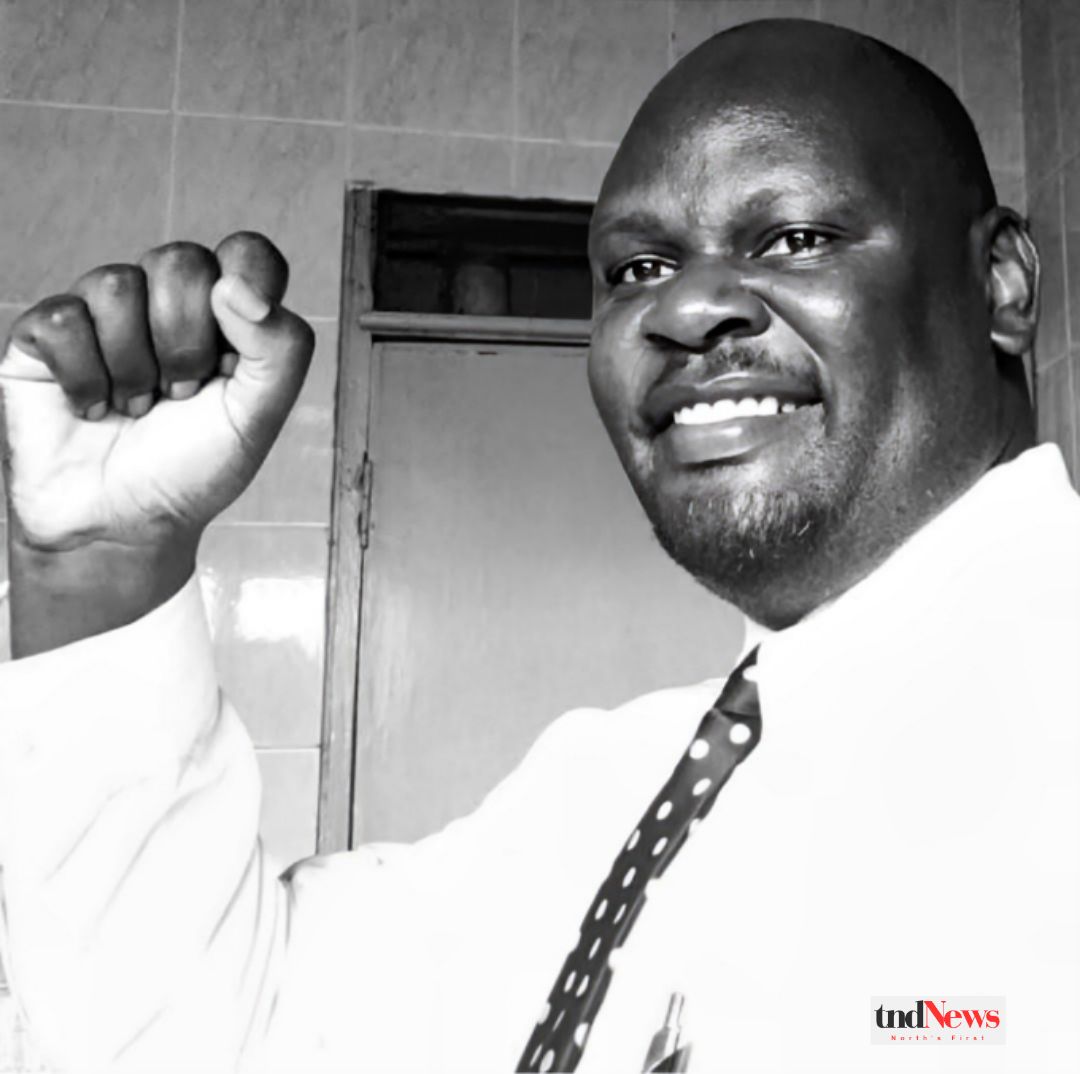
The writer, J. J. Opondo is the Public Relations Officer — NDOC.
Discover more from tndNews, Uganda
Subscribe to get the latest posts sent to your email.