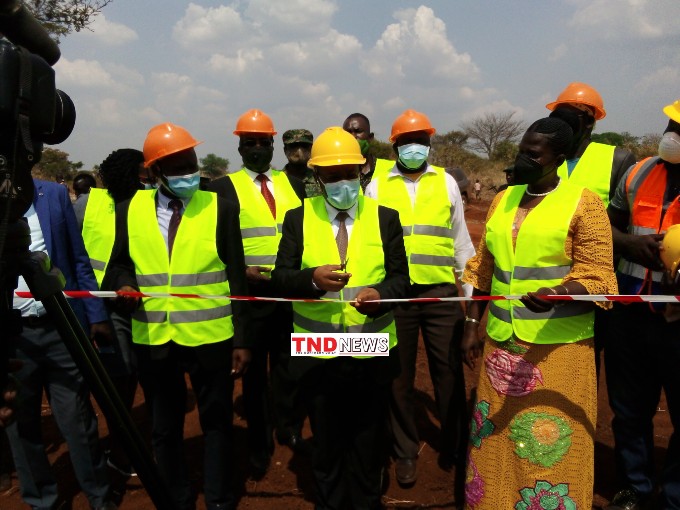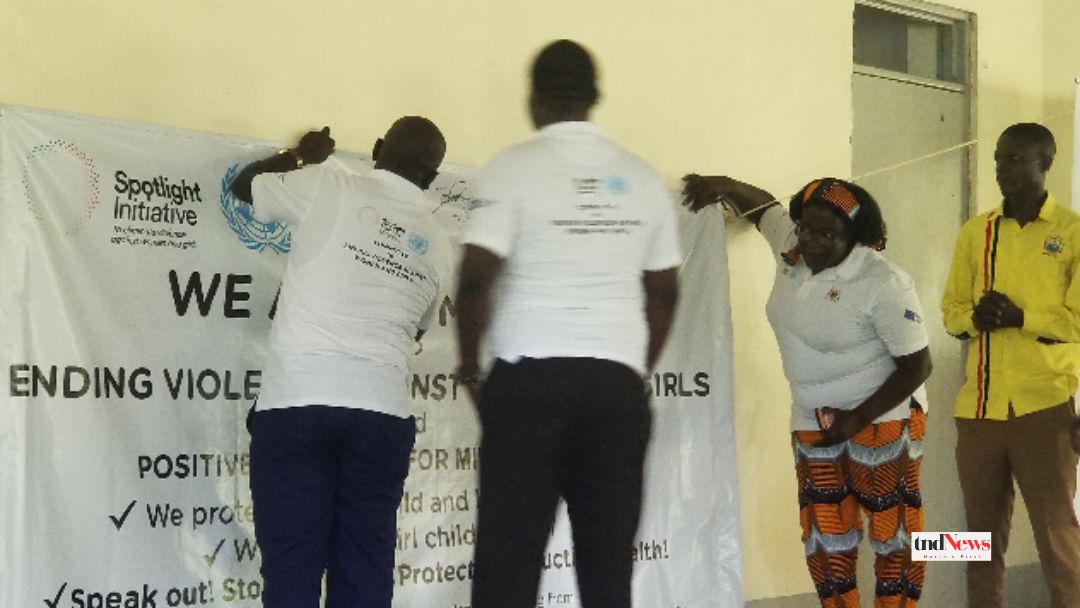
The Ministry of Gender, Labour and Social Development has rolled out a three-year, $38 million Spotlight Initiative aimed at eliminating violence against women and girls in Northern Uganda.
The programme, launched at Adjumani Multipurpose Hall, will focus on Lamwo, Oyam, Adjumani, Madi Okollo, and Nebbi districts, areas grappling with high rates of gender-based violence (GBV).
The initiative is jointly supported by the European Union, United Nations agencies, and the Embassy of the Netherlands. It is designed to enhance women’s safety and dignity, strengthen legal and institutional responses to GBV, and equip young people with education and vocational skills to live productive lives.
During the launch, Angela Nakafeero, Commissioner for Gender and Women Affairs, urged district leaders, civil society actors, and cultural institutions to champion the programme’s implementation.
She said the project seeks to protect girls and young women in schools, extend opportunities for those out of school, and provide start-up support for vocational graduates.
“The goal is to eliminate all forms of gender-based violence and promote dignity for young girls and women,” Nakafeero said.
She added: “Under the Spotlight Initiative, we are ensuring children are enrolled, retained, and able to complete their education. For those not in school, we offer vocational training followed by start-up kits so they can live a life of dignity.”
Nakafeero revealed that the EU had provided 20 million euros, the Netherlands Embassy contributed $7.1 million, and UN agencies injected $1.8 million.
Combined with the Government of Uganda’s human resource and infrastructure support, the programme totals $38 million.
It targets three million adolescent girls and also involves boys, teachers, schools, and local institutions as indirect beneficiaries.
She noted that the selected districts have struggled to respond effectively to sexual and gender-based violence and appealed to leaders to reverse negative development trends.
“We want to see a reduction in GBV prevalence and improved access to sexual and reproductive health services for adolescents,” she said.
The launch drew local government officials, civil society organizations, cultural and religious leaders, youth groups, and development partners. Stakeholders agreed that GBV remains a pressing issue in the region, fueled by cultural norms, poverty, and limited access to justice.
Aciro Scovia, chairperson of the Nebbi Women Council, commended religious leaders for their role in family guidance and appealed to men to allow their wives to attend church.
“Religious leaders have been instrumental in counseling and sustaining marriages. I have stayed in my marriage for 25 years because of their guidance,” she said, adding that faith-based support often encourages forgiveness and harmony in homes.
Chelangay Selestine, a teacher at Comboni Comprehensive College, urged parents to engage more with their children to prevent teenage pregnancies.
“Many girls get pregnant because parents rarely talk to them. At school, we struggle because students without proper upbringing sneak out for night discos,” she said.
Nebbi Resident District Commissioner (RDC) Abak Robert pledged support for the programme and cautioned that reversing GBV trends requires collective effort.
“The task ahead is enormous. Some children giving birth are themselves being raised by grandparents, which complicates parental guidance,” he observed.
Local leaders hailed the Ministry and its partners for focusing on rural districts, where women and girls face the greatest risks yet often lack a voice. They said sustained investment in education, skills, and community engagement is critical to achieving the programme’s goals.
With committed collaboration from government, development partners, and local stakeholders, the Spotlight Initiative is expected to significantly reduce violence against women and girls and foster safer, more equitable communities across Northern Uganda.
Discover more from tndNews, Uganda
Subscribe to get the latest posts sent to your email.