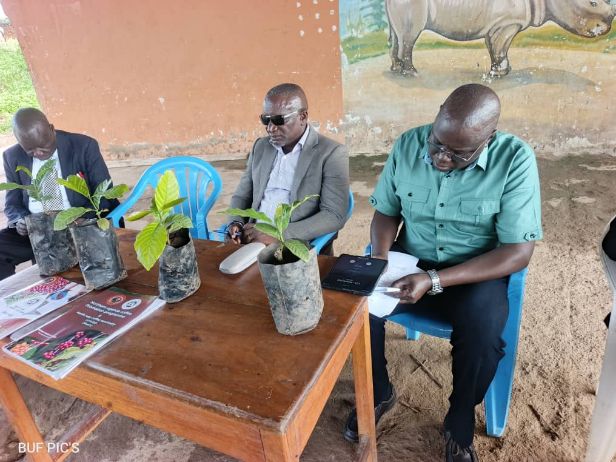
In a renewed drive to transform rural livelihoods and revamp traditional farming systems, the North Way Coffee Sanctuary (NWCS) has partnered with the Lango Cultural Institution (LCI) to launch the Northern Uganda Coffee Promotion Program.
Formalized during a strategic meeting held on July 11, 2025, the partnership aims to restore coffee farming in Lango sub-region and turn it into a sustainable economic venture.
The initiative is designed to empower rural communities, boost household incomes, and reclaim Lango’s agricultural identity, which had been disrupted by past civil unrest, displacement, and land mismanagement.
Stakeholders believe that this renewed focus on coffee, one of Uganda’s most valuable cash crops, could reposition Northern Uganda as a key contributor to the national and global coffee economy.
Addressing participants at the launch event, NWCS Executive Director Peter Kamukama said agriculture remains the most viable route to sustainable economic development in the north.
He emphasized that coffee farming presents a long-term opportunity to alleviate poverty, restore livelihoods, and foster self-reliance among rural populations.
“Our goal is to turn coffee farming into a profitable venture because agriculture remains the best hope for economic recovery in Lango. We are restoring lost livelihoods, empowering farmers, and commercializing coffee as a key cash crop,” Kamukama stated.
The partnership with the Lango Cultural Institution is a deliberate effort to integrate cultural leadership into agricultural revival. According to LCI’s Minister of Agriculture, Micheal Abeja, the coffee initiative is part of a broader campaign to reclaim Lango’s lost agricultural glory while engaging young people and women in productive economic activities.
“This is a historical mission to bring back coffee farming in Lango. Our partnership with NWCS is more than economic; it’s about reclaiming our agricultural identity and giving youth a new reason to engage in farming,” Abeja said.
Abeja further emphasized that the cultural institution is working closely with local governments, clan leaders, and community elders to ensure grassroots participation and ownership. He noted that blending traditional knowledge with modern agricultural methods is key to reviving the coffee sector sustainably.
The initiative aligns with the development vision of Won Nyaci of LCI who has consistently called for community-driven efforts to restore dignity and productivity through farming.
LCI Prime Minister Professor Willy Okullo lauded the NWCS partnership, describing it as a powerful model of community empowerment through agriculture.
“We believe coffee farming, if well managed, can be a key to transforming Lango into a thriving agricultural economy. It’s time we moved from subsistence to surplus, from survival to sustainability,” Okullo said.
The Northern Uganda Coffee Promotion Program is particularly important for a region still recovering from the long-term effects of armed conflict, cattle rustling, and the breakdown of traditional farming systems.
Many families lost access to their ancestral land, and agricultural knowledge was disrupted. Kamukama explained that NWCS was established with a post-conflict recovery mission to support vulnerable farming communities in the north and West Nile regions.
“Our work is both developmental and restorative. We are not only promoting economic activities but also rebuilding confidence among people whose livelihoods were shattered,” he said.
The program is structured around several pillars aimed at creating a vibrant and profitable coffee farming ecosystem. These include training and capacity building, provision of inputs, creation of market linkages, infrastructure development, financial inclusion, and inclusive participation of youth and women.
Under this project, farmers will be trained in nursery establishment, planting techniques, mulching, irrigation, pruning, and coffee processing. These sessions will be conducted at the designated demonstration site in Lira city.
Key challenges for rural farmers being access to stable markets and fair pricing, the program seeks to address this by linking farmers to certified cooperatives, exporters, and bulk buyers. These partnerships aim to eliminate middlemen and ensure farmers earn a fair return for their produce.
Special emphasis will be placed on youth and women, who are often excluded from commercial agriculture. Through mentorship, agribusiness clubs, and leadership programs, the initiative is yet to groom a new generation of coffee entrepreneurs who can scale up production and introduce innovation into the sector.
According to the Uganda Coffee Development Authority (UCDA), Lango sub-region produced 101,465 bags of coffee during the 2023/2024 financial year, ranking 9th among Uganda’s coffee-producing areas.
Uganda remains Africa’s leading coffee exporter and the second-largest producer after Ethiopia. Coffee contributes over 20% of Uganda’s export earnings, and under the government’s Coffee Roadmap, national production is expected to rise from the current 8 million 60-kg bags to 20 million by 2030.