Gulu | To overcome the challenge of poor yields due to unpredictable weather, farmers in Paicho sub-county, Gulu district have found hope in hybrid seeds. These seeds are high yielding, disease resistant and tolerant to the vagaries of weather.
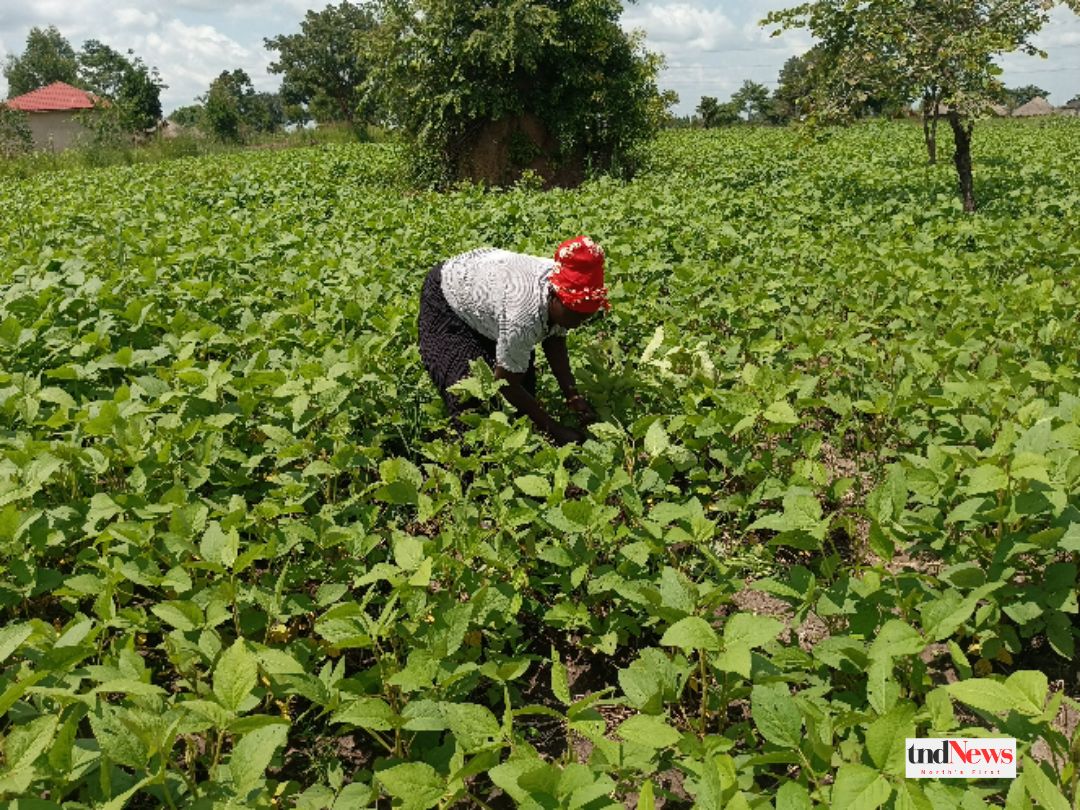
In 2024, Paska Lamunu, a farmer specializing in soybeans production bought soybean seeds which she planted in half an acre in her homestead located in Wigweng village, Kalali parish.
“After harvesting, I got 1.5 sacks which I later sold for one sack at shs4,500 a kilo. The remaining half sack is what I have planted here in a full acre,” she said.
Lamunu plants both 3N and 6N varieties of soybean. She sells the produce of 3N to the middlemen between shs1,500 to shs2,000 a kilo. While the 6N is sold at UGX 4,500 to shs5,000 a kilo to farmers.
“In September, I will be harvesting this one (6N) and I am expecting to get around 6 sacks.”
Patrick Ogik Tabu, is another farmer who has found hidden treasure in seed business.
In 2020, when he received training from some organization on quality seed access, Ogik decided to try a business of seed production. Since then, he has not regretted his decision.
“My entire life, I was planting 3N while I was buying the seeds from stores which I later realized were of poor quality, especially if they have been frequently used. The training I attended opened my eyes to specialize in seed production and my farm has been a demonstration farm for farmers who would want to be in this business,” he explained.
Ogik started this business in 2020 with an acre of Maksoy (soya) N6 which he sold as seeds to interested farmers.
He got shs3m which made him stick to this enterprise. Why? Because this is where he got a business that could bring in millions of shillings at one go.
Hybrid
Maksoy 6N, which is a high-yielding, early-maturing soybean variety, was released by the National Variety Release Committee in Uganda in November 2017. It is known for its resistance to soybean rust disease, lodging, and pod shattering, and a high protein (41%) and oil (20%) content.
The variety, developed by Makerere University’s Department of Agricultural Production, is high-yielding and matures in less than 120 days and produces high inputs under good management, according to Agape Innovations.
It is large-seeded and exhibits resistance to common soybean diseases aforementioned.
On May 21, 2025, Ogik planted 9kgs of Maksoy 6N in half an acre on his farm located in Paicho sub-county, Gulu district. 150 days later after harvest, he expects to get shs2m
This year, Ogik has partnered with Syova Seed Uganda who had supplied them with MH410, a new variety for maize and identified his farm to act as a demo to other farmers.
“I planted this variety on May 14 and I have realized that this particular variety is resilient to climate change like drought, pest and disease and matures early as compared to LONGE 5 which I had been using all this while,” he said.
According to Ogik, a kilo of authentic MH410 maize planting seed goes for shs13,000.
“I have received very many farmers from districts across Northern Uganda inquiring about this maize variety and I am glad they are embracing it,” said OgiK.
Ogik added: “When planting this variety ensure the spacing is 70 x 50cm double seed.”
He has one acre each of maize and rice, half an acre of soybeans and quarter acre of tomatoes. Annually, he earns not less than shs20m from these crops.
He has commended Climate Smart Jobs for partnering with agricultural extension service providers who have access to smallholder farmers to provide them with climate resilient inputs.
The smart farmer, Ogik, has also acknowledged that these seeds are high yielding, resilient, short maturing, and tolerant to climatic conditions that increase farmer’s income by 15%.

Under this business model of Climate Resilient Inputs, farmers in cooperatives set a demonstration farm for a particular variety which allows other farmers to see and appreciate the reason why they should adopt.
According to Climate Smart Jobs, this is to address the problem of people using home saved seeds which are low performing hence producing low yields and to provide a platform where they have access to the right quality seed in the face of climate change that exposes farmers to risk especially when using low performing inputs and so, these inputs are put in place to mitigate them.
Ogik’s maize has greatly inspired Denis Lar-pa-Rwot who had been planting other varieties for all his life.

When Reporter Rosemary visited his garden located in Laminoyoo village, Paicho sub-county, Lar-pa-Rwot had already cleared his two acres of land to plant this new maize variety.
“I visited his farm and saw how healthy his maize was which got me inspired. I immediately reached out to him to inquire more about the maize and where he had gotten the seeds from because ideally what we lacked was access to good quality seeds.”
Lar-pa-Rwot planted two acres of LONGE 5 and would get around 10 sacks, selling a kilo between shs700 to shs900 which he said was bringing less profit.
Raymond Odonkonyero Obina, Agricultural Officer for Paicho sub-county empathizes need for farmers to join cooperatives so that they can jointly seek for advice from experts on the kind of seeds to plant, when to plant, bargain for the prices of their products so that at the end of the day they get profits from the sweat.
He also stretches out that farmers should be driven by market forces to make decisions on the variety to plant.
Why seed business
Lamunu explains that involvement of local business people in the seed business, a farmer is sure of having easy access to good quality and high yielding seeds which are tolerant to drought, pests and diseases yet giving a farmer high inputs and a lot of cash.
Meanwhile, Ogik advises farmers to take farming as a business and give it their best by investing in it and having proper record keeping if they are to benefit from this business.
He urges them to prioritize good land and crop management, use fertilizers which have been recommended by the experts above all to seek advice and exchange visits to farmers who are excelling in the particular crops.
This story was produced with support from InfoNile in partnership with Palladium under Climate Smart Jobs.
Discover more from tndNews, Uganda
Subscribe to get the latest posts sent to your email.