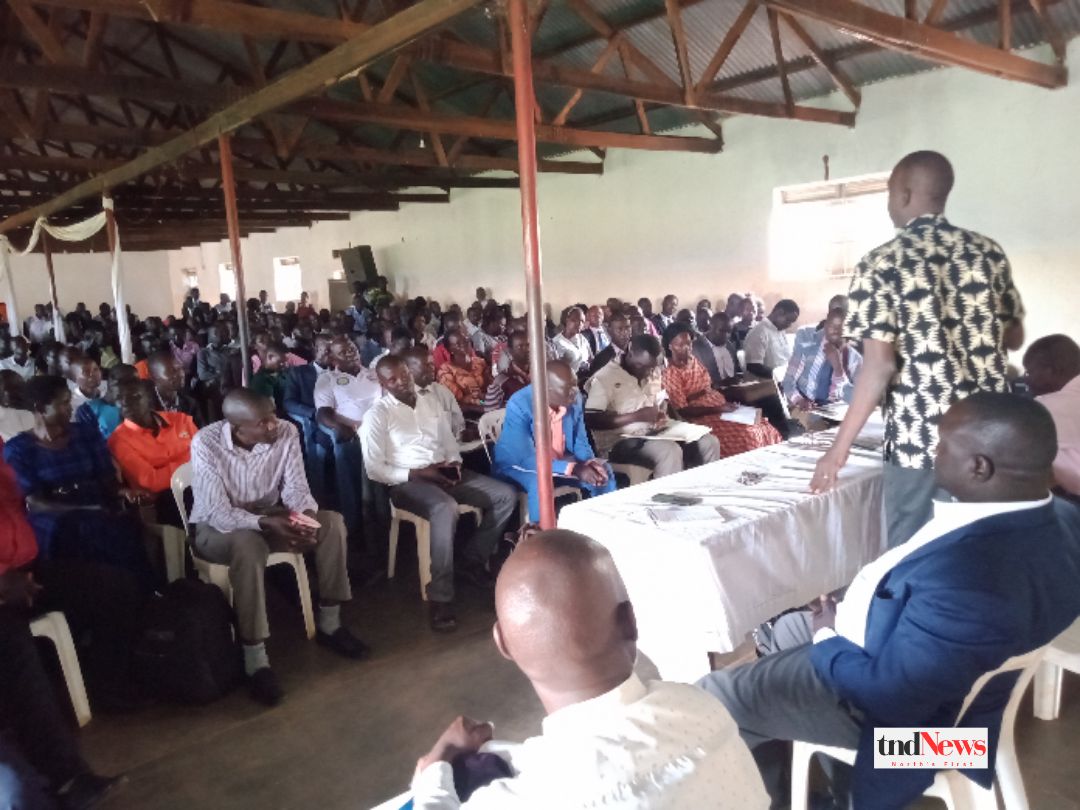
Lamwo | In a major step toward improving education outcomes in Lamwo district, over 400 primary school teachers have undergone intensive training in curriculum interpretation and competency-based assessment, a move expected to enhance learner performance, particularly in national examinations.
The training, organized by the Lamwo district education department, was facilitated by national curriculum experts and officials from the Uganda National Examinations Board (UNEB).
It comes amid growing concerns over poor academic performance across the district’s primary schools, particularly in Primary Leaving Examinations (PLE).
According to Joro Ben Washington, the Lamwo district inspector of schools, one of the key findings from a recent internal education review pointed to gaps in how teachers interpret and implement the national curriculum.
“Since Lamwo became a district after breaking off from Kitgum, we’ve consistently performed below national average in PLE and even at foundational levels.
“After reviewing our practices, we found that most of our teachers lack proper skills in curriculum interpretation and in setting competency-based assessments,” Joro explained.
He added that many teachers rely heavily on textbooks purchased from bookshops, which often do not align fully with the National Curriculum Development Centre (NCDC) framework.
“Some of these books leave out critical areas of the curriculum. That’s why we partnered with curriculum experts and UNEB officials to retool our teachers, so they can confidently teach and assess learners using the right approaches,” he noted.
Teachers welcome the initiative
Teachers who participated in the training expressed appreciation, admitting that it filled long standing knowledge gaps that have affected their teaching effectiveness.
“This training has opened our eyes,” said Monica Akaraber, a teacher at Ogako Primary School. “We now understand how to translate curriculum objectives into classroom practice and assess learners based on competencies rather than just memorization.”
Otim Richard, another participant from Child care Primary School, highlighted how the training addressed long-standing challenges they face in lesson planning and evaluation.
“We were taught how to set questions that test learners’ understanding, skills, and attitude—not just recall. This will surely improve the quality of learning outcomes in our schools,” he said.
Expert opinion
According to Richard, a curriculum consultant and Kampala examination Centre who led the training sessions, many teachers across the country, especially in rural areas, still struggle with the transition from content-based to competency-based education.
“The curriculum changed in 2007 to become more learner-centered and competency-driven. Unfortunately, due to limited retooling opportunities, many teachers continue using outdated approaches. Training like this is critical,” Richard said.
He also emphasized the need for ongoing professional development and district-wide monitoring of teaching practices.
Next steps
The Lamwo district education office Banabas Langoya, has committed to following up on the training through school inspections, mentorship, and localized refresher workshops.
“Our goal is to ensure this is not a one-time event,” said Langoya. “We will continue supporting our teachers with resources, follow-up training, and regular feedback to bridge the gap in curriculum delivery.”
As Lamwo takes this significant step, stakeholders are hopeful that the intervention will lead to improved academic performance and long-term educational transformation in the district.
Discover more from tndNews, Uganda
Subscribe to get the latest posts sent to your email.