On Wednesday, May 21, 2025, Olum Peter, the district veterinary officer of Amolatar, presented a compelling case for poultry farming.
He stated that such farming is an important strategy for alleviating poverty in local households.
His remarks came at the conclusion of a two-day training session organized by Facilitation for Peace and Development (FAPAD) to teach farmers essential poultry management and production skills.
During the training, Olum encouraged participants to actively apply what they had learned, emphasizing the potential impact on the Amolatar community as a whole.
“By adopting best practices in poultry farming, we can significantly enhance food security and economic stability in our district,” he stated.
James Auna, the FAPAD coordinator in Amolatar, echoed these sentiments, encouraging the trained farmers to use their newly acquired knowledge to boost poultry production in the district.
Auna noted, “The techniques you have learned will not only improve your individual output but can also inspire others in your communities to consider poultry farming as a viable source of income.”
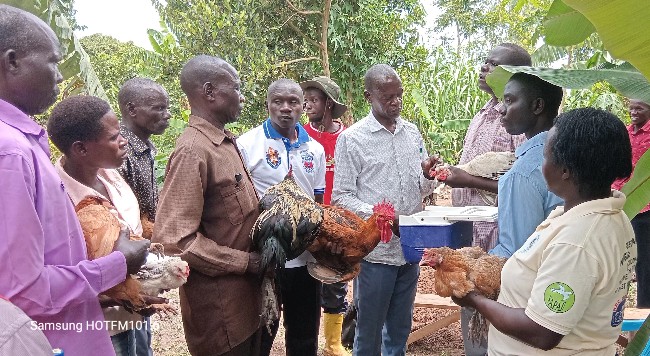
A practical demonstration of poultry vaccination, led by trainer Otema Sam, was a major highlight of the training.
He advised on maintaining cleanliness prior to vaccination and cautioned against administering two different types of vaccines to chickens at the same time, as this could cause unnecessary stress for the birds.
“Proper vaccination practices are vital for the health of your flock and the success of your farming endeavors,” Otema emphasized.
Farmer Edonu Peter, who participated in the training, expressed his gratitude toward FAPAD. “I am eager to apply the skills I’ve gained,” he remarked.
Edonu added that he intends to collaborate with his group and other households to effectively increase poultry production. This commitment reflects the spirit of collaboration and community support emphasized throughout the training sessions.
Judith Atim, a resident of the Awelo sub-county, began raising over 50 chickens and has significantly improved her family’s income, allowing her to pay her children’s school fees and manage household expenses.
She expressed her gratitude to FAPAD for the training received and pledged to apply the skills learned to enhance poultry production.
FAPAD’s initiative included providing participants with free vaccine carriers and vaccines, ensuring that farmers have the necessary tools to implement what they learned directly in their villages.
As Amolatar’s farmers embark on this new journey in poultry management, they hope that their efforts will not only benefit individual households but also contribute to the region’s overall economic development.
The training laid the groundwork for a more prosperous future through better poultry practices.
With dedicated professionals like Olum, Auna, and Otema guiding them, Amolatar farmers are poised to make significant strides in poultry production, ultimately contributing to the collective goal of reducing poverty and strengthening community resilience.