Genius always says, “A journey of a thousand miles begins with a single step,” and this is true of a man who was once known for his ability to wash clothes.
Okello Sunday previously washed clothes for the Village Health Team (VHT) in Apyetta North village, Palabek Ogili sub-county, Lamwo district. He decided to leave his job after receiving his monthly salary of shs50,000 and begin a beekeeping project.
Okello Sunday, a resident of Apyetta North Village, Apyeta Parish, Lamwo, manages his family’s needs with ease despite his limited educational background. He now earns shs12 million per year through his project, “Nyeko Rac Enterprises.”
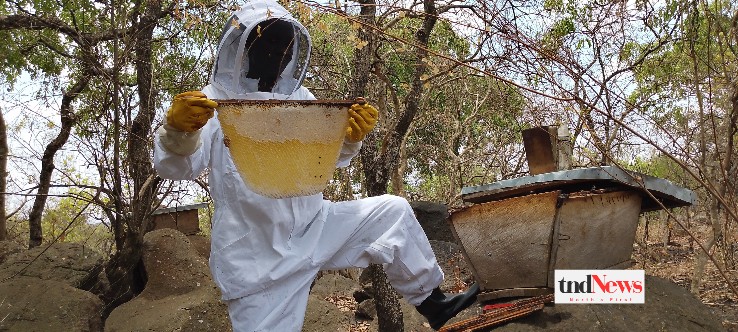
Currently, he has 150 beehives.
How he started
Okello began beekeeping in 2014, buying five beehives for shs50,000. He stated that after receiving training from Cow Foundation, a locally based NGO in Kitgum district, in 2015, where they were taught by a woman named Margaret of Jalima Company Limited, he became more involved in the beekeeping project.
“In 2016, I attended another training in Kampala at Cilla Hotel, where beekeepers from 59 districts attended the training,” Okello said. “Initially, I had no knowledge of how to set up beehives, but after the various training sessions I attended, it’s no longer a problem.”
Initially, he received very little production from the beehives, but now he receives 8-10 kilograms of honey from each one. Of the 150 beehives, he explained that 100 were KTB made, while the remaining 50 are locally made.
He gets between 10-15 kilograms of honey from each of the KTB-made (modernized) beehives, depending on their production.
Earlier, he used to work without proper knowledge, sometimes getting well-packed beeswax without the proper oil. He mentioned that when he realizes the bees will produce less honey, he removes the existing beeswax so that the bees start fresh, producing proper honey.

In 2018, the Lutheran World Federation (LWF) invited farmers to pitch business ideas, and Okello won shs1.5 million in the competition, which aided his beekeeping venture. He now sees farming as a business.
In April 2019, the Cawa Project, also under LWF, organized a competition between refugee farmers in the Palabek Refugee Settlement Camp in Lamwo district and the host community. Okello won another shs250,000.
Tips on beekeeping
Okello advises anyone interested in beekeeping not to put all of the beehives in one location. To achieve better results, beehives should be planted close together, but not too close.

He explains that if you place too many beehives in one location, the bees will spend too much time wandering between the hives, leaving insufficient time to focus on honey production, resulting in low returns.
Okello emphasizes the value of having land, beehives, a slasher for clearing brushy areas, and basic beekeeping knowledge.
How to harvest honey
He explained that when harvesting honey, you should begin with the beeswax with the most honey and allow the ones with less to develop further. Okello also advised against using fire during harvesting because the ashes would mix with the honey, reducing its quality and, ultimately, market value.
“To get clean honey, use two buckets, one for clean honey and another for honey mixed with dirt. Avoid harvesting honey during the rainy season, as honey will contain water, which can be detected by a refractometer at the point of sale, and they won’t buy it.”
Market for honey
Okello has friends in Kampala, Gulu, Kitgum, Mukono, Nakasongola, and Lamwo districts, as well as refugees from the Palabek Refugee Settlement, who buy his honey.
He sells purified 500 grams of honey for shs10,000 and unpurified 1 kilogram for shs8,000-shs10,000, depending on the grade of the honey.
He mentioned that finding a market for honey is not a problem because several organizations in the camp buy from him.
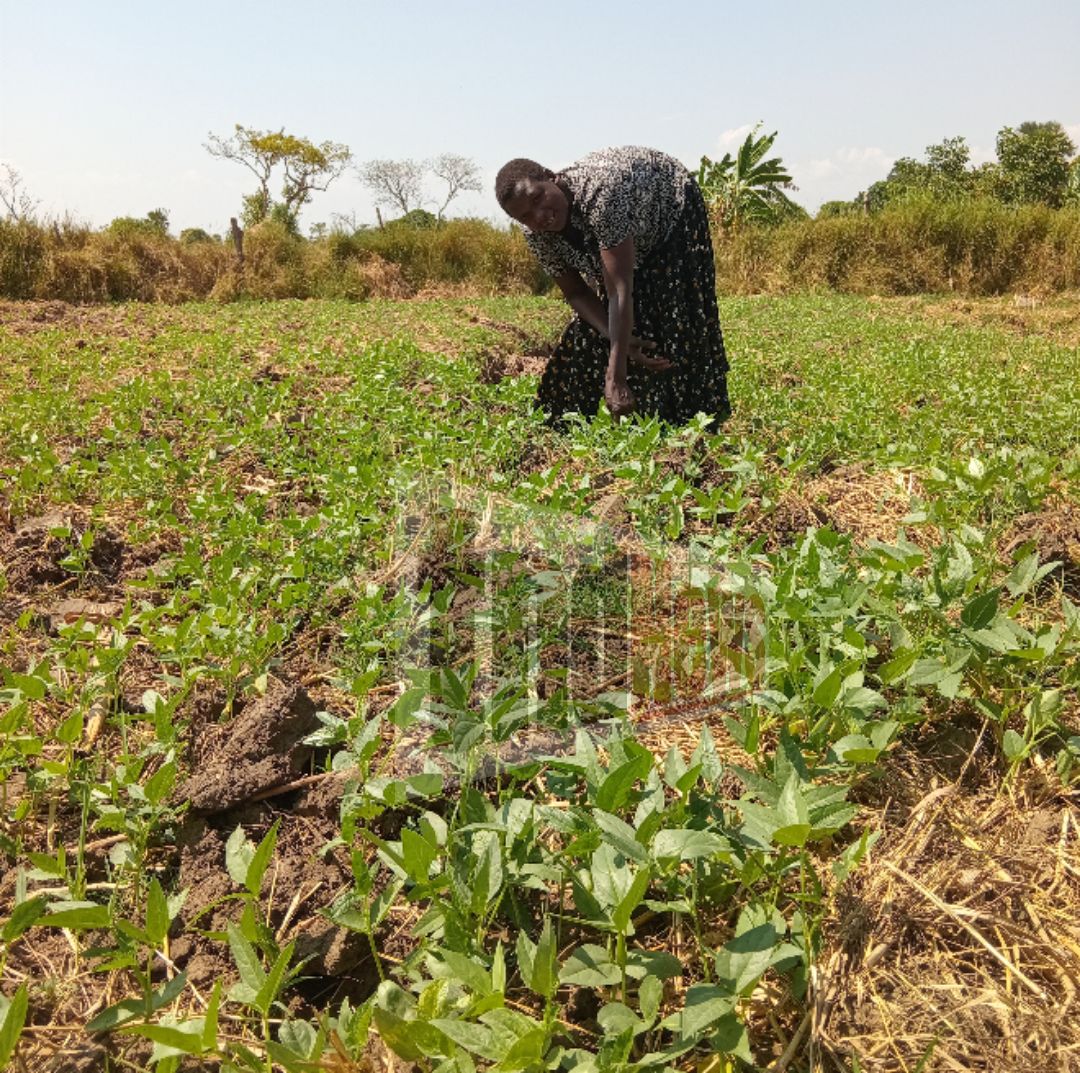
Okello owns approximately 40 acres of customary land on which he raises chickens, grows cotton, and cultivates sesame (sim sim) for commercial sale.
Other farming activities
He buys feed for his chickens but also plants his own chicken feed. He currently raises 300 local chickens and sells them for shs15,000 to shs35,000 depending on their size. He anticipates earning more money during the holiday season.
Workers
Okello doesn’t have permanent employees but hires workers when the farm becomes overgrown. He pays them shs30,000 per person to clear the bush. He spends between shs100,000 and shs200,000 every six months to clear the farm.
Assistance from his family
Okello said there is much work to be done on the farm, and if he had to hire people for everything, it would cost him a lot. His wife, Achola Beatrice, helps with tasks such as weeding the garden, feeding the chickens, and selling the honey.
Achola said that the farming they are involved in has allowed them to meet most of their basic needs. All their children, ranging from primary to secondary school, are in school. She added that they no longer need to buy much from the market.
Time for harvesting honey
Okello harvests his honey twice a year, in March and December. Honey harvested in March tends to be brown, while that harvested in December is cleaner and thicker.
His vision
Okello plans to use a machine called a Venom Extractor, which extracts bee venom to help strengthen those living with HIV. He sees this as a lucrative opportunity due to high demand.
He also plans to build a training facility to share his beekeeping knowledge with others who might not have access to such training. Additionally, he hopes to expand his knowledge and begin rearing the Kuroiler chicken breed.
Challenges
Okello mentioned several challenges, including:
•Heavy rains this year caused many bees to migrate from his hives.
•Other organisms that distract the bees.
•Theft of honey from his farm when it becomes overgrown.
•Intentional fires set near bee hives that burn the hives.
Mitigating the challenges
To address these issues, Okello keeps the beehive area clean to prevent wildfires during dry seasons. He regularly checks the hives to ensure there are no other insects feeding on the bees.
Advantages of beekeeping
Beekeeping provides several benefits, he says. “Honey can be eaten, used to make candles, and used as medicine for teeth, body rashes, and vomiting.
“It generates income and helps increase CD4 count for those living with HIV.”
Environmental conservation
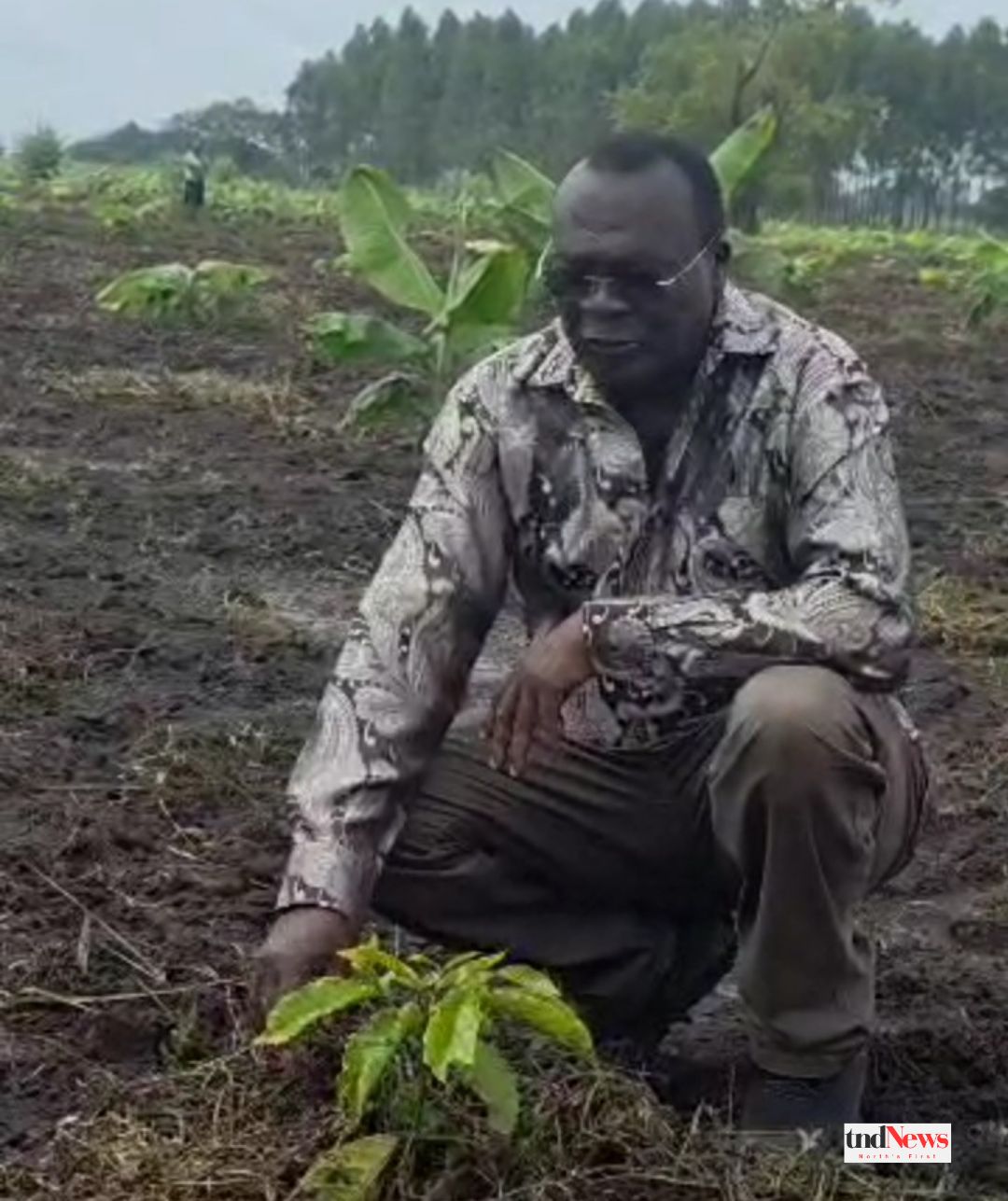
Okello is also involved in tree planting, which helps bring rain and improves air quality, benefiting both beekeeping and the environment. He plants tree species such as guava, oranges, and ticks. He encourages others not to cut down trees.
Record keeping
Okello keeps a record book to track sales, profits, and expenses. He believes record keeping is essential for monitoring business progress.
Adding value to honey
Before purifying honey, Okello sorts it by grade and appearance, based on how it is separated in the buckets during harvest. He stores honey at low prices and only sells it when the market is favorable.
Views from a specialist
Odong Joseph, an agricultural worker in Kitgum district, encourages farmers and the community to embrace farming. He advised those interested in beekeeping to plant flowering trees or crops like sunflowers near their beehives to improve honey production.
Opinion from the locals
Obol Uvan, said, “I urge the youth to look at how people are engaged in various activities, rather than just playing cards in the centers. There are many ways to earn money.”
Another local, Achiro Florence, stated, “I have hope that I will learn beekeeping because I have been helping Okello screen his honey before sale.”
“Many people avoid hard work, which is why many are poor. I encourage the youth to engage in hard work to eliminate poverty in the Acholi sub-region,” said Okot Alex.
Acen Beatrice had this to say, “I advise everyone who has something to help others grow, especially by imparting knowledge.”
By Vincent Kaguta
Discover more from tndNews, Uganda
Subscribe to get the latest posts sent to your email.