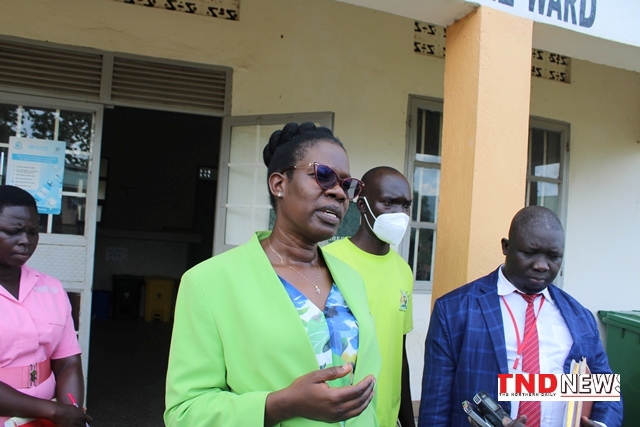
A blood group test is done at Kotido general hospital and Kanawat Health Centre III.
Kotido – January 18, 2022: Medics from Kotido district general hospital have urged members of the public to go for blood group tests to prevent cases of incompatibility.
This call follows a TND News mini-survey conducted by its Karamoja sub-region based Correspondent Hope Ochero Owiny.
He found out that a section of the public within Kotido do not know their blood group statuses.
Among five people Owiny asked, four of them all said they do not know their blood group.
“I have not bothered going for a test because and I have not been looking at it as a matter of importance,” one interviewee responded.
The second respondent said he has been reluctant to think about going for a test.
Another interviewee said she tested for blood group from Kotido General Hospital. “I am aware of my blood group for the last three years.”
“I went voluntarily for the test,” she responded when asked if she was advised to do so.
Dr Richard Opira who works at Kotido General Hospital has advised the public to take upon blood group tests as a serious matter.
“It is easier for blood to be processed faster if one needs blood transfusion and is aware of his/her blood group,” he added.
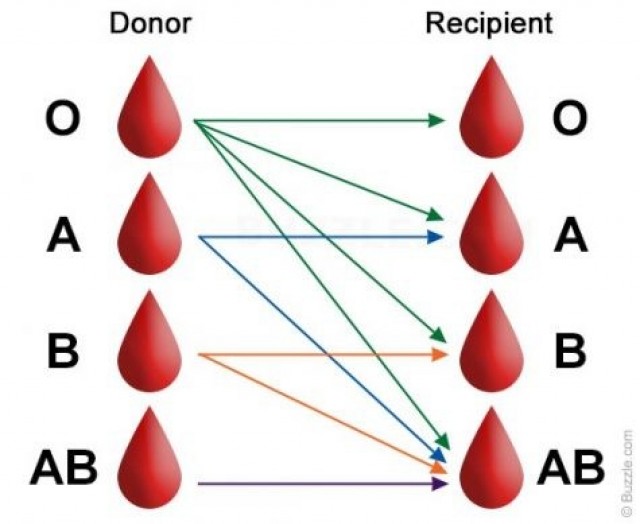
Opira also said that abortions and miscarriages are common with people whose blood groups do not match.
“Such cases can be minimized if people know their blood groups before marriage so that couples make informed decisions before getting married.”
ALSO READ:
- Moroto regional hosp. gets “blood collection and distribution center”
- Kotido’s ‘no oxen to attach on yokes’ protest ends unproductive
- Crime & Security: Lira City ghetto squad blames killing, theft on ‘smart group in town’
- Exclusive: LPG to investigate PRELNOR, criticizes govt for mistreating Lango
The medic said screening the blood group of couples is also an important procedure when determining the paternity and maternity of a child in cases where there are doubts.
In Kotido, a blood group test is done at the general hospital and Kanawat Health Centre III.
According to a study by the US National Center for Biotechnology Information, citing Gulu Regional Blood Bank, RhD variants were prevalent among blood donors.
The team examined 138 RhD-negative blood samples obtained from Voluntary Non-Remunerated Blood Donations (VNRBDs). Of these, 66.7% (n=92) were males whose main age was 24.4 years (range, 14-33 years).
Majority of the donors were of ABO blood group O (62.8%, n=86), followed by A (19.7%, n=27), then B (13.9%, n=19) and least AB (3.6%, n=6).
The study also showed that the prevalence of RhD variant phenotypes was 0.7% (n=1.95% confidence interval, o.5-0.9).
There was no statistical association of RhD variant phenotypes with donor gender, tribe and their ABO blood groups.
“This study has revealed a high prevalence of RhD variant among blood donors at Gulu Regional Blood Bank in Northern Uganda. It further highlights a potential risk of alloimmunization, as the present blood typing practices do not identify RhD variant phenotypes,” the study concluded.
Discover more from tndNews, Uganda
Subscribe to get the latest posts sent to your email.